A soundtrack for the nose
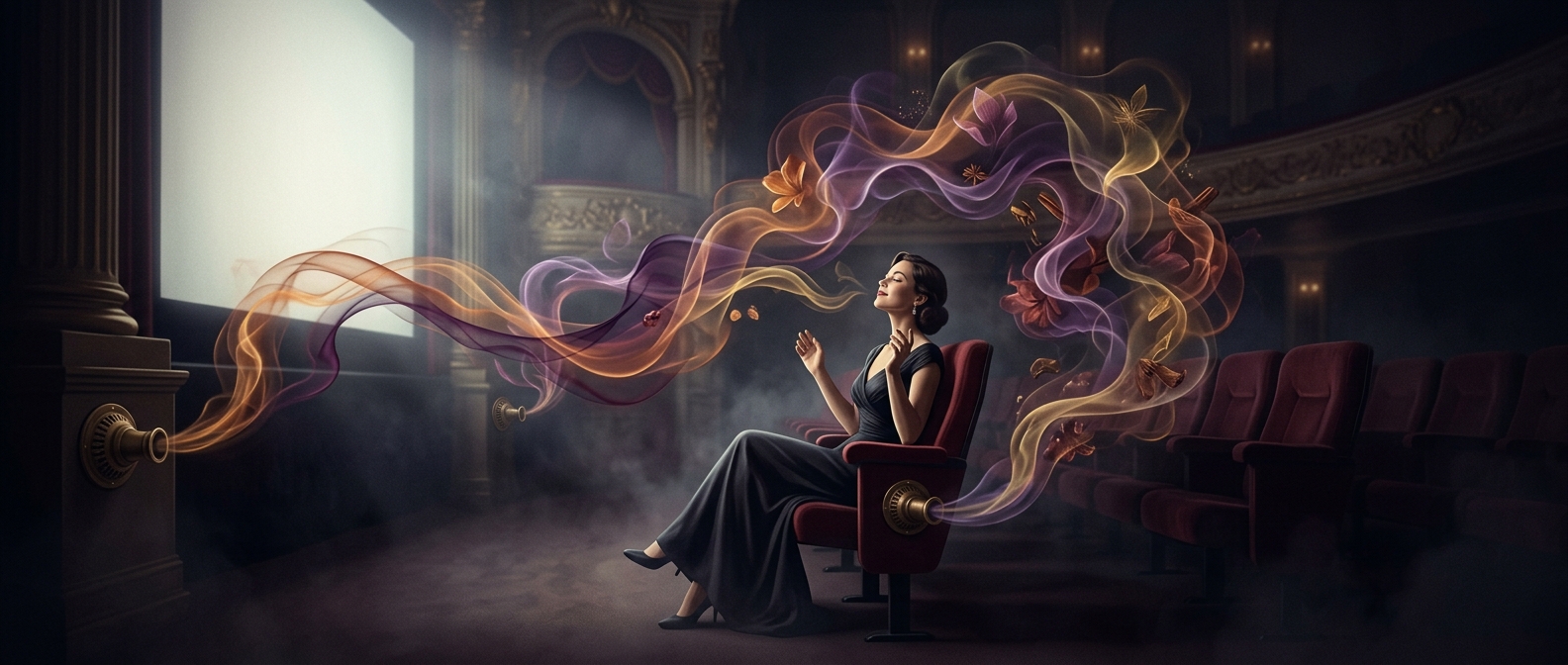
Scent of Mystery was built around an unusual idea: let viewers smell events as they happened on screen. The theater system sent different odors toward the audience in time with the film, turning scent into another part of the storytelling—not merely something suggested by a scene.
That required a kind of coordination familiar from sound effects but much harder to achieve. A cue had to reach people at the right moment, then clear before the next one. With 30 scents in the mix, even a small timing error could change what a scene seemed to smell like.
Why odors refused to behave like sound
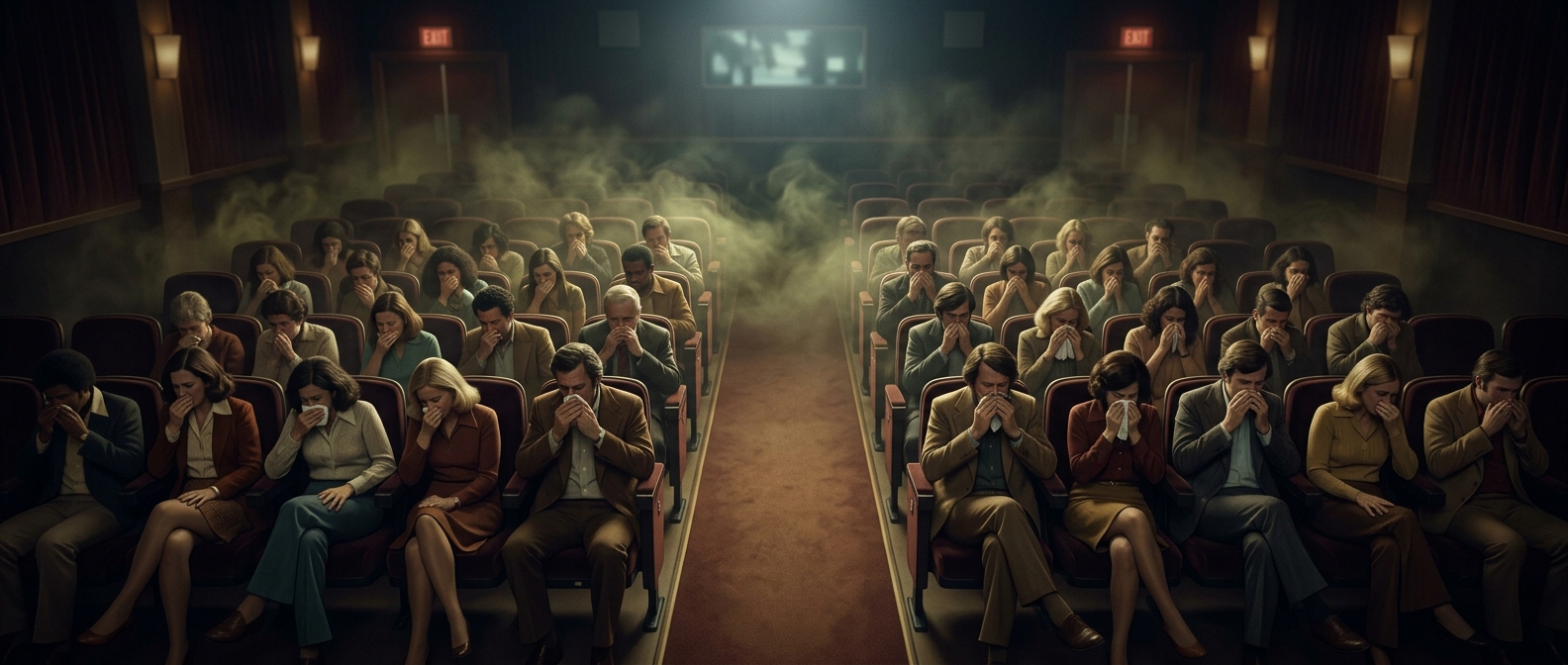
Sound stops when its source stops. Smell does not. Odor molecules remain in the air and can cling to surfaces, so one cue may still be present when the next arrives. Air currents can also carry a scent unevenly: some viewers may catch it promptly, while others get it late—or not at all.
That persistence made precise sequencing difficult. A fragrance meant to identify one object could blur into the odor for the next scene, while a delayed release could make the audience connect the smell to the wrong action. The result was not simply a technical glitch; it could muddy the story’s cues.
The theater became part of the experiment
The film exposed a basic design problem for sensory entertainment: a smell can be delivered on cue, but it cannot be cleanly switched off. Images and dialogue stay within the screen and speakers. Scent spreads through shared air, making every seat—and every lingering odor—part of the performance.