How Polyester turned a theater seat into a scent station
John Waters’s Odorama depended on a simple bit of audience coordination. Each viewer received a numbered scratch-and-sniff card; when a matching number appeared on screen, the viewer rubbed that spot to release its scent. The card worked like a miniature scent dispenser: scratching broke open tiny fragrance-filled capsules in its coating.
That cue system mattered. Instead of merely watching a character react to a smell, the audience could encounter a version of it at the same moment. The theater became part of the joke—and the viewers had to participate for the gag to land.
The joke was in making bad taste physical
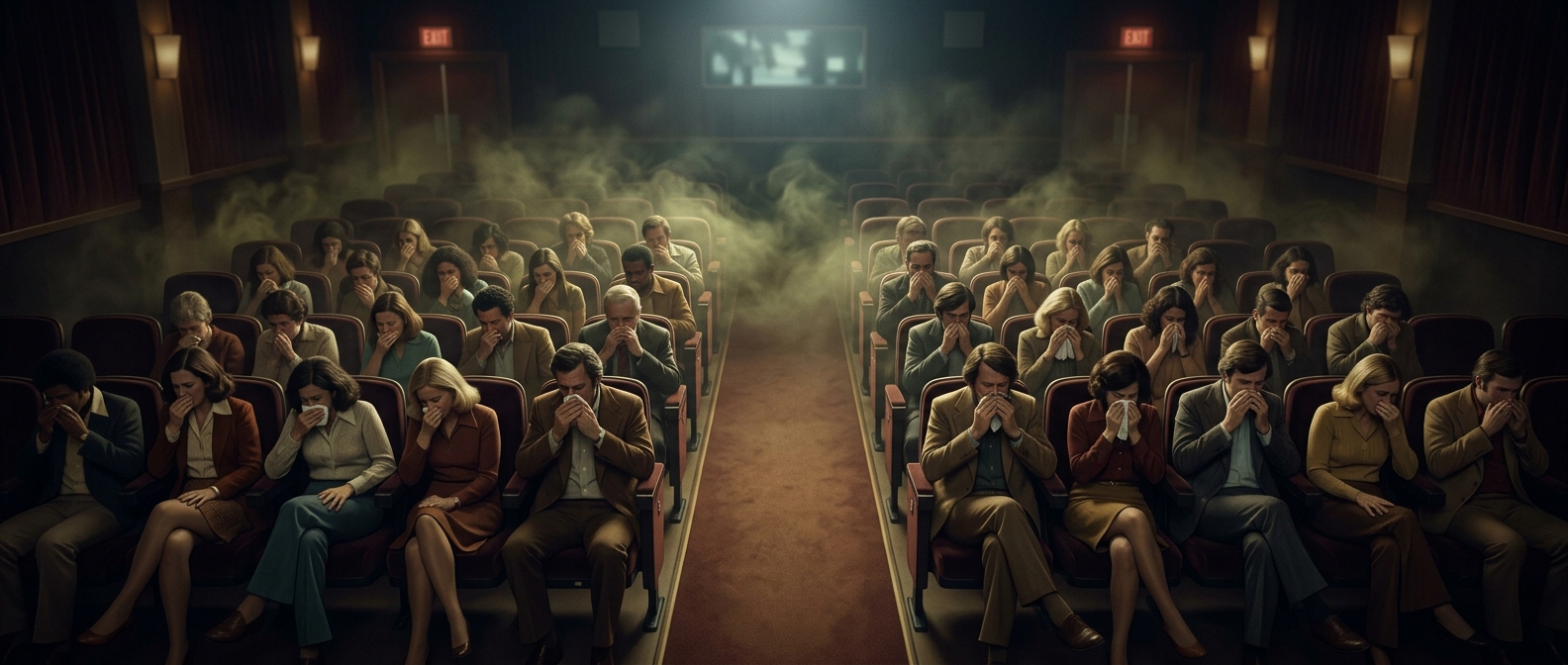
Waters built his reputation on deliberately outrageous, low-budget comedy, and Odorama carried that sensibility beyond the image. A smell can be harder to ignore than an on-screen gag: it arrives in the audience’s own space, where laughter, disgust, and embarrassment become part of the experience. The flatulence scent pushed that idea to its most juvenile extreme.
The cards also made an otherwise invisible film effect communal. Everyone could follow the same numbered prompts, then discover that the same cue had reached the whole room. Polyester did not just show audiences something crude; it asked them to scratch, sniff, and share the punch line.