The Entrance That Made Wonka Impossible to Read
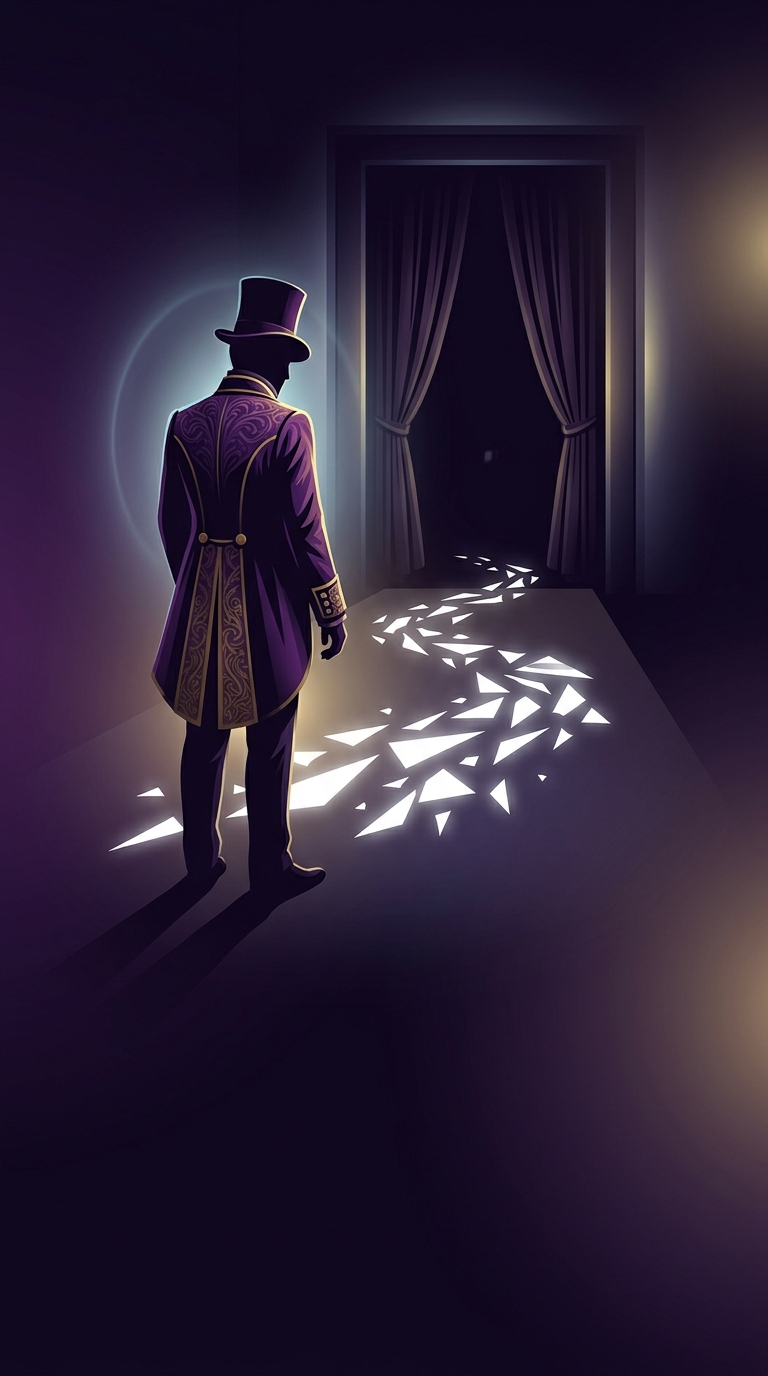
Gene Wilder’s condition for playing Willy Wonka was about the character’s first impression. He wanted Wonka to approach the waiting children with a cane, appear to stumble, tumble forward, and then spring back to his feet. The sudden recovery was the point: the audience would see a man who might be frail—or might be putting on an act.
A Small Stunt, a Lasting Question
That entrance gives the audience a puzzle before Wonka has explained anything. His cane suggests weakness; the fall seems to confirm it. But the quick recovery undermines both clues. Is he genuinely unsteady, or has he staged the whole thing? Viewers have to keep revising their judgment of him.
The movement also establishes Wonka’s power over the scene. The children have been waiting for the factory owner, and he arrives by making them—and the audience—uncertain about what they are seeing. His first appearance is less a conventional greeting than a demonstration that ordinary expectations may not apply.
Why Wilder Made It a Condition
Wilder wanted that uncertainty to shape the character from the start. If Wonka entered plainly and confidently, his eccentricity would be something he announced in dialogue. The cane-and-tumble entrance lets the audience experience it instead: even a simple act of walking becomes difficult to interpret.
In Willy Wonka & the Chocolate Factory (1971), that opening gesture offers a compact guide to Wonka’s appeal. He is funny, theatrical, and hard to trust—not because the film explains him, but because his very first move leaves two incompatible possibilities in view.