How Chest Contact Carries a Tango Lead
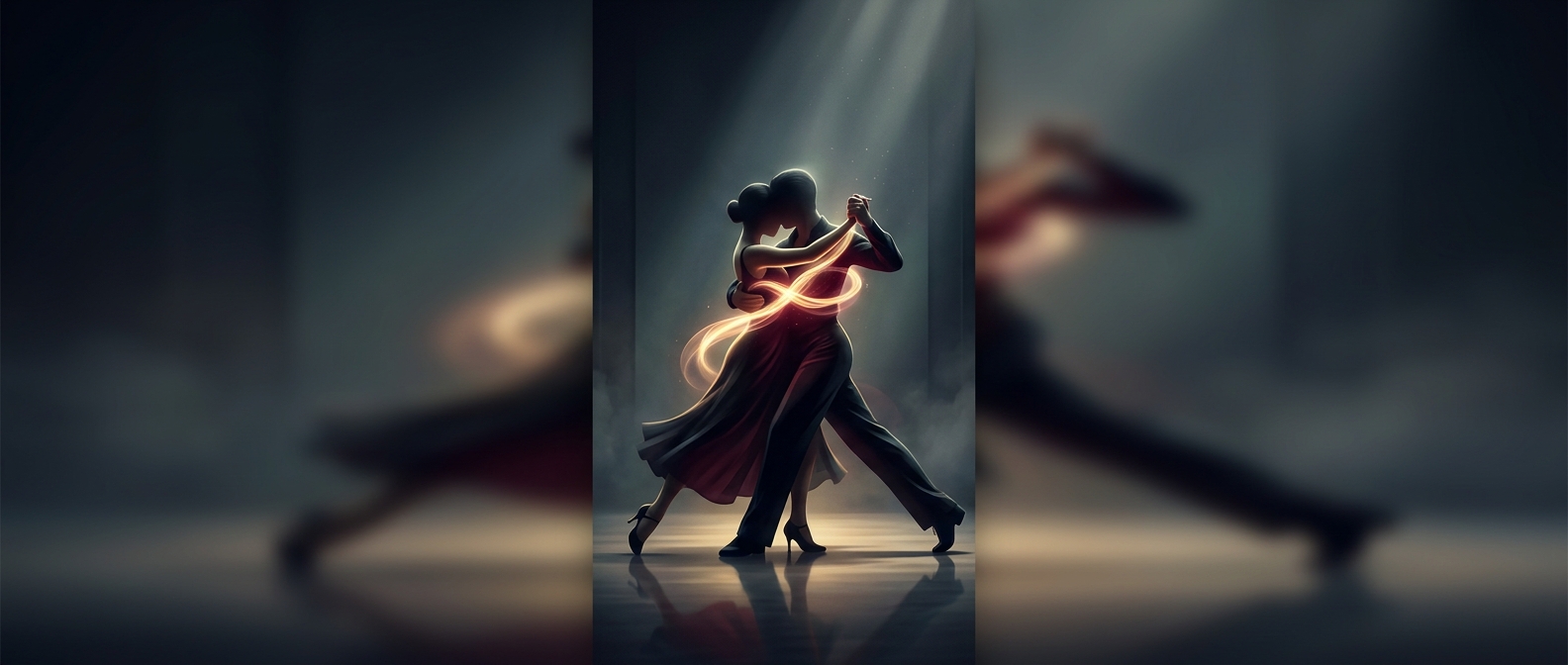
In close-embrace tango, the dancers’ upper bodies stay in contact while their legs remain free to move. That contact gives the follower a steady reference point: a small change in the leader’s balance or direction can be felt before it becomes a visible step. The chest connection is not a shove or a command to copy a fixed sequence. It is a way to share movement information through the body.
From Weight Shift to Step
A leader can shift weight from one foot to the other, turn the torso, or begin traveling across the floor. Those changes alter the contact between the dancers. The follower senses the shift and responds by adjusting their own balance and choosing where to place a foot. When the signal is clear, a quick leg movement can feel like the natural continuation of the shared motion rather than a sudden instruction.
The mechanism depends on balance, not force. If one dancer leans heavily on the other, the contact becomes harder to read and harder to move with. A responsive embrace stays connected while allowing each person to support their own weight. The legs can then make sharp steps, pivots, or pauses without the upper bodies losing their shared reference.
A Conversation, Not a Script
The connection also helps explain why tango is improvised. The leader proposes changes in direction and timing; the follower interprets them in real time, and both dancers adjust to the space around them. The embrace makes that exchange possible even when the music calls for a sudden pause or a rapid sequence. The chest contact is less a grip than a quiet channel for balance and timing—one that lets two dancers move quickly without having to plan every step in advance.