How a Hula Gesture Carries a Line of Meaning
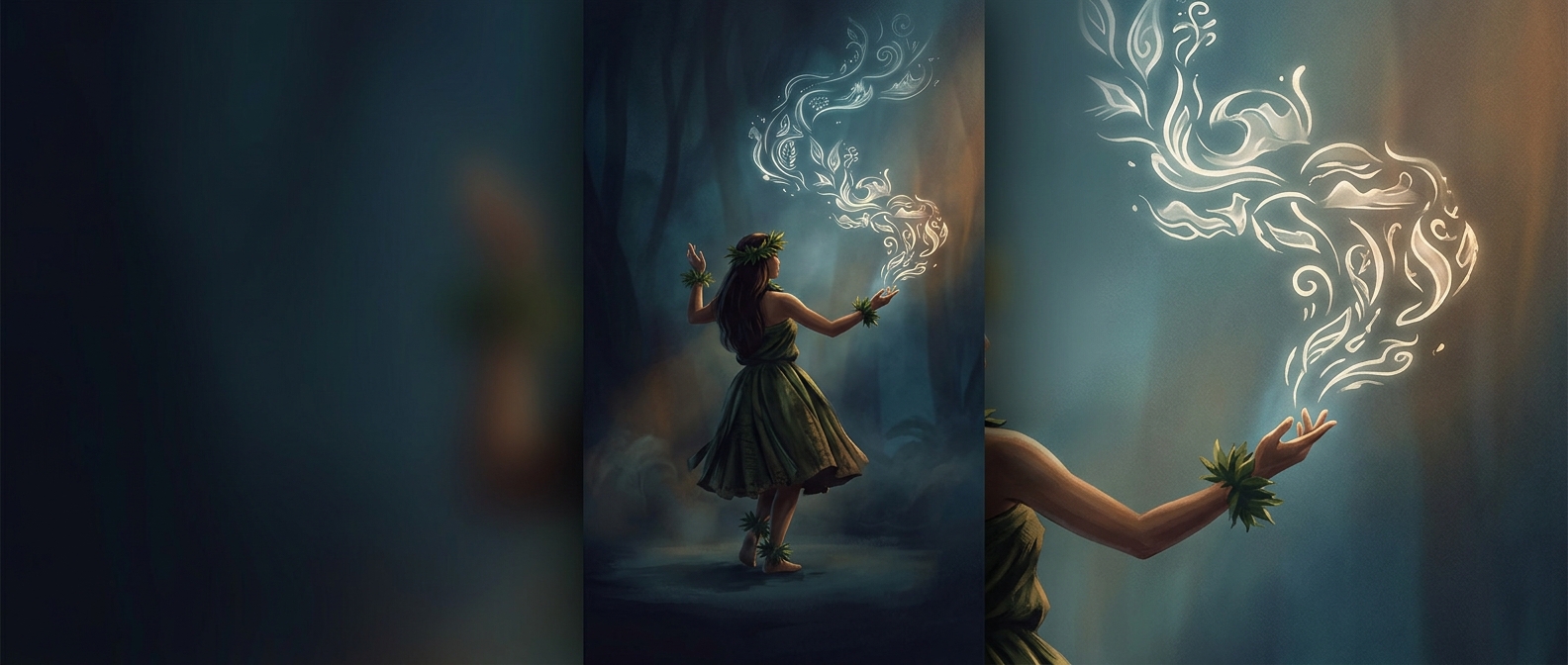
In hula, a dancer’s movement is tied to a mele—a Hawaiian song or chant. The hands may trace an image named in the words, such as rain or the sea, while the dancer’s posture, gaze, and rhythm help shape how that image feels. A gesture is therefore not simply decoration: it helps make the language visible.
The movement does not work like a universal sign language in which every motion has one fixed translation. Its meaning depends on the particular mele and the way it is taught and performed. A gesture for a natural feature can also carry emotional weight when it appears within a story about a person, place, or event. Viewers who know the words and conventions can follow layers that might not be obvious from the motion alone.
Why the Chant and Dance Belong Together
Hula is learned through instruction and practice, not by assembling a set of gestures at random. Dancers coordinate movement with the chant’s words, phrasing, and pulse, so the story unfolds in time: a hand may mark an image as it is sung, while the body’s movement connects that moment to what comes before and after.
That connection makes hula more than a visual accompaniment to music. The dancer interprets the mele through movement, giving an audience another way to encounter its imagery and feeling. A brief gesture can point to a landscape, but its place in the chant—and the story around it—gives that image its fuller significance.