How a Pointe Shoe Makes Standing on Tiptoe Possible
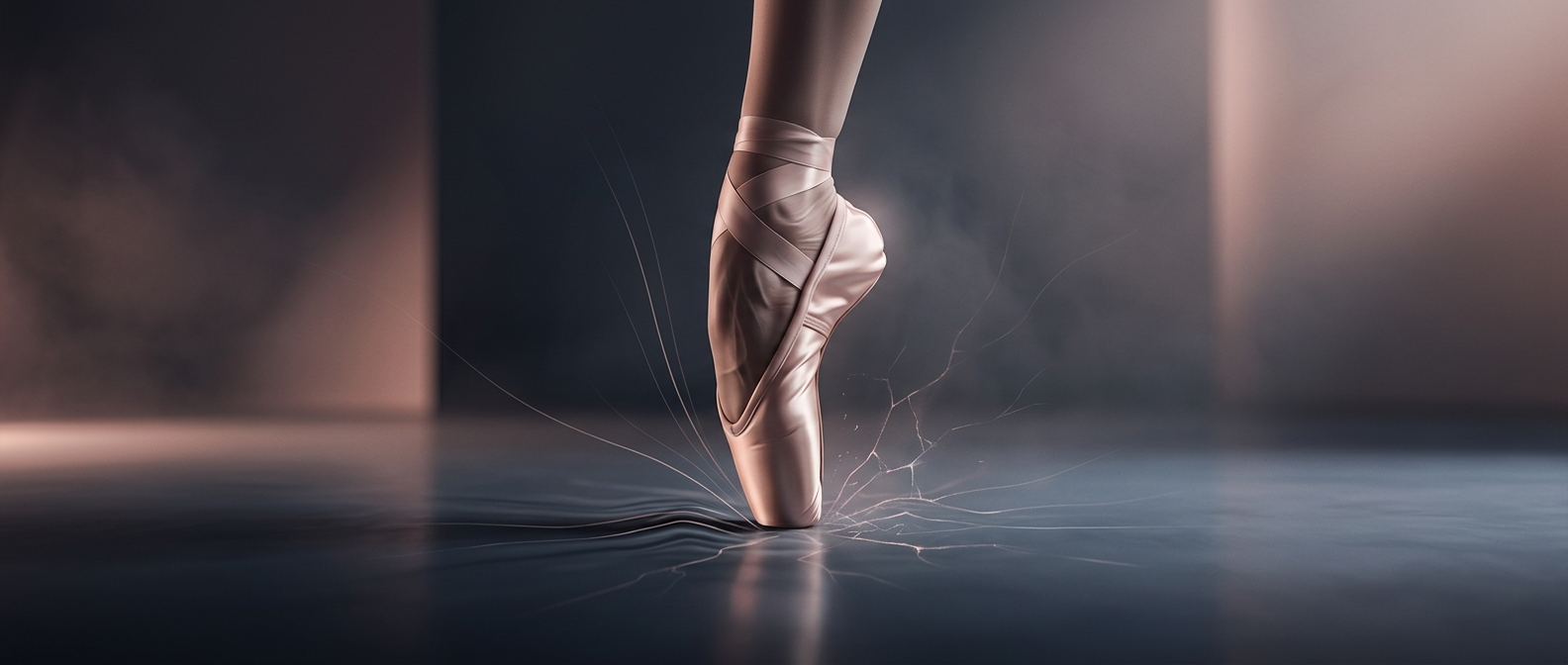
A pointe shoe does not lift a dancer onto a hard, narrow spike. Its front contains a firm, shaped structure called the box, which surrounds the toes and ends in a small, flattened platform. That platform gives the dancer a surface to balance on; the box helps keep the toes from folding under the body's load.
Inside the shoe, layers of fabric and paste form the box, while a stiff sole, or shank, runs beneath the foot. The shank supports the arch as the dancer rises onto pointe. Together, these parts create a stable path for force from the floor through the shoe and into the foot and leg. The satin covering is the visible finish, not the main source of support.
Why Fit and Technique Matter
The shoe does not make the pressure disappear. A dancer's toes still bear substantial force, shared across the front of the foot according to the shoe's fit and the dancer's position. If the box is too roomy, the foot may sink; if it is too tight, toes can be squeezed. Either can make balance and control harder.
Going onto pointe also depends on strength and alignment. Dancers train their feet and legs to rise with control, keeping the ankle and body organized over the platform rather than dropping their weight onto the toes. The shoe is supportive equipment, but it cannot substitute for that preparation.
That tiny platform is the key: it turns a precarious tiptoe position into a narrow, usable base. Even so, the dancer must continually make small adjustments to stay centered above it.