The shoe becomes a percussion instrument
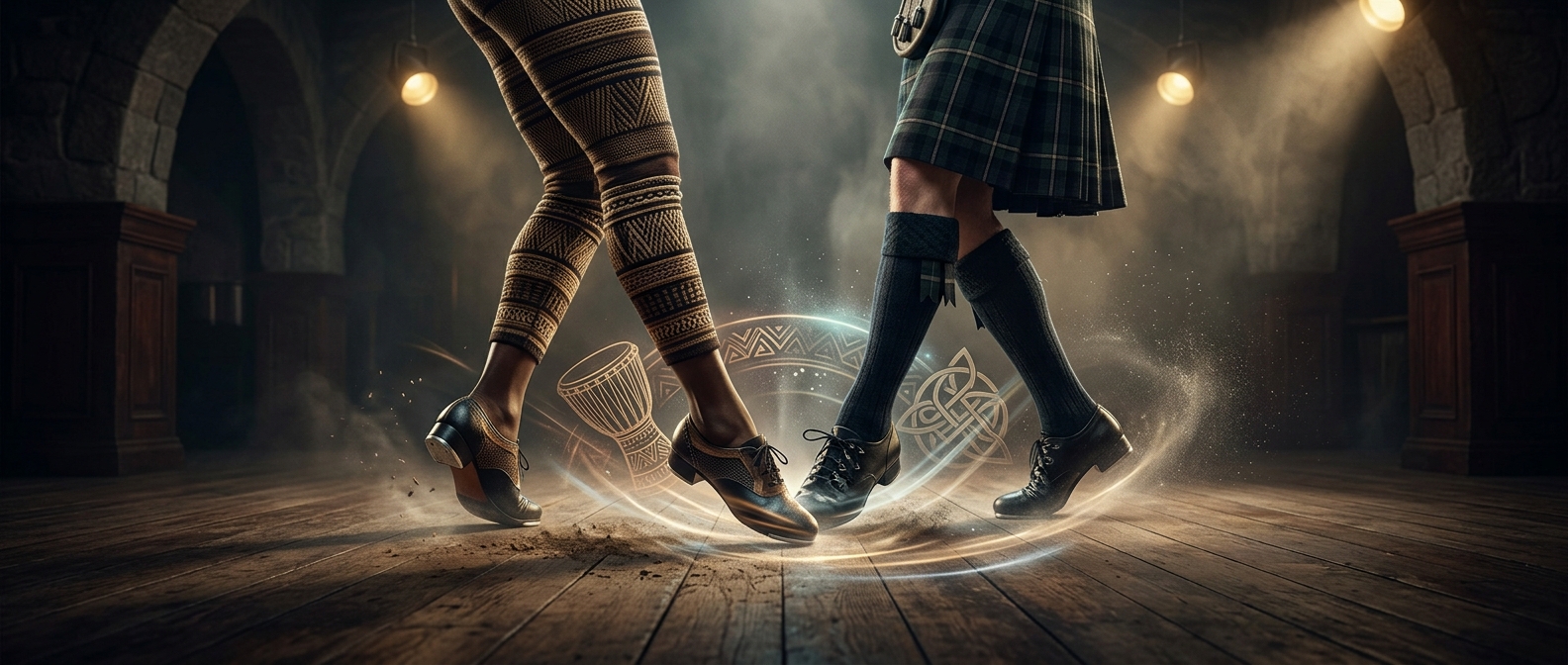
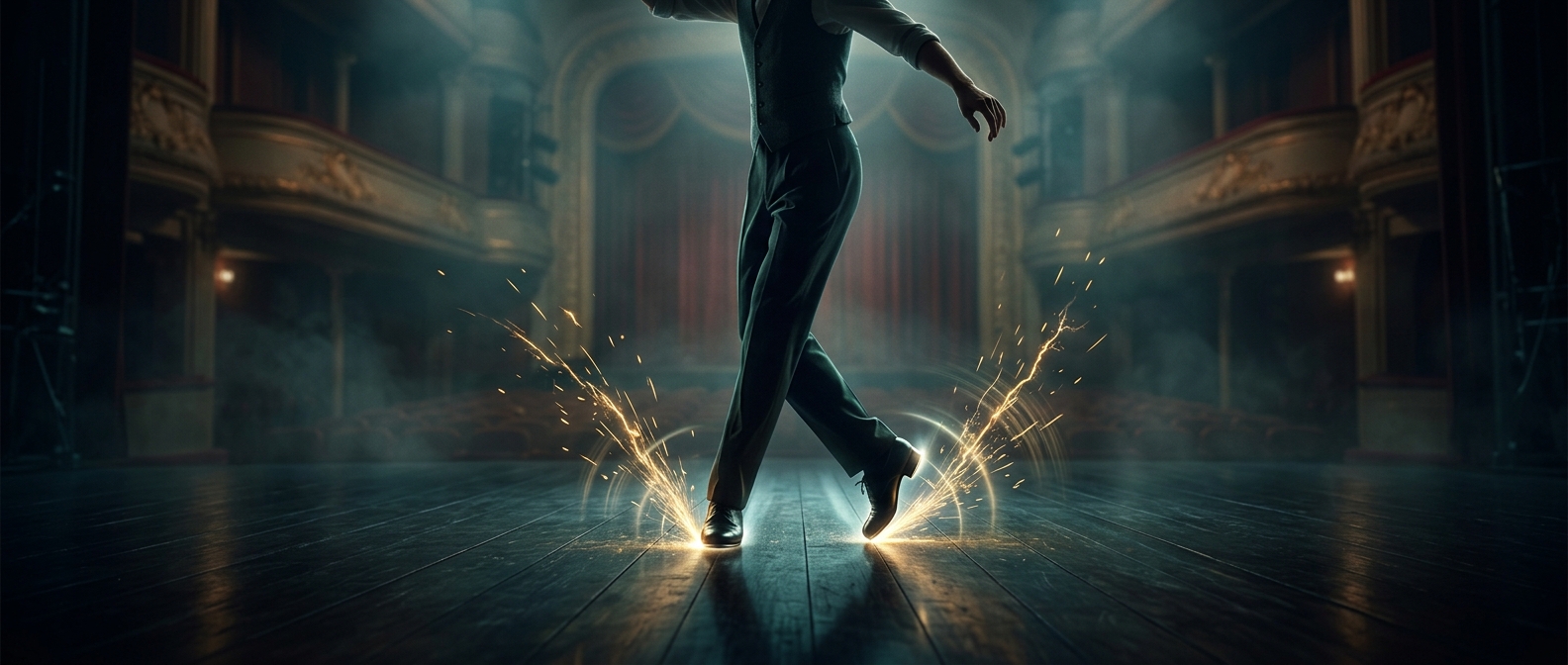
A tap dancer does more than make noise by striking the floor. Different parts of the shoe can produce distinct attacks: a toe tap may sound crisp and bright, while a heel tap often has a lower, heavier quality. By shifting weight, changing the angle of a foot, or striking with one edge rather than another, the dancer can vary those sounds without changing shoes.
The floor is part of the instrument, too. A hard surface reflects the impact clearly; a softer one absorbs more of it. The same step can therefore sound different from room to room, much as a drum changes character with its surroundings.
Rhythm comes from controlling the impact
Tap dancers build phrases from steps that strike, brush, scrape, or briefly skim the floor. A brush passes across the surface; a strike lands more directly. Combining these actions lets dancers place several sounds inside a beat, leave deliberate gaps, or emphasize an unexpected part of the rhythm. Those shifted accents are called syncopation.
The challenge is to make the feet both musical and precise. A dancer has to control how much weight reaches each tap: enough to speak clearly, but not so much that every sound becomes equally loud and the rhythm loses its shape. The upper body can stay relatively still while the feet carry a quick, intricate pattern, or movement through the space can make that pattern feel larger and more forceful.
A visible rhythm
Because the sound is made by movement, audiences can watch the music being produced. The taps are not simply accompaniment added to a dance; they are the dance’s audible structure. A pause, a run of rapid strikes, or a sudden change in accent can function like a musical phrase—and the dancer’s next step can answer it.