How two footwork traditions reshaped each other
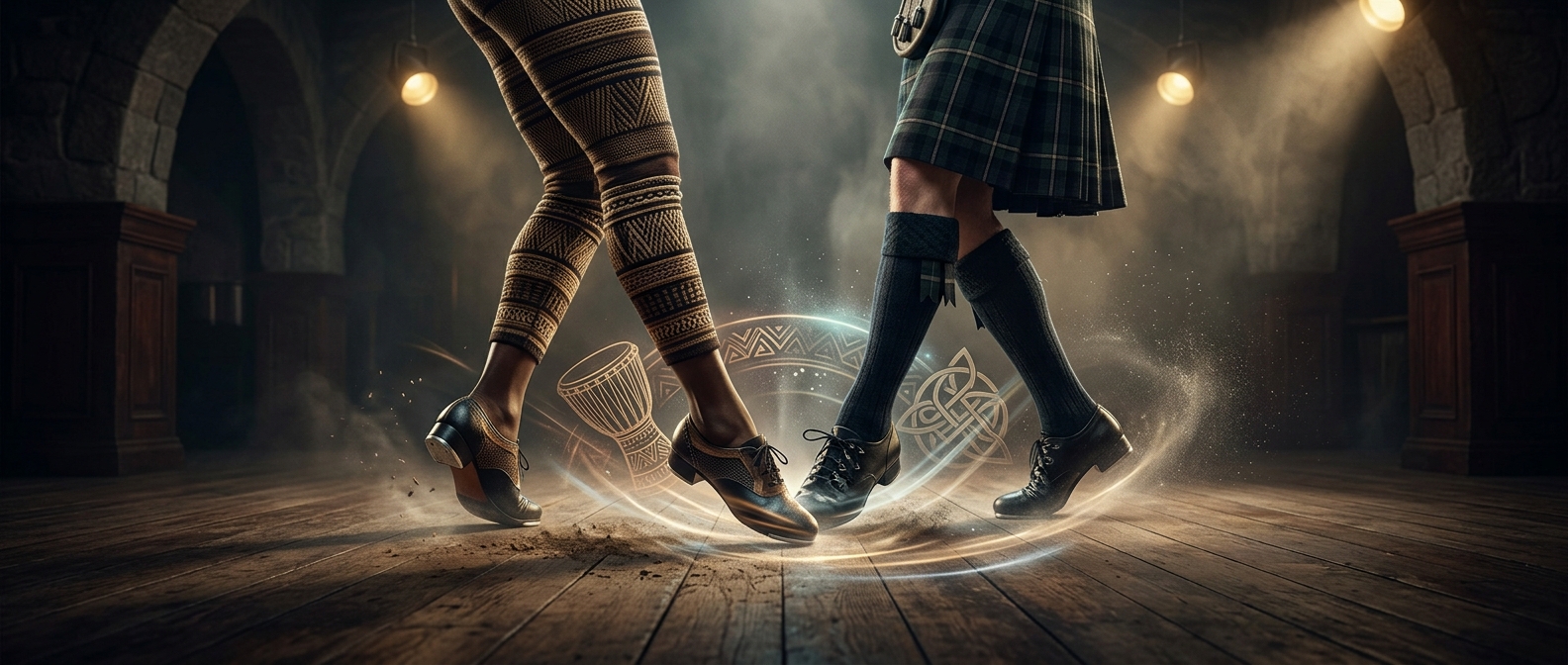
Tap did not arise from a single meeting or a single inventor. It developed over generations in the United States, where African American dance traditions encountered European step dances, including Irish and Scottish forms. The traditions brought different strengths: African-derived styles often made rhythm a flexible, expressive part of the whole body, while step dances foregrounded intricate patterns struck with the feet.
That contrast was not a clean division. Dancers watched, borrowed, competed, and adapted. In shared social and theatrical settings, footwork could become both a rhythmic conversation and a contest of speed and invention. The resulting dance drew on multiple traditions rather than simply copying one of them.
When the feet became instruments
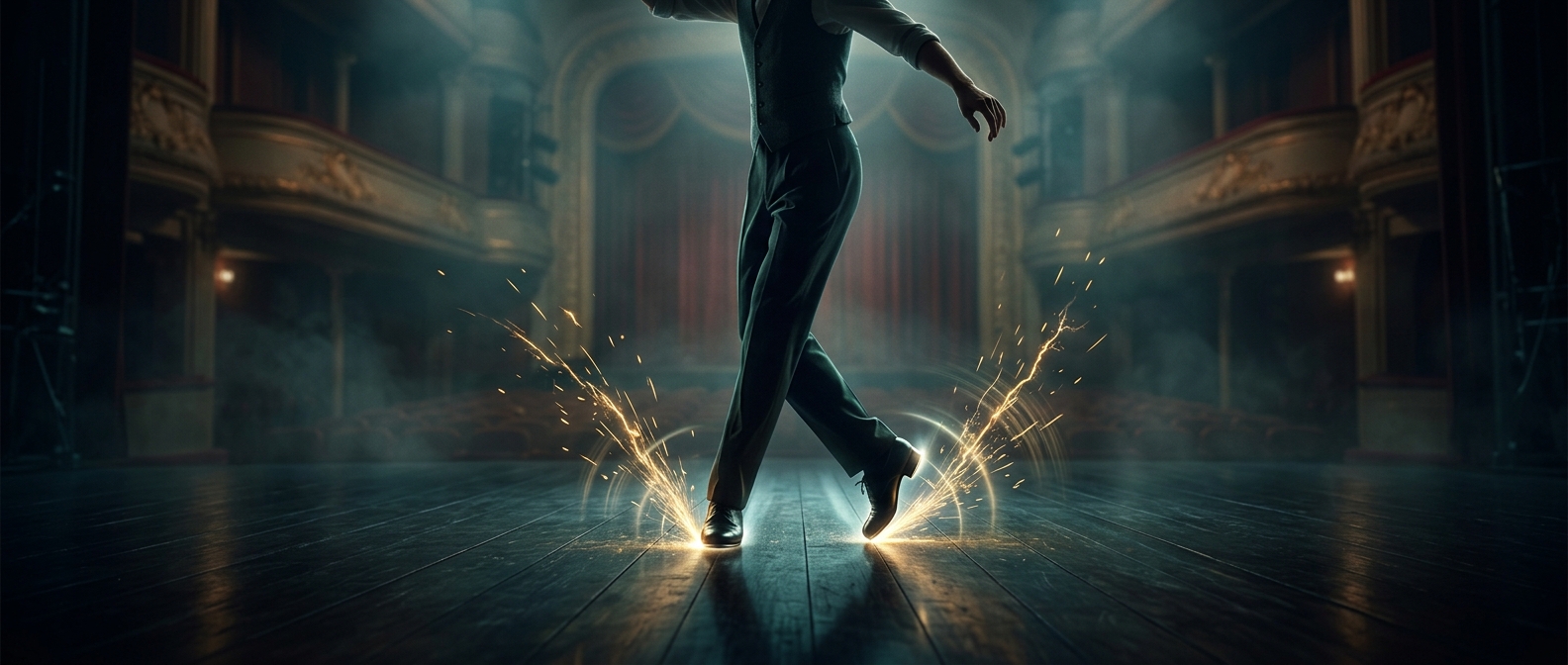
Hard-soled shoes made steps audible, but tap’s defining sound came from dancers shaping those impacts into rhythm. A heel strike, toe tap, scrape, or shuffle could create a distinct accent; combining them let a performer make patterns that sounded almost like a drum line. The dancer was not merely moving to the music—footwork could answer it, interrupt it, or carry the beat on its own.
As tap moved onto stages, that audible precision became part of its appeal. The shoes helped project rhythm to an audience, and choreographers could build routines around increasingly elaborate patterns. Tap’s blend is therefore heard as well as seen: inherited dance steps became material for a distinctly percussive form of performance.