From court dance to theatrical spectacle
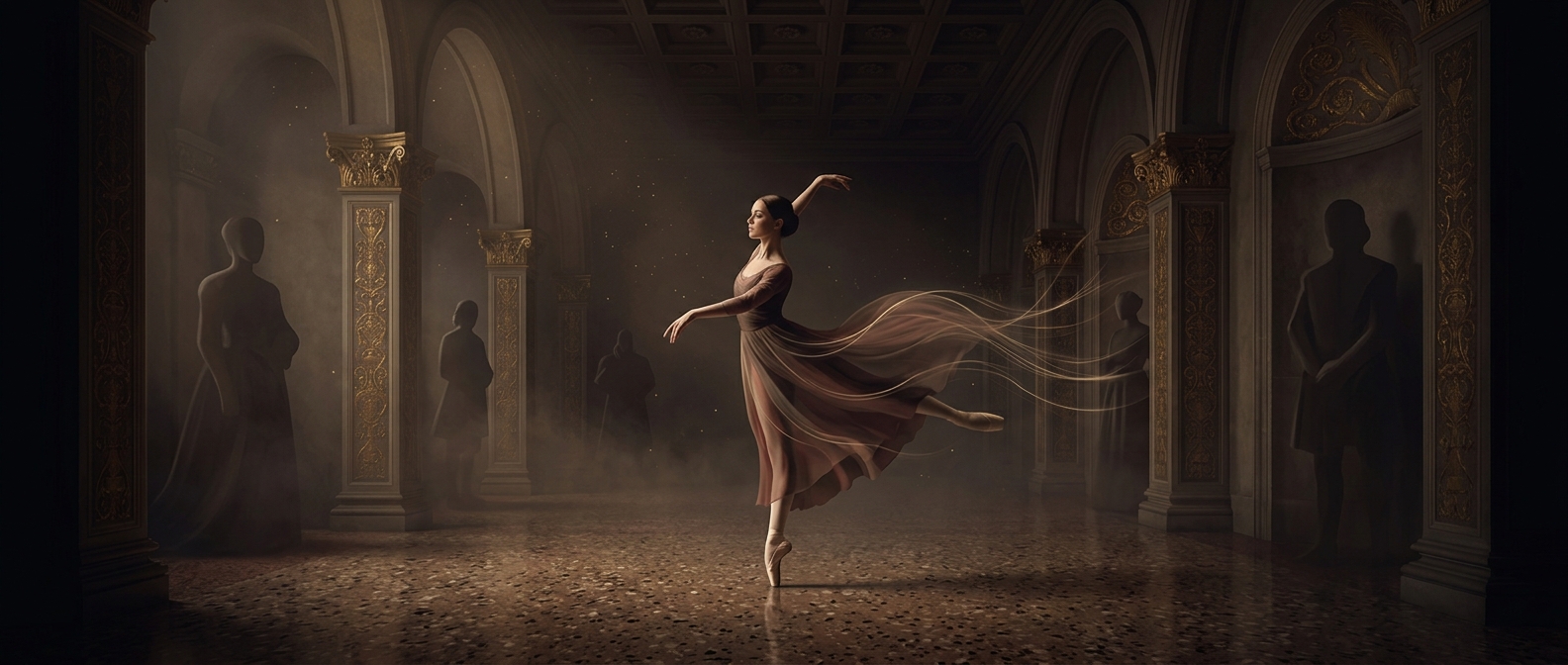
Early ballet grew out of elaborate entertainments staged for Italian Renaissance courts, not from a theater tradition of professional dancers performing for ordinary ticket buyers. These events were woven into court celebrations, where dance could be combined with music, poetry, pageantry, and carefully arranged costumes. Movement was part of a larger visual display: the guests watched bodies and scenery form patterns that helped turn a celebration into a performance.
A dance that carried political meaning
The structure mattered as much as the steps. A ruler who could organize a polished, coordinated spectacle demonstrated command over a court’s people, resources, and artistic talent. Courtiers themselves often took part, so learning and performing dance also signaled refinement and belonging. In this setting, choreography—the planned arrangement of movement—made the court’s social order visible: each person had a place, and the whole display depended on coordination.
From Italian courts to ballet as an art form
The courtly form traveled and changed, especially in France, where it developed into more elaborate court ballets and, over time, a more formal theatrical tradition. That evolution took centuries; the Italian court entertainments were an important beginning, not ballet in its later, familiar form. The lasting idea was that dance could do more than accompany a party: arranged movement could create a public spectacle in which power, ceremony, and artistic skill were all on display.