How square dancing became a state symbol
An official state dance is a cultural honor, not a claim that a dance originated in that state or is danced by most residents today. Square dancing’s spread across state lists reflects organized campaigns: enthusiasts asked lawmakers to recognize a pastime they regarded as distinctly American and suitable for public celebration.
A dance that made an easy civic pitch
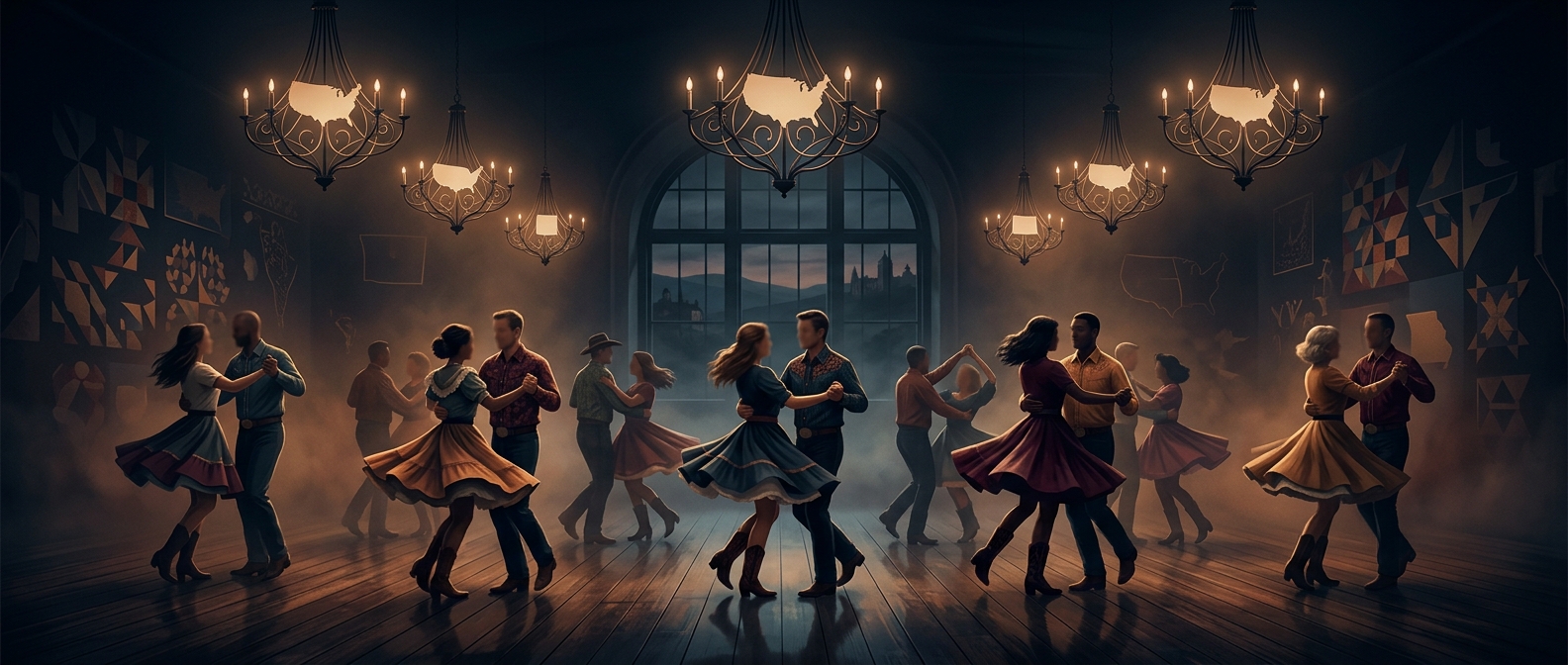
In a traditional square dance, four pairs form a square while a caller announces the steps. That format helped supporters make a practical case for it. The dance could be taught to groups, performed at community events, and presented as recreation that brought people together. Its simple visual story—neighbors following a caller and moving as a group—also made it an appealing emblem of community life.
During the twentieth century, square-dance advocates organized lobbying efforts to persuade state legislatures to adopt the dance. A designation could be won through a bill and legislative vote, giving clubs and supporters a concrete goal without requiring a state to fund a new program. Repeated campaigns carried the same basic idea from one statehouse to another.
Recognition is not the same as popularity
The resulting designations say as much about civic organizing as about everyday dancing. A state dance can honor a tradition that residents value, even if it is not part of most people’s routines. And because official symbols are chosen by lawmakers, a successful campaign may reflect the persistence of its advocates as well as the dance’s broader cultural appeal.
That is why square dancing appears on so many state lists: a participatory tradition gave organized supporters an easy-to-explain symbol to bring before legislators.