Palmas Is More Than Keeping Time
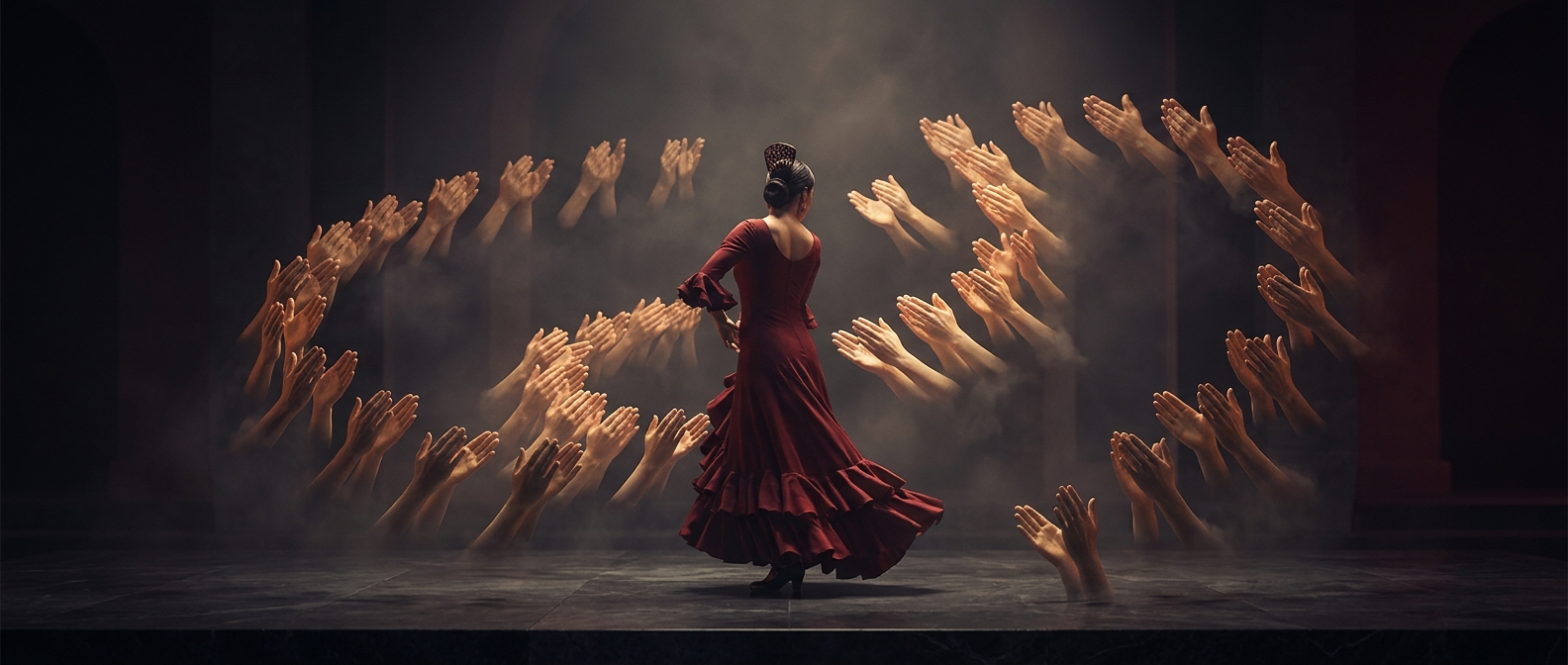
In flamenco, the hand claps are called palmas. They do not simply mark a steady beat beneath the dance. Skilled clappers shape the rhythm’s accents and energy, helping the singers, guitarists, and dancers stay connected as the music changes.
Two Sounds, Two Roles
Flamenco performers use different kinds of palmas. Palmas sordas are muted claps, made by cupping the hands to produce a softer, rounder sound. Palmas claras are sharper and louder, made with the hands more open. The quieter sound can support a singer or sit behind a dense passage; the brighter one can cut through and intensify the pulse.
The choice matters because flamenco rhythms are organized into recurring patterns, often with accents that do not fall where an unfamiliar listener expects. A clapper has to know not just when to clap, but which beat to emphasize and how strongly. A misplaced accent can pull against the dancer’s steps or the singer’s phrasing rather than support them.
Listening as Part of the Performance
Palmeros—the performers who provide palmas—follow the other musicians closely. They may change volume, texture, or emphasis as the singer stretches a phrase, the guitar shifts direction, or the dancer builds toward a sequence of forceful footwork. That responsiveness lets the rhythm feel both structured and alive.
The result is a kind of musical conversation: claps help make the pulse audible, while the performers’ choices determine whether it feels restrained or driving. In flamenco, the hands are not just keeping up with the performance; they are helping steer it.