A ballet can inherit more than one ending
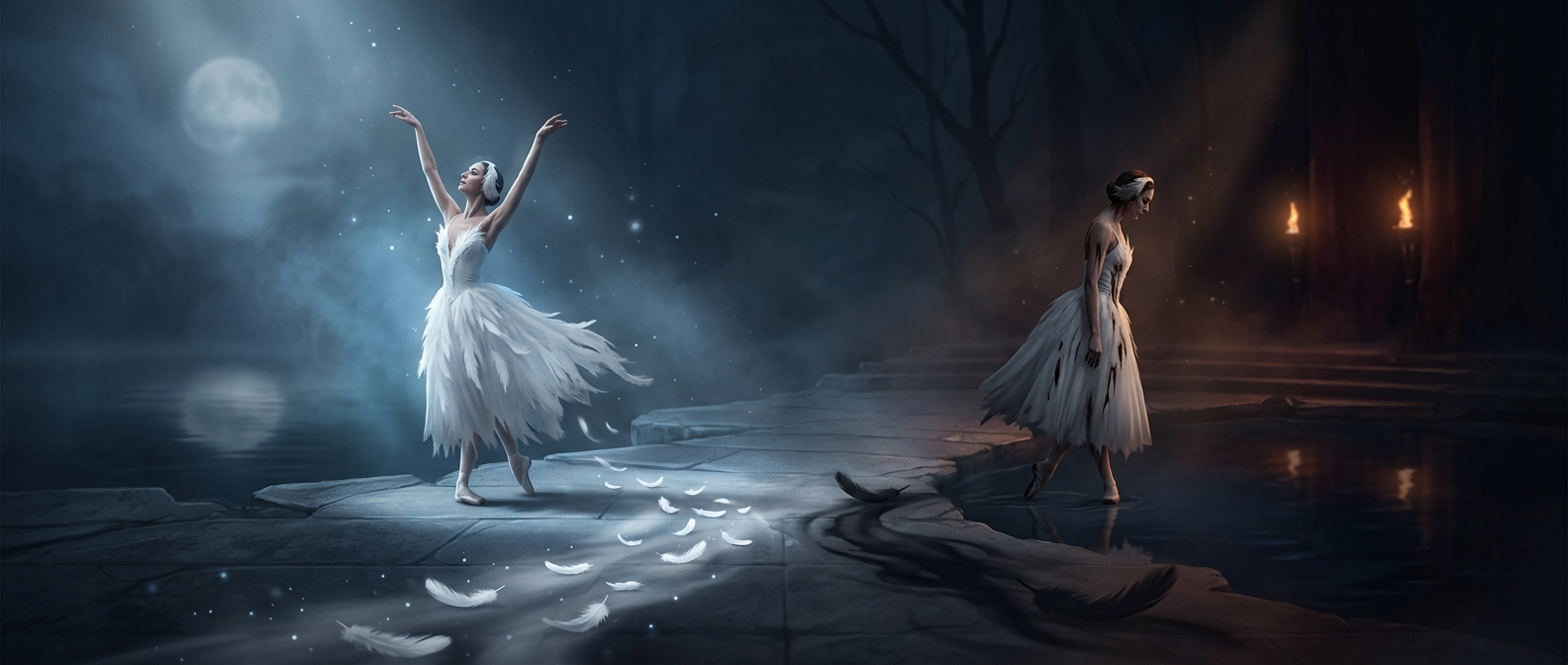
Unlike a novel, Swan Lake does not arrive in every theater as one fixed text. The ballet’s story is carried through music, dance, mime, and stage action, and companies perform versions shaped by different choreographic traditions and adaptations. The finale is one place where those versions can diverge sharply.
In the tragic approach, the lovers’ resistance to the sorcerer Rothbart ends in death; their reunion is often suggested as something beyond earthly life. In happier stagings, Rothbart is defeated and the lovers survive, or the curse is broken in a way that lets them remain together. These outcomes change the meaning of the same struggle: sacrifice and transcendence in one version, victory and release in another.
The ending is made onstage
A company’s choice is not just a different last pose. Choreography—the movement and staging created for dancers—determines how the final conflict unfolds: who confronts Rothbart, whether the lovers fall or prevail, and what the audience sees after the music’s climax. Directors and choreographers can also adjust the story’s action to support their interpretation.
Because there is no single ending that every production must use, audiences may encounter Swan Lake as a tragedy one night and a romance with a happy resolution another. The ballet’s familiar music and central characters remain, while the final sequence changes what their story says about love: whether it can overcome the curse, or only survive it in loss.