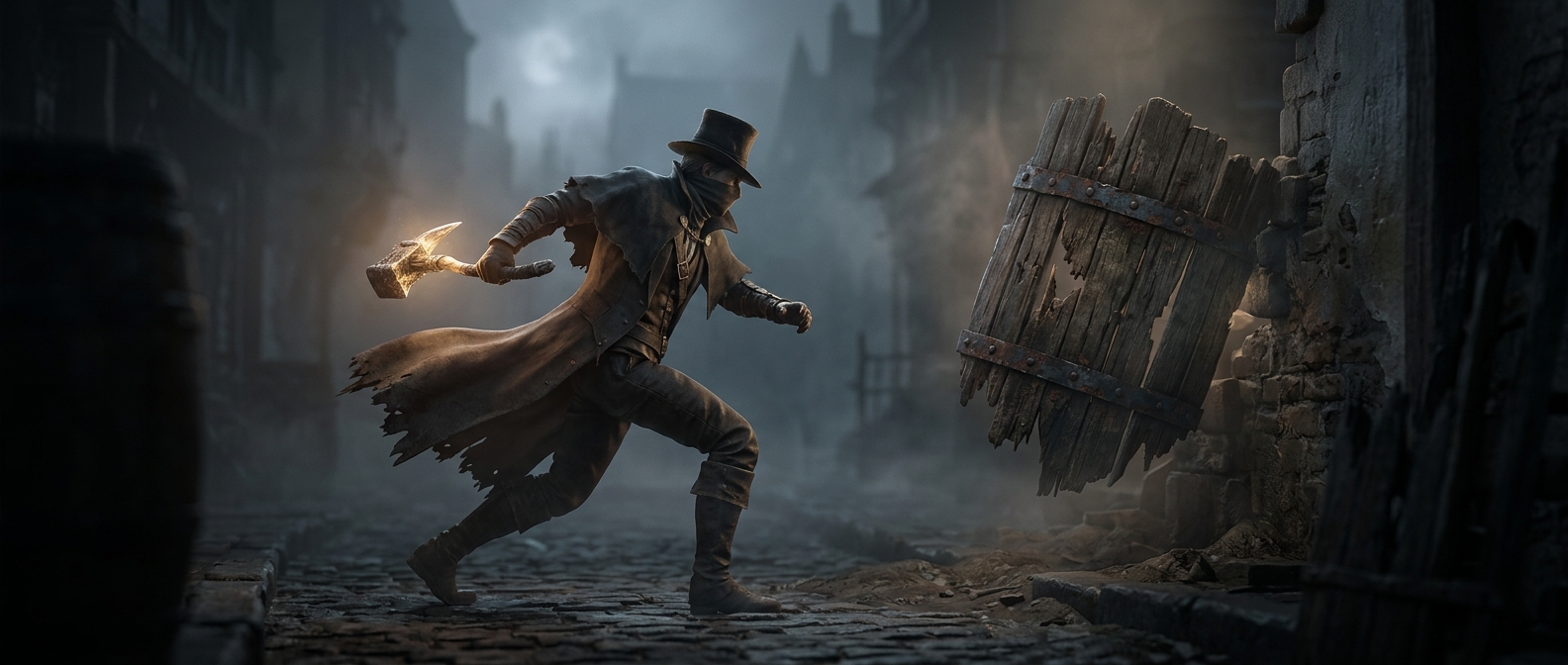
Why Bloodborne’s Wooden Shield Feels Like a Trap
The shield is not useless because it does nothing. It can absorb some attacks. The problem is what happens next: a hunter who stays behind it gives up the movement and timing that make Bloodborne’s combat work. The rough wooden plank offers poor protection against the creatures hunters are expected to face, so blocking can still leave the player hurt—and spending time holding position can make it harder to escape a follow-up strike.
That weakness is deliberate. In the base game, the Wooden Shield is a conspicuous exception to a combat system built around getting out of danger, not waiting behind cover. (The later The Old Hunters expansion adds another shield, but neither turns turtling into the central strategy.)
The Game Rewards Getting Back In
A dodge moves the hunter clear of an attack and can put them beside or behind an enemy, where they can strike back. That matters because of rally, the mechanic that lets hunters recover some recently lost health by attacking quickly after being hit. Taking damage is therefore not always the end of an exchange; a fast counterattack can reclaim part of what was lost.
Firearms offer another active defense. A well-timed shot can interrupt certain enemies and open them to a powerful close-range attack. Together, dodging, counterattacking, and interrupting give players ways to answer danger without simply enduring it.
The plank’s real lesson is about commitment: in Bloodborne, safety often comes from reading an enemy and acting at the right moment. A shield may seem like the cautious choice, but the game’s most reliable protection is usually movement.