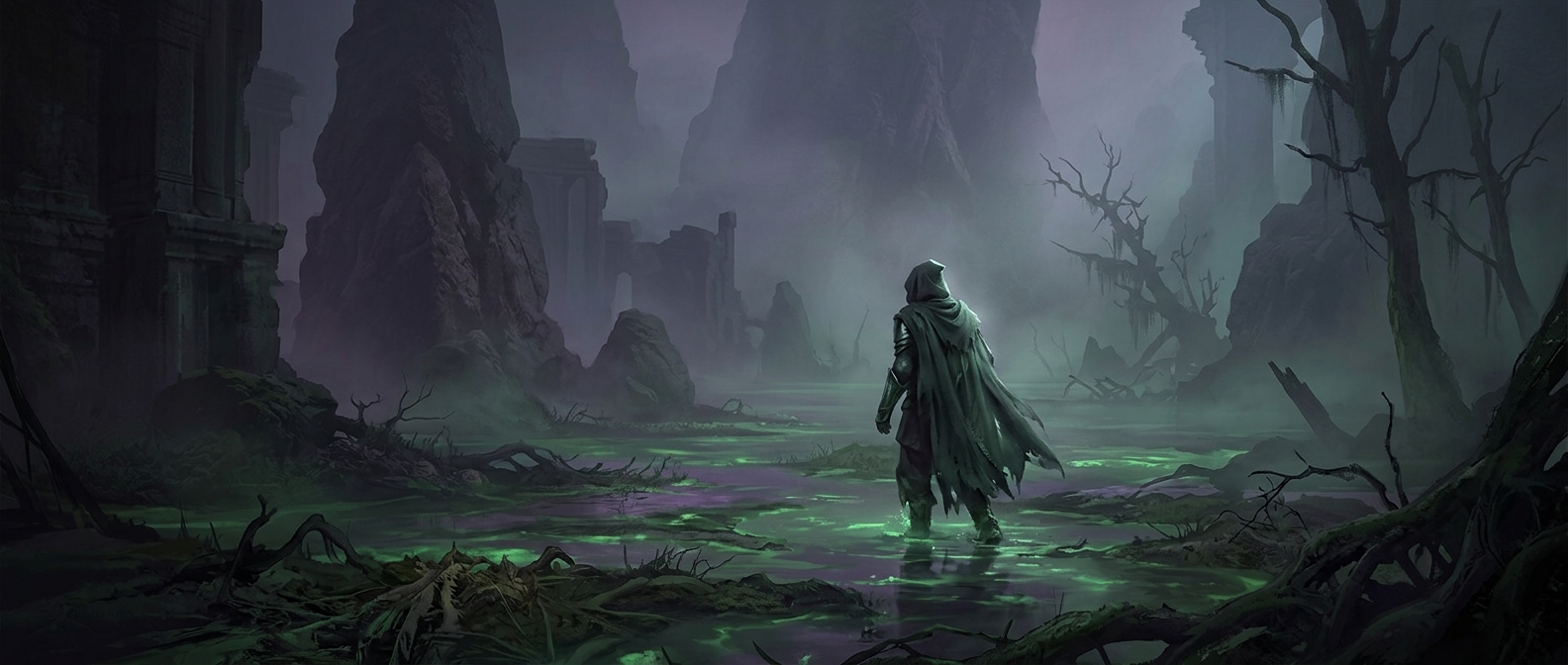
When the Ground Becomes the Enemy
Elden Ring’s swamps are not just gloomy scenery. In places such as Caelid’s Swamp of Aeonia and the Lake of Rot, the terrain itself can inflict a dangerous status effect. Scarlet rot builds up while a character is exposed; once the buildup reaches its limit, it causes repeated damage over time. The player must manage the landscape as well as whatever is attacking from it.
That changes the usual rhythm of exploration. A clear path across the mud may be safer than a direct dash, and stopping to fight can mean spending more time exposed. Healing can keep a journey going, but it does not make the hazardous ground disappear. The danger is especially sharp when enemies force a player to choose between engaging and moving toward solid ground.
A Hazard That Shapes the Route
The swamp turns navigation into a resource decision. Players can look for islands of safe footing, use items that resist or clear the buildup, or accept the damage and press on. Each choice has a cost: a detour takes time, protective supplies may be limited, and crossing quickly can leave less room to recover from a mistake.
That is why these areas can feel larger than their boundaries suggest. The mud slows progress not only through its physical space but through the attention and healing it demands. In Elden Ring, a stretch of ground can function like an enemy encounter—one that keeps attacking until the player finds a way out.