A tabletop shape became a television creature
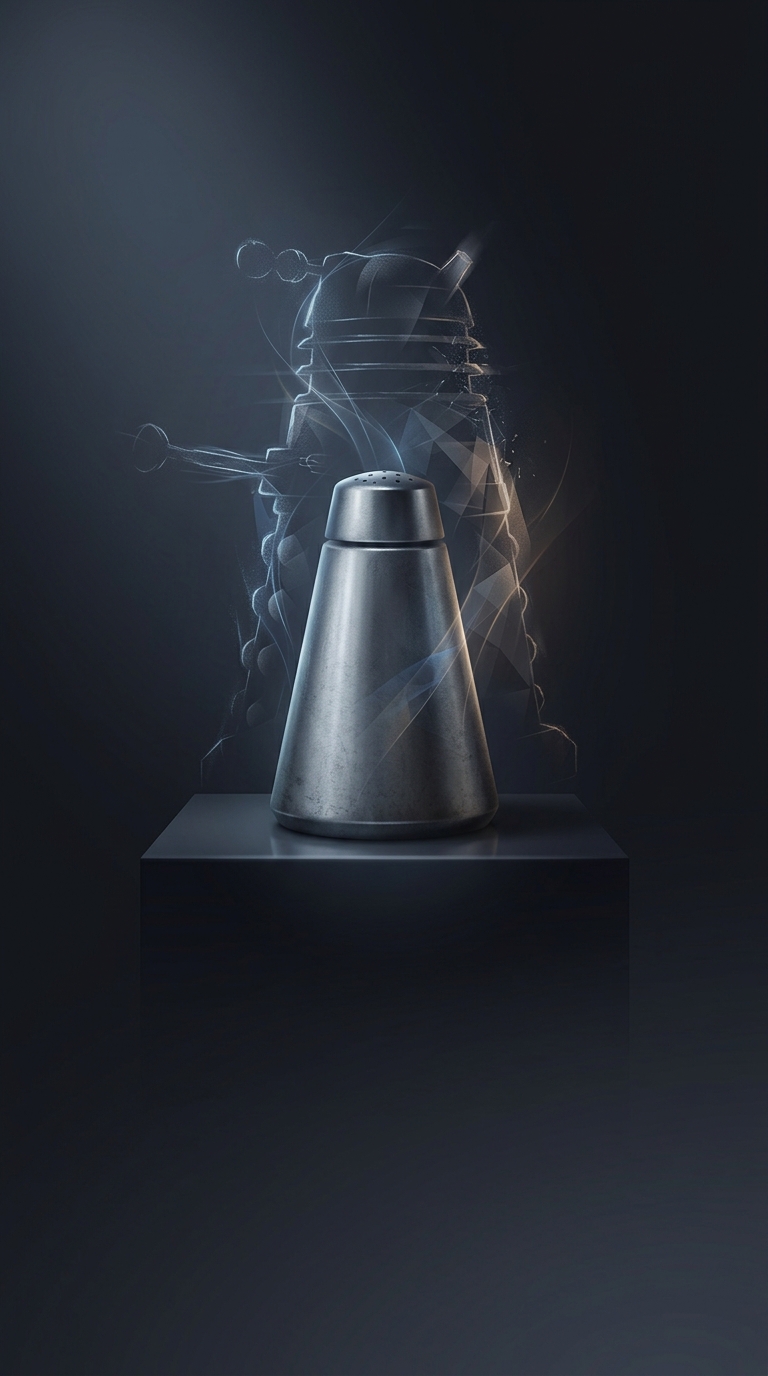
The pepper-shaker inspiration mattered because it offered more than a memorable outline. A rounded body narrowing toward a domed top gave the Dalek a clear silhouette that viewers could recognize even on a small television screen. The design then added features that made the shape seem purposeful: an eyestalk to suggest sight, a swiveling upper section, and projecting arm-like tools.
Those parts also helped the creature communicate without a human face. Its eyestalk could turn toward a character, while the rest of its rigid body stayed fixed and unreadable. The result was a machine that seemed to notice people without revealing what it felt.
The shape had to work on set
A Dalek was not just a drawing or a model in the background. In the original television production, the effects team built rolling props, so the design had to move through real studio spaces and be operated during filming. A broad lower body concealed the machinery and the person inside; wheels let the prop glide rather than walk.
That practical limitation became part of its character. Without visible legs, the Dalek seemed to advance as one solid object, its smooth movement at odds with its threatening voice and weapons. The pepper-shaker form was therefore not merely a visual joke: it could be turned into a workable prop whose shape made the creature instantly legible and unnervingly inhuman.