How early television became “high definition”
In the 1930s, television was still being worked out as a practical system, not just an idea. Early mechanical sets made pictures by sweeping a spinning, perforated disc across an image. Their low-resolution pictures contained relatively few horizontal lines, so faces and objects appeared coarse and indistinct.
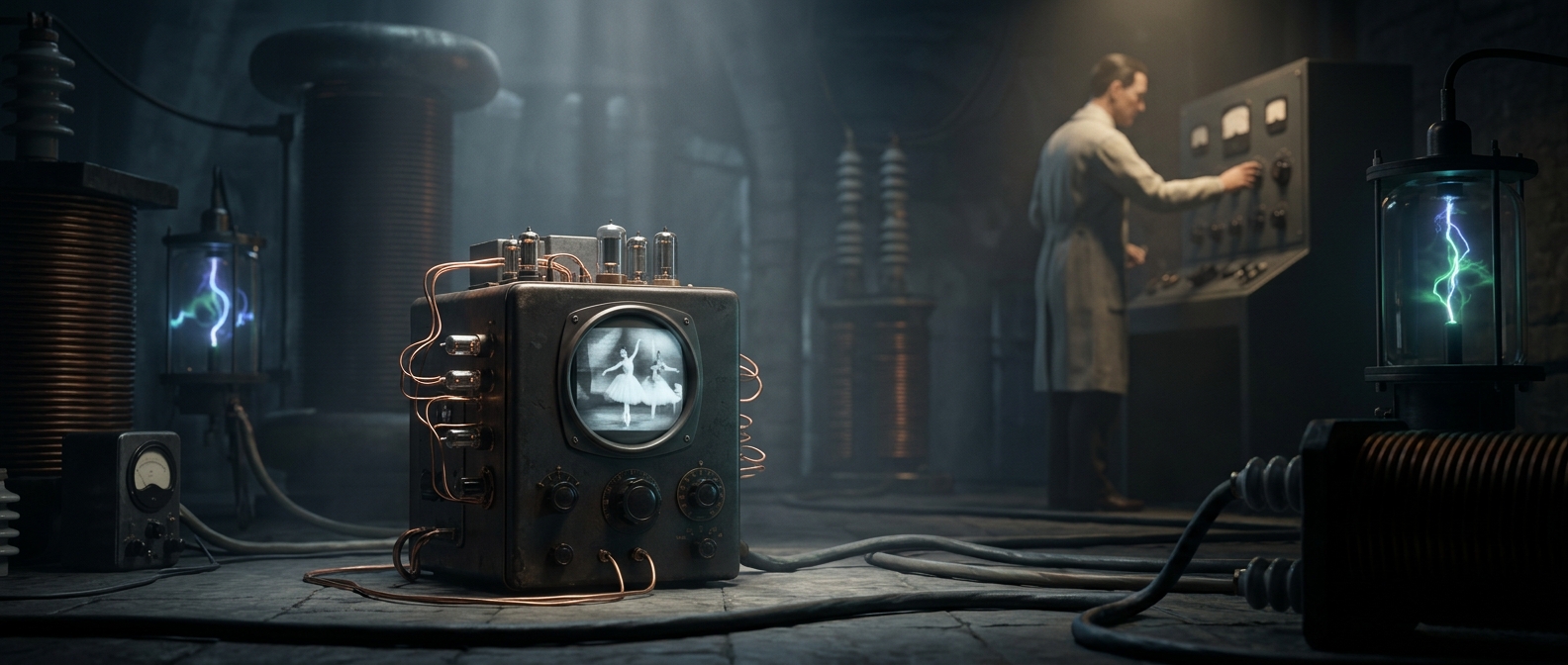
Electronic television replaced that spinning scanner with a camera tube that converted light into an electrical signal. The signal could then control an electronic display, building the picture line by line. Systems with several hundred lines captured far more detail than mechanical television could manage. “High definition” was a comparison with the technology of the day—not a claim that these pictures matched modern HD.
Testing the whole chain
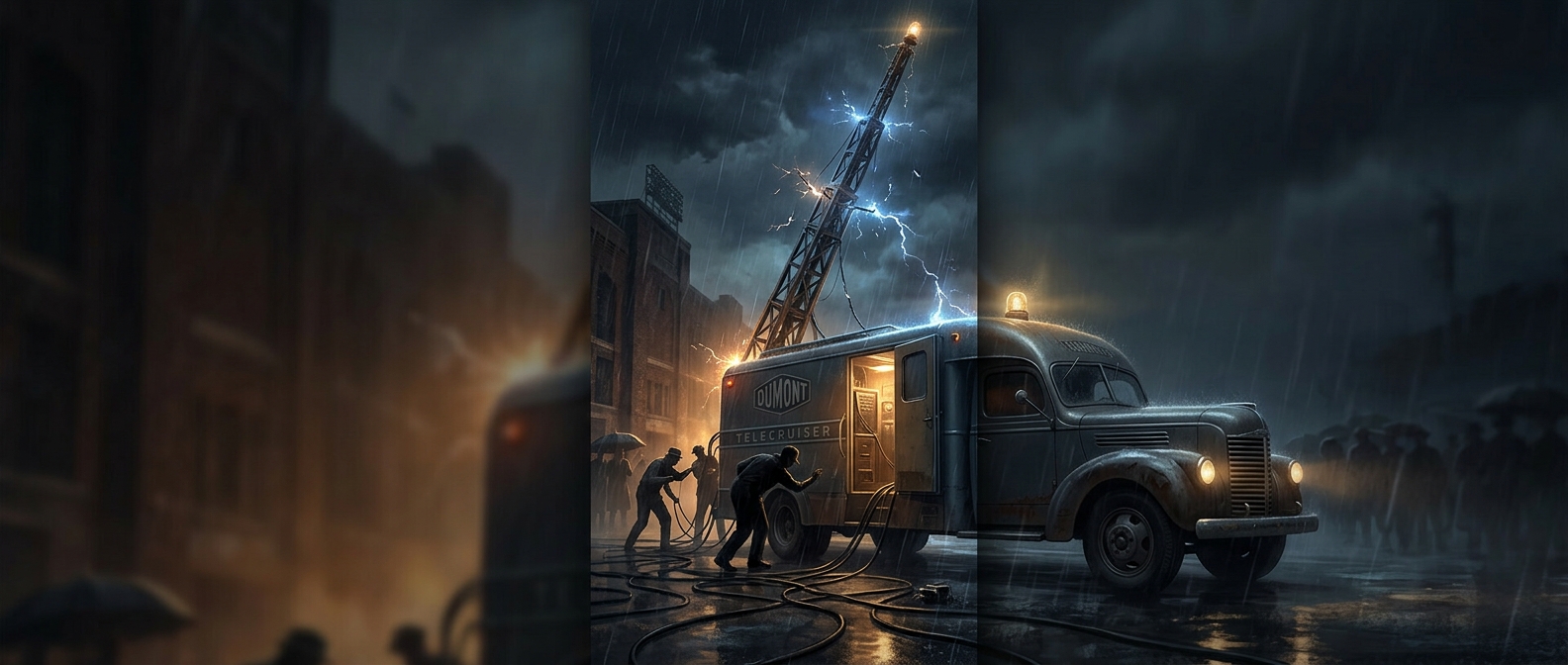
A sharper picture depended on more than a camera. Broadcasters had to check that the image could be captured, transmitted and reconstructed reliably at the receiving set. The number of scan lines, the speed of the picture and the equipment at both ends all had to work together. A system that produced a detailed image in a laboratory was not useful for broadcasting if its signal or receivers could not support it.
That is why the decade’s experiments mattered: they tested television as a complete service, from camera to screen. The next hurdle was commercial use—making the technology available beyond trials. World War II interrupted that transition. The development had already shown what electronic television could resolve; what it could not guarantee was that viewers would soon be able to watch it.