Why a Forecast Takes Practice in an Empty Studio
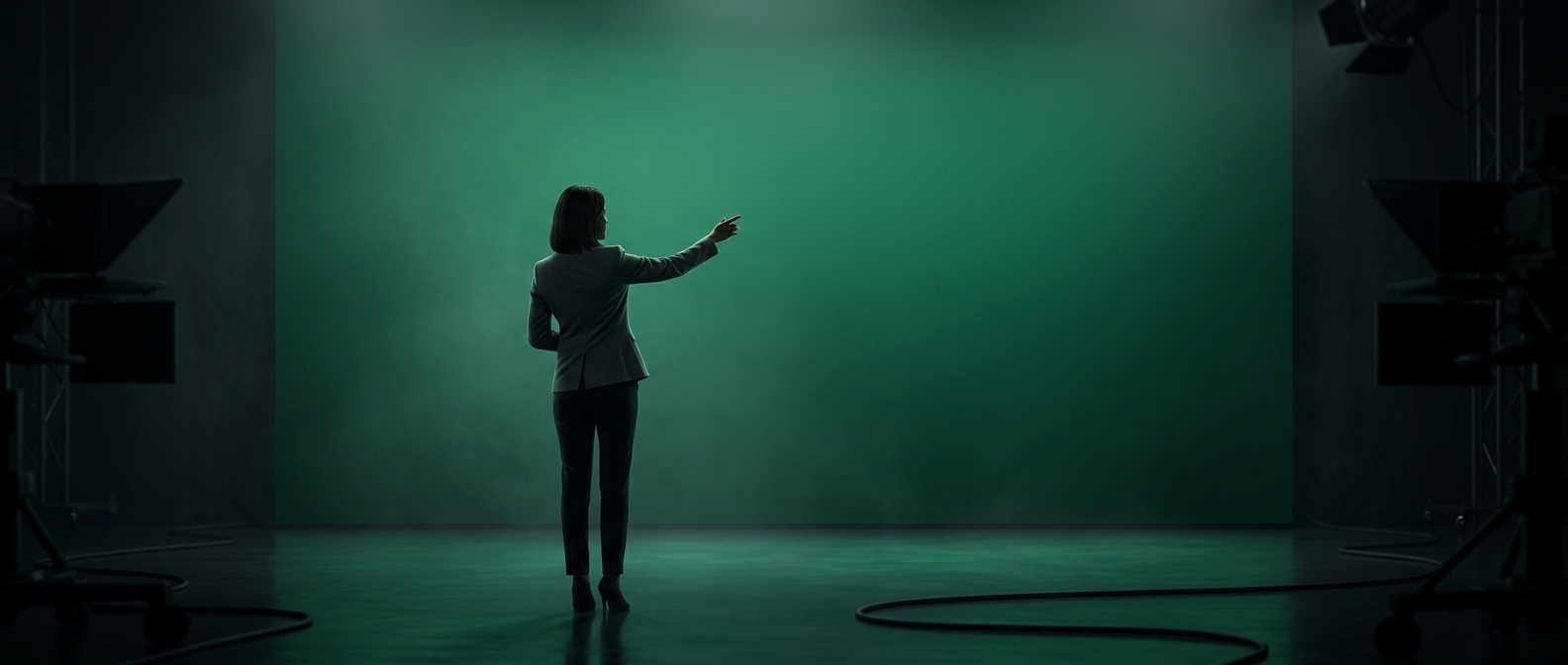
A green screen is not a map at all: it is a plain backdrop whose color can be digitally removed. A computer replaces that green with the forecast graphics, making the presenter appear to stand beside a storm track or point toward a city. The substitution may happen live or during production, but either way the map is not physically where the presenter’s hand seems to land.
The Monitor Becomes a Stand-In for the Map
To orient themselves, presenters watch a preview that shows their image alongside the graphics. That gives them a usable reference, but it also creates a coordination problem. The preview’s left and right can feel reversed relative to the presenter’s own body: reaching toward one side of the displayed map may require moving the opposite way in the studio. A practiced gesture connects the pictured location to the correct physical movement.
The presenter must also keep track of where the camera will place them in the finished frame. A step or extended arm that seems harmless in the studio can cover a temperature reading or obscure a region on screen. Broad, deliberate motions help viewers follow the forecast while leaving the information visible.
The Empty Space Is Part of the Performance
This setup lets a small studio display elaborate, changing maps without building a physical set for each forecast. It also means the reporter has to act toward images that may not occupy any real space in front of them. What looks like an effortless point on television is a carefully rehearsed match between a monitor image, a camera frame, and a hand moving through empty air.