A moving pattern, not a crowd
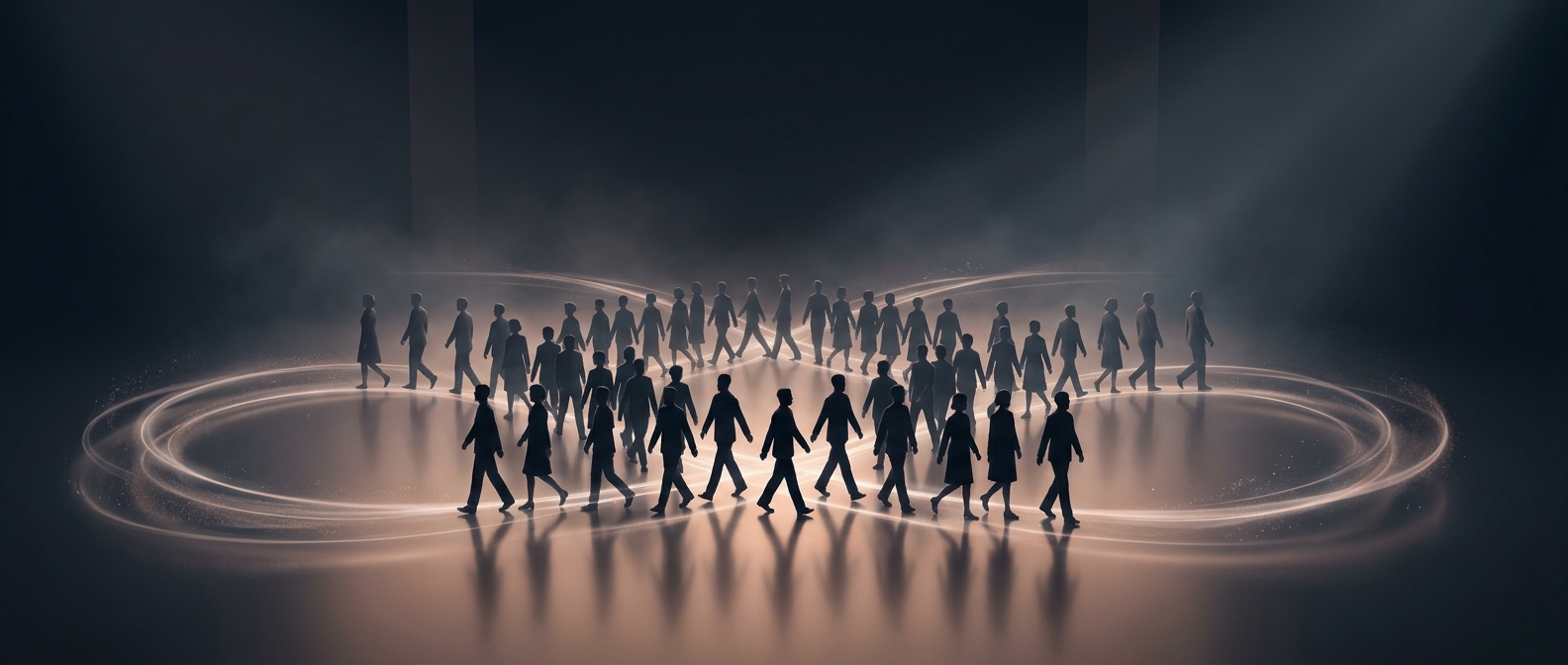
Shuudan koudou—Japanese for “group action”—turns walking into choreography. Performers follow planned paths and changes of direction, often crossing through one another’s routes at a brisk pace. The effect can look like a crowd navigating itself, but the movement depends on rehearsed timing and spacing.
How the crossings stay orderly
Each walker has to do two things at once: keep the pace and direction called for by the routine, while staying aware of nearby performers. A step taken too early can close a gap before another person reaches it; a turn taken too late can disrupt the pattern behind. The group’s precision comes from many individual movements landing at the right moment.
That makes the performance a test of coordination as much as memorization. Participants learn their own paths, but they also need to respond to the flow around them. If everyone follows the same timing, paths that appear to collide can pass cleanly.
Why it looks so striking
The audience sees the whole pattern at once; each performer sees only part of it. That difference creates the suspense: a crossing seems dangerous from above or from the side, even when the route has been carefully planned. The striking detail is that the apparent near-collisions are not improvised escapes—they are the visible result of dozens of people keeping a shared rhythm.