How contortionists make extreme backbends possible
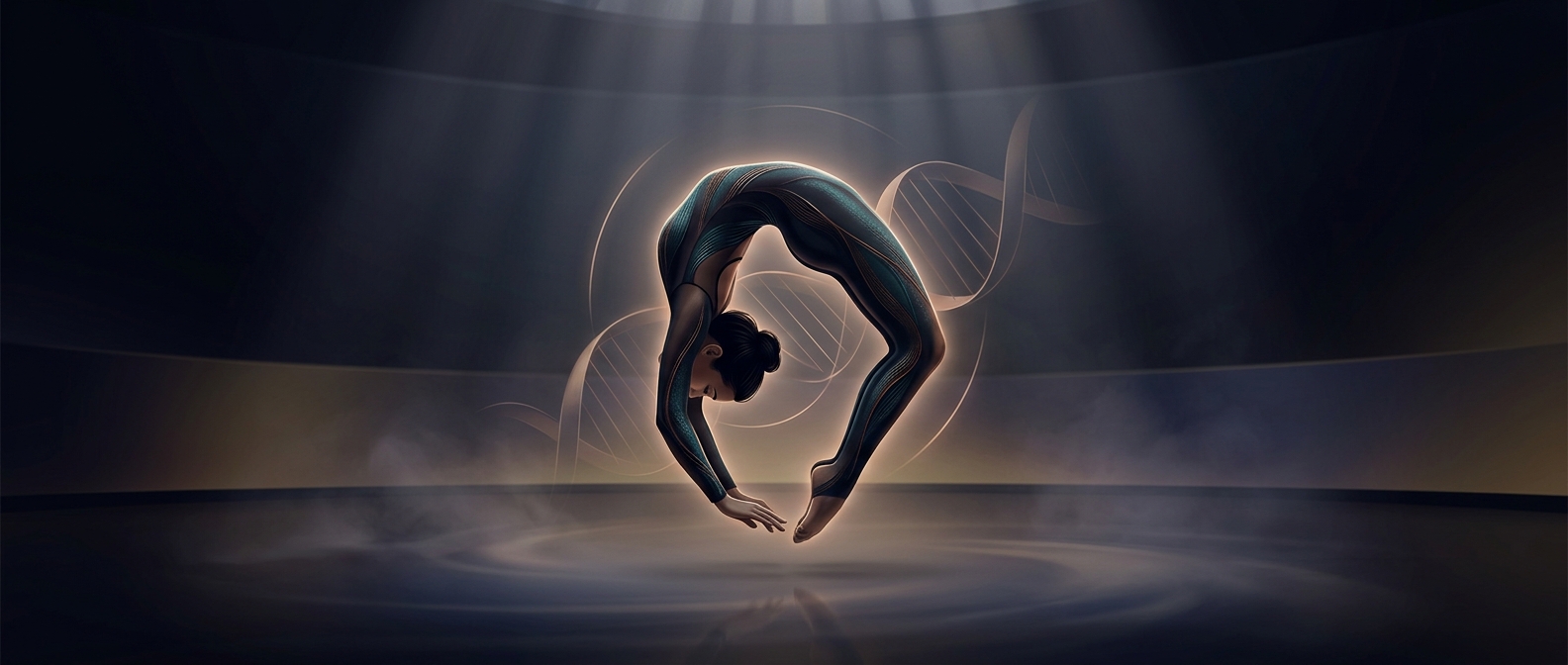
A spine is not one bendable rod. It is a chain of small bones, with discs between them, supported by muscles and ligaments. In a deep backbend, movement is shared across that chain and the hips, shoulders, and pelvis. A performer’s range depends partly on how readily those joints and surrounding tissues allow movement; unusually mobile joints are often described as hypermobile.
Ligaments help hold joints steady. If they stretch more easily, they may allow a wider range of motion, but that does not automatically make the movement safe or controlled. Contortionists also develop strength and coordination so they can guide their bodies into a position and support themselves there rather than simply collapsing into it.
Flexibility is only part of the skill
A dramatic bend can look effortless while placing substantial demands on the back and other joints. Repeatedly pushing beyond a person’s comfortable range can strain tissues, so extreme flexibility is not a goal that can be safely pursued by everyone in the same way. Training needs to account for both mobility and the strength to control it.
That combination is what turns an unusual range of motion into a performance: the audience sees a striking shape, while the performer must manage the many joints and muscles contributing to it.