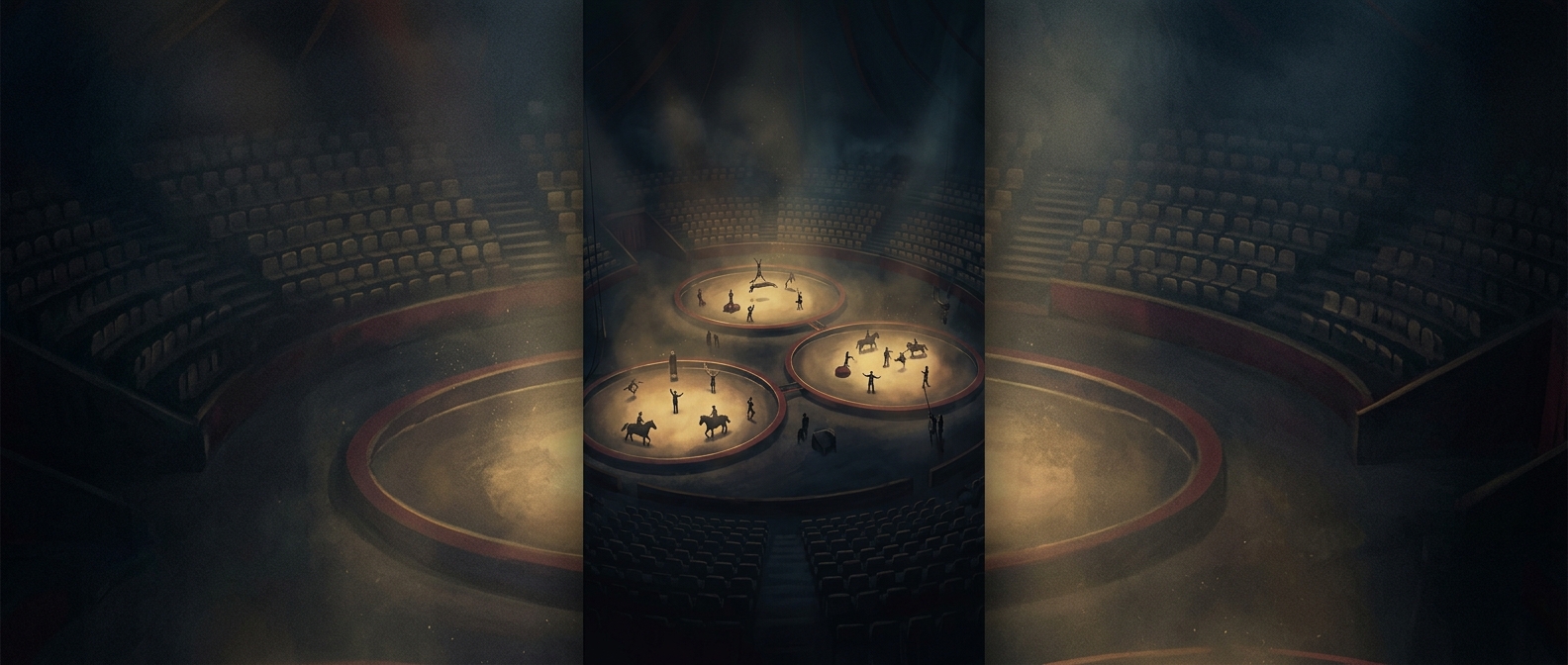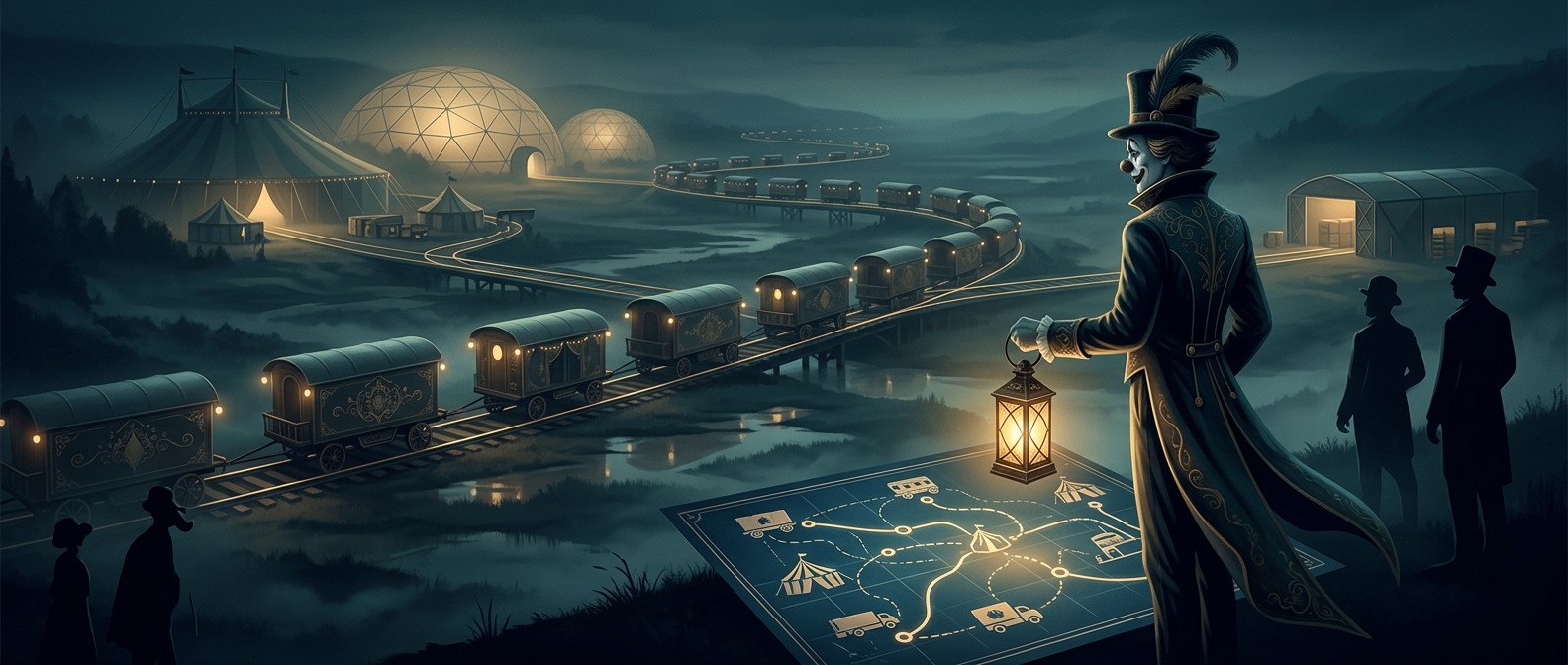
A circus itinerary was a moving supply plan
A circus on the road had to move more than its performers. Tents, equipment, animals, and the people who cared for them all had to reach the next stop in an order that allowed the show to open on time. The route mattered, but so did the sequence: what to load first, what needed to travel together, and what had to be ready as soon as the wagons arrived.
That is the practical lesson behind the claim that early industrial armies studied circus routes. A route is not just a line between two places; it is a schedule for moving a large organization and its essential supplies without losing track of either.
From spectacle to military movement
Armies faced a related problem on a larger and more dangerous scale. Battalions could not move efficiently if food, equipment, transport, and personnel arrived at different times or in the wrong order. A plan that coordinated a circus’s departure and setup offered a concrete example of how to organize many moving parts across a changing itinerary.
The useful idea was logistical, not theatrical: coordinate the journey with the work that must happen at the destination. When movement is planned as a sequence rather than as a single march, a large group can arrive better prepared to act.
Why the comparison mattered
Circuses and armies had very different purposes, but both depended on coordination under time pressure. A circus had to turn travel into a functioning show; an army had to turn travel into an organized force. The striking connection is that a traveling entertainment company could serve as a model for military logistics—not because its route was a battle plan, but because getting people and essential gear to the right place, in working order, was a problem both had to solve.