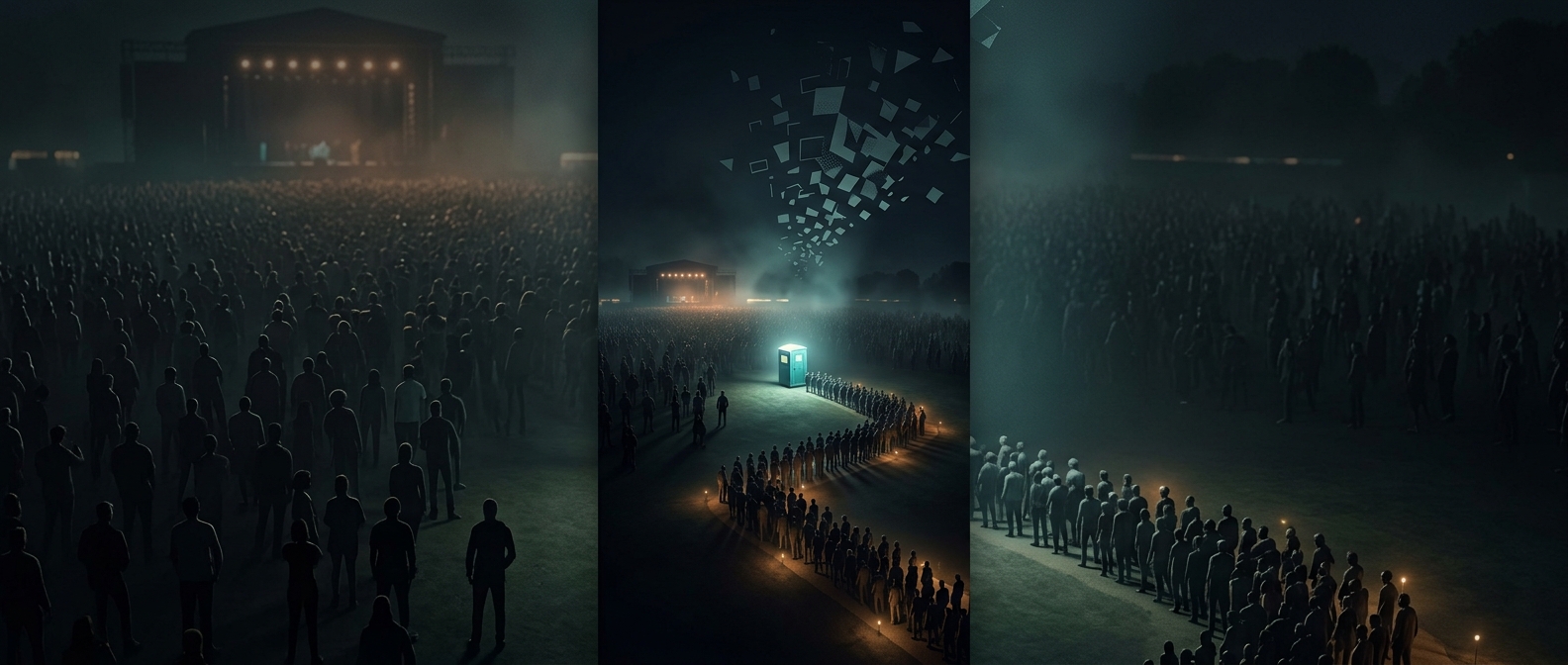
Why the toilet line grows faster than the festival
A festival’s crowd does not use restrooms evenly. Many people arrive, eat, drink, and take breaks at roughly the same times, so demand surges between sets and after a performance ends. Alcohol and long stretches away from facilities can add to that demand. Even a site with enough toilets on paper can develop a long queue when thousands of attendees need them within the same short window.
The cost is more than renting a unit
Portable toilets take up scarce space, and each one must be delivered, placed, stocked, cleaned, and eventually removed. Waste tanks also need servicing; adding units means coordinating more equipment and truck visits on a crowded festival site. Organizers balancing those expenses against other operating costs may plan close to the minimum required by local rules rather than build in much extra capacity. Requirements vary by location and event, so there is no single legal minimum that applies everywhere.
Capacity has to match the crowd’s rhythm
The useful question is not just how many toilets are present, but how many people can use them before the next rush. Placement matters too: a restroom cluster near one stage may be convenient for part of the crowd and a long walk for everyone else. When queues form, attendees can miss performances, while people who need accessible facilities may face additional barriers.
More units can help, but they are not a perfect fix if they are poorly distributed or not serviced. The line is often a visible sign of a planning tradeoff: organizers save money and space by limiting capacity, while attendees pay for that decision in waiting time.