One Script, Two Broadcasts
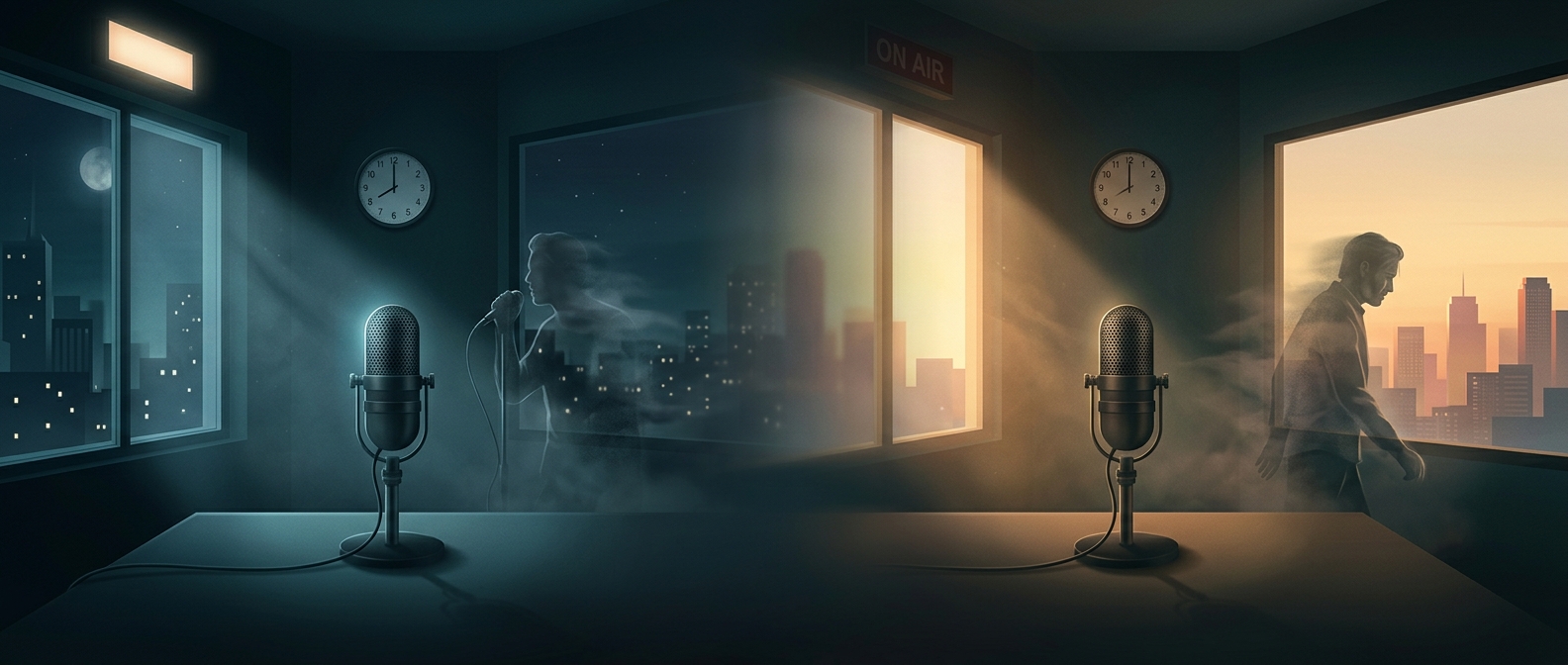
A coast-to-coast radio network faced a scheduling problem: a show sent out live at an evening hour on the East Coast would reach the West Coast three hours earlier by local time. A program meant for one region’s evening audience could therefore land in another region’s afternoon. Rather than make listeners accept that mismatch, networks could arrange a second live performance later.
The Studio Became a Repeating Stage
The cast returned to the same script after the first broadcast, along with the musicians and sound-effects performers. That meant recreating the whole show—not simply replaying the actors’ dialogue. A door slam, a musical cue, or a pause timed for a laugh had to happen again at the right moment. The second performance followed the same plan, but live delivery left room for small differences in pacing or emphasis.
This was especially practical for a half-hour program: the performers could repeat a compact, rehearsed production within the same evening. The arrangement also kept each broadcast tied to the immediacy of live performance, rather than asking the network to capture and later transmit a recording.
A National Audience, in Separate Rooms
The repeat made a single program fit two local evenings, but it also made “the broadcast” less singular than it sounds. East and West Coast listeners heard separate performances of the same script. For the people in the studio, national reach meant doing the show twice; for listeners, it meant that a line or cue could land a little differently depending on which performance reached them.