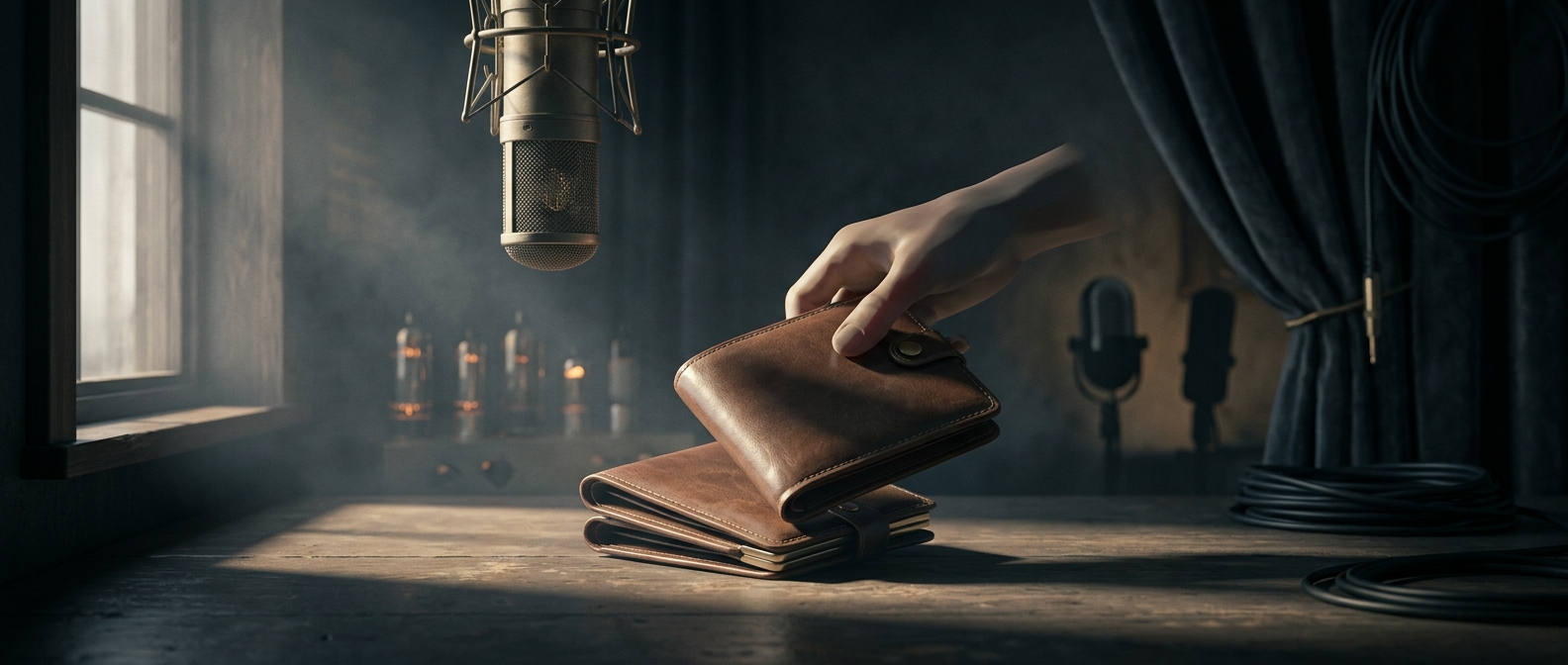
Why leather can sound enormous
Leather is flexible, but its surfaces do not always slide smoothly. As a worn wallet bends, parts of the material briefly grip and then slip past one another. That uneven friction produces little squeaks and creaks—the same kind of irregular motion that can make a heavy hinge groan.
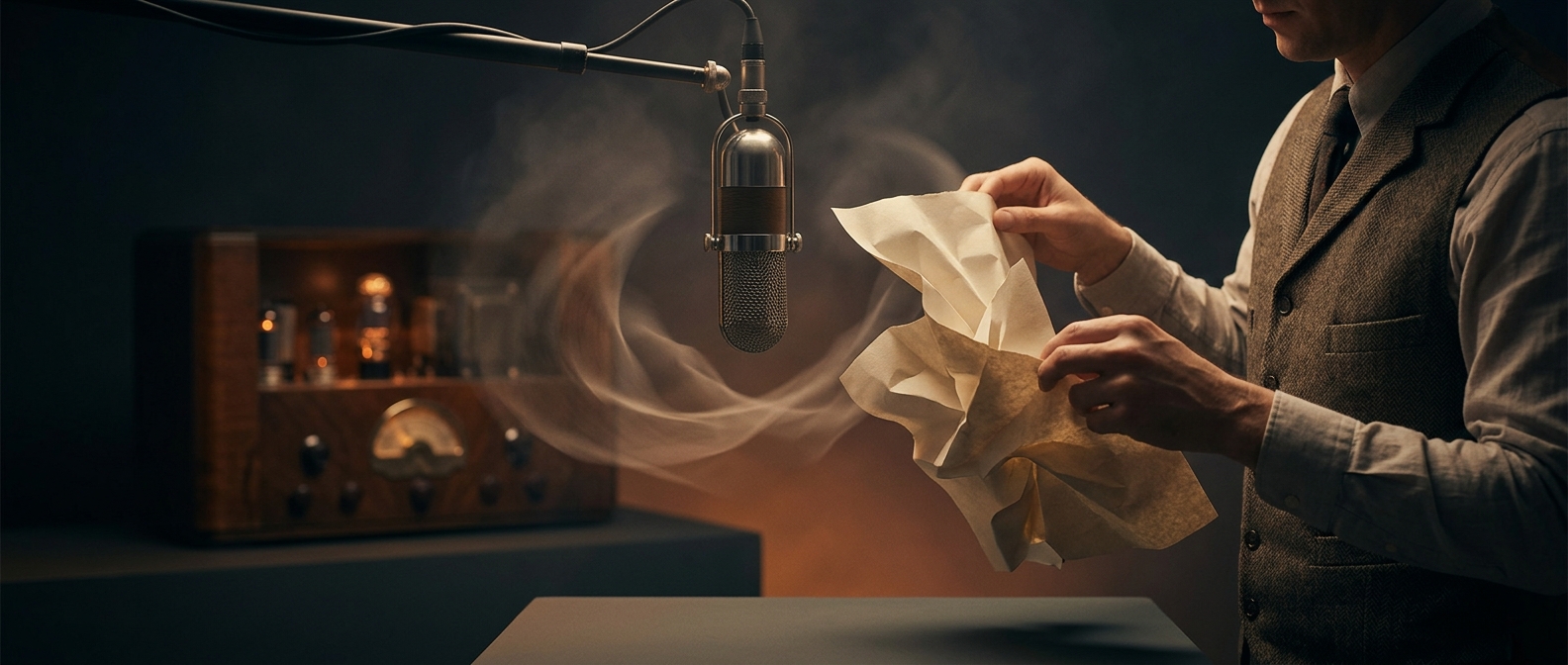
A microphone placed close by captures those tiny changes in texture. In a room, the wallet is plainly small; in a recording, its noises can be isolated from that visual clue and made to feel much larger. A listener hears a drawn-out, rough creak without seeing what caused it, and the mind supplies a door or some other massive object.
The performance is in the movement
Twisting the wallet gives the sound artist control over how the leather bends and releases. A slow, uneven turn can create a wavering creak rather than a quick snap. That variability helps the sound feel organic: it seems to strain and shift, not simply play as a fixed mechanical effect.
The trick is not that the wallet literally makes a door sound. It is that friction gives both sounds a recognizable quality—resistance followed by movement—and close recording lets that shared texture carry the illusion. A pocket-sized object can suggest a doorway because sound tells us about motion, while our expectations fill in the unseen scale.