The sound had to follow the picture
When films began to include recorded dialogue, voices were only part of the problem. A character could walk across a room, shut a door, or handle a coat, yet those movements might sound faint or wrong on the soundtrack. Effects recorded separately could also drift out of sync with the action.
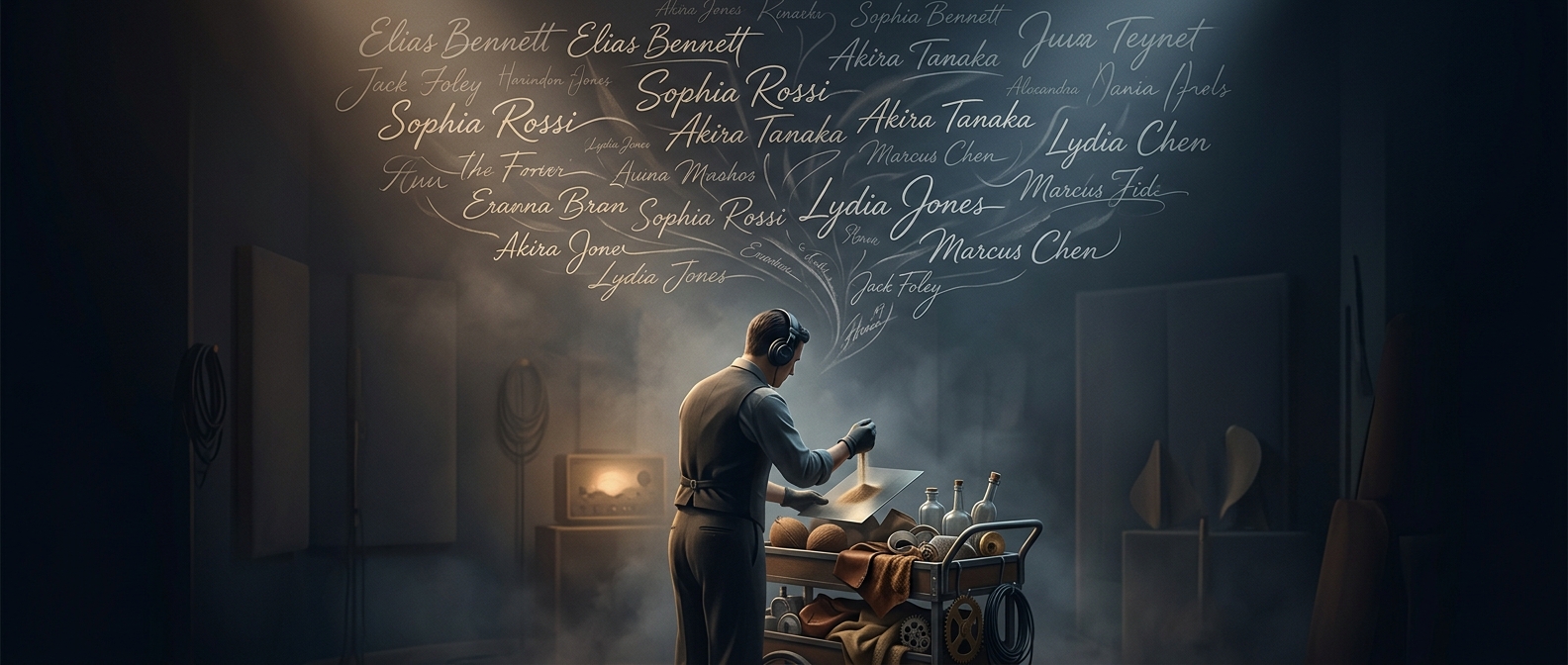
Jack Foley’s solution was to perform the sounds while watching the film. He followed each movement in real time, timing a footstep or rustle to the instant it appeared on screen. “Live” meant live during the recording session—not performed for an audience in the theater. The result was added to the film’s soundtrack afterward.
One performance, many moving parts
The work demanded close attention and quick physical choices. A performer might walk on a surface that produced the right kind of step, then switch to another prop or material as the scene changed. Door impacts, clothing sounds, and other small noises had to land at the right moment, often within the same continuous pass.
That made the process more than simply collecting noises. It was a performance synchronized to the picture, with the artist tracking the scene and creating a sequence of effects in time. The method could give otherwise quiet actions a clear, convincing presence without requiring the sounds to have been captured on set.
A lasting production role
The name “Foley” came to describe this kind of work: creating and recording everyday sounds in sync with filmed action. It became a standard part of post-production, the work done on a film after shooting, alongside dialogue and music. A viewer may notice the character’s movement, not the careful performance behind its sound—but that invisible timing is what makes the movement feel present.