The anatomy behind an alien roar
A creature’s voice sounds convincing when it seems to come from a body. In people, the throat and mouth shape the sound made by the vocal folds: their changing cavities amplify some frequencies and soften others. Those emphasized frequencies are called resonances. They help make a voice sound small, large, nasal, hollow, or otherwise distinctive, even when the underlying sound is similar.
Turning body shape into sound
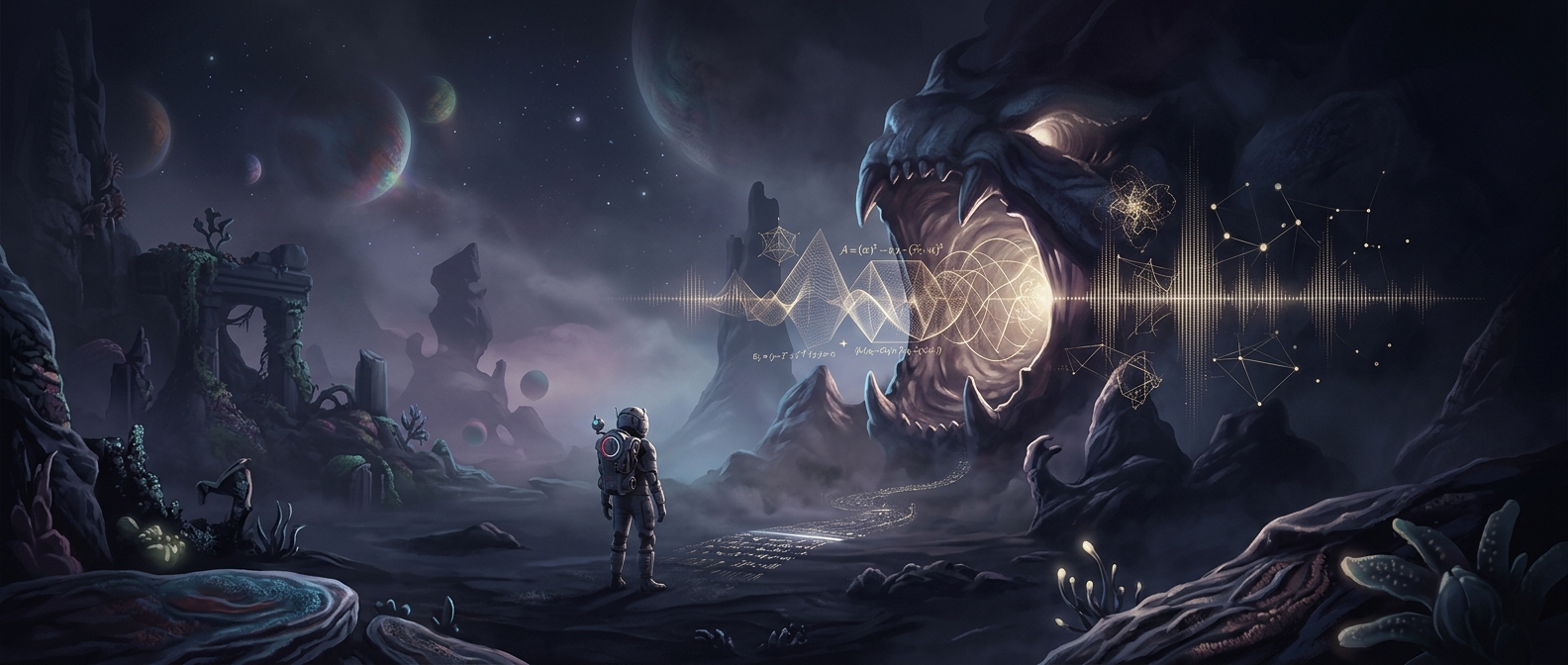
VocAlien uses physical modeling synthesis—a way of creating sound by simulating how a physical system behaves—to reshape vocal-tract characteristics in real time. Instead of treating every creature’s roar as the same sound with a different pitch, the software can alter the modeled tract and its resonance to suggest different anatomy. A larger or differently shaped vocal space would affect which parts of a sound stand out, changing the impression of the voice.
That gives the audio a useful link to the creature design: the roar can seem to belong to the body on screen, rather than to a generic monster effect. Because the changes happen as the sound is made, the system can fit the shifting forms of creatures generated by No Man’s Sky without requiring every alien to have one fixed, prerecorded voice. The result is a practical illusion: a sound whose character seems to emerge from an anatomy that does not exist.