Turning Cassette Tape Into a Hiss
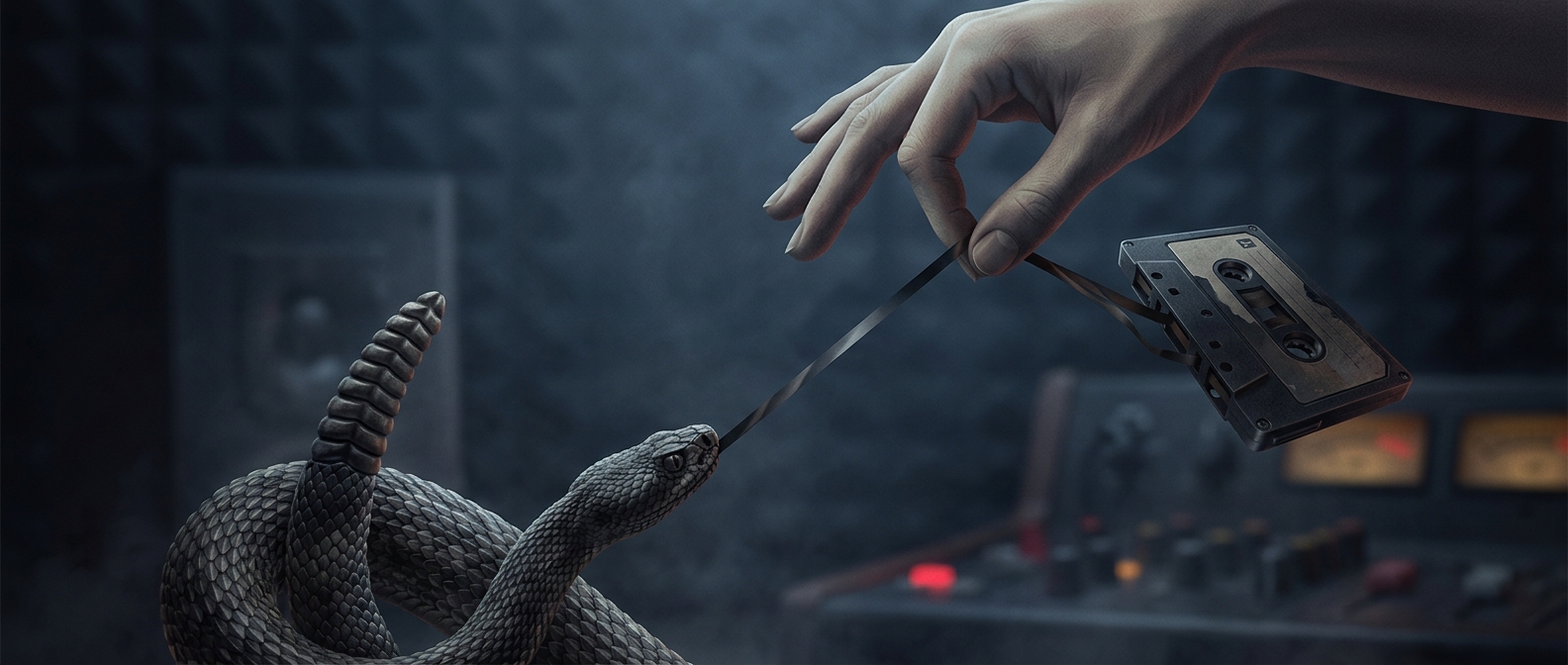
A cassette’s magnetic tape is a very thin plastic ribbon. Pulling it free and crinkling it quickly makes tiny folds and snaps that produce a dry, scratchy rustle. Recorded close up, those small sounds can read as a much larger, sharper hiss—the kind a sound artist might use for a snake in a film.
Why the Texture Works
A real snake’s hiss is made as air passes through its throat, but movie sound does not have to reproduce that process literally. The goal is to give the audience a recognizable impression. Tape crinkles contain lots of irregular, high-pitched detail, which can suggest a rough, breathy sound without sounding like a smooth stream of air.
The artist can vary the movement to change the result: a faster, tighter crinkle may feel sharper, while a looser one can sound softer or more diffuse. The recording can then be trimmed or mixed with other sounds to fit the length and intensity of the moment on screen.
Foley From Everyday Materials
This is a form of foley: sound made or performed for a production to match what viewers see. A cassette is useful not because it is snake-like, but because its thin, flexible tape is easy to manipulate into a distinctive texture. The surprising part is how little the sound’s source matters once it is recorded: a handful of crinkles can become a convincing hiss when the image gives the audience a snake to hear.