Why a Bellows Sounds Like Strained Breathing
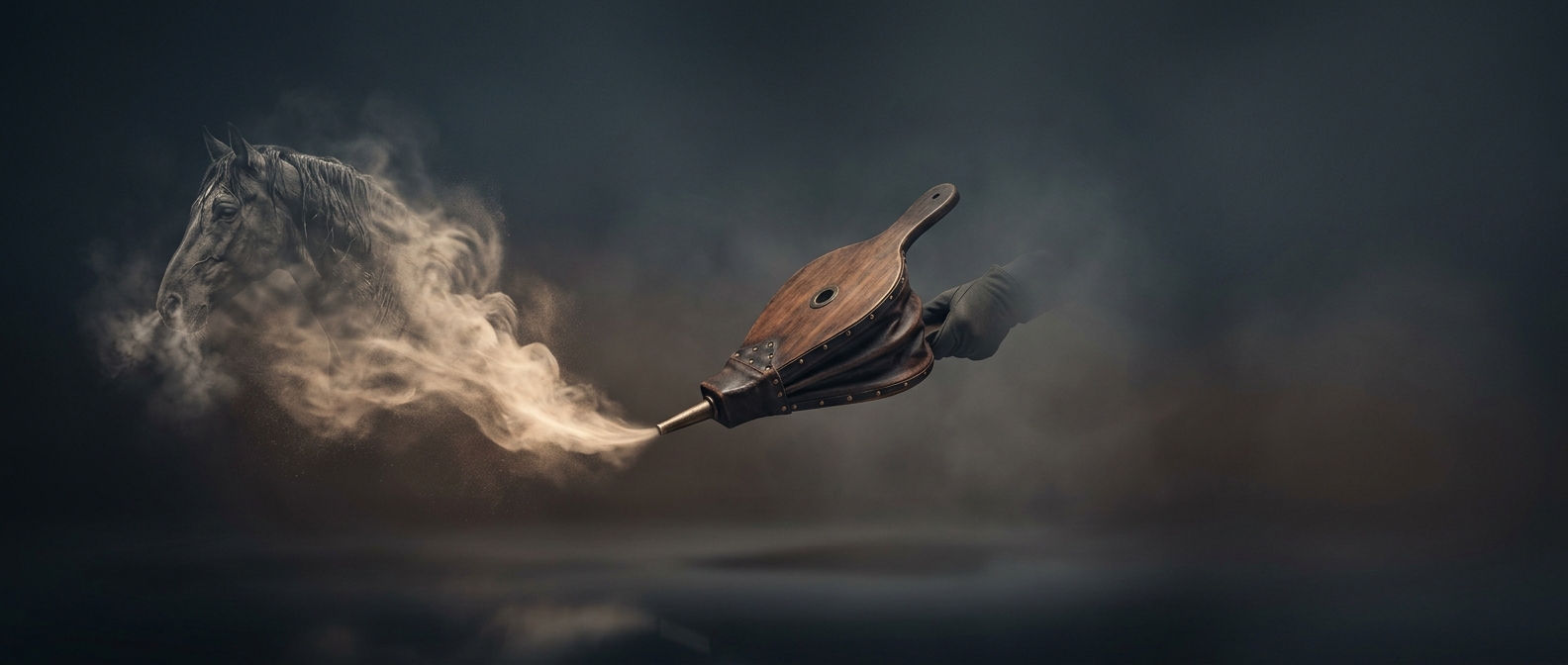
A fireplace bellows moves air in uneven pulses. Squeeze its wooden handles and air rushes through the nozzle; let the handles open again and the bellows draws in another breath. The leather flexes as it works, adding a soft rasp and creak to the airflow. Together, those sounds can suggest an animal breathing hard rather than a person simply blowing air.
The effect depends on performance as much as the prop. A Foley artist—the sound-effects performer who makes noises for a film—can vary the force and spacing of each squeeze to shape a breath: short and urgent, or long and labored. The bellows supplies the rough texture, while the performer supplies the rhythm that makes it seem alive.
A Prop Becomes a Performance
A real horse’s breathing would be difficult to reproduce on cue with the same consistency in a recording session. A bellows gives the sound artist a controllable source close to the microphone: each breath can be repeated, adjusted, and matched to the action on screen. Its old-fashioned construction is useful not because it imitates a horse literally, but because its moving parts make air sound worn and physical.
That distinction is the heart of Foley. The audience hears an exhausted horse; the recording may come from a person timing squeezes on a fireplace tool. The sound feels convincing when its roughness and cadence fit the body the viewer imagines.