Why a Small Bubble Can Sound Enormous
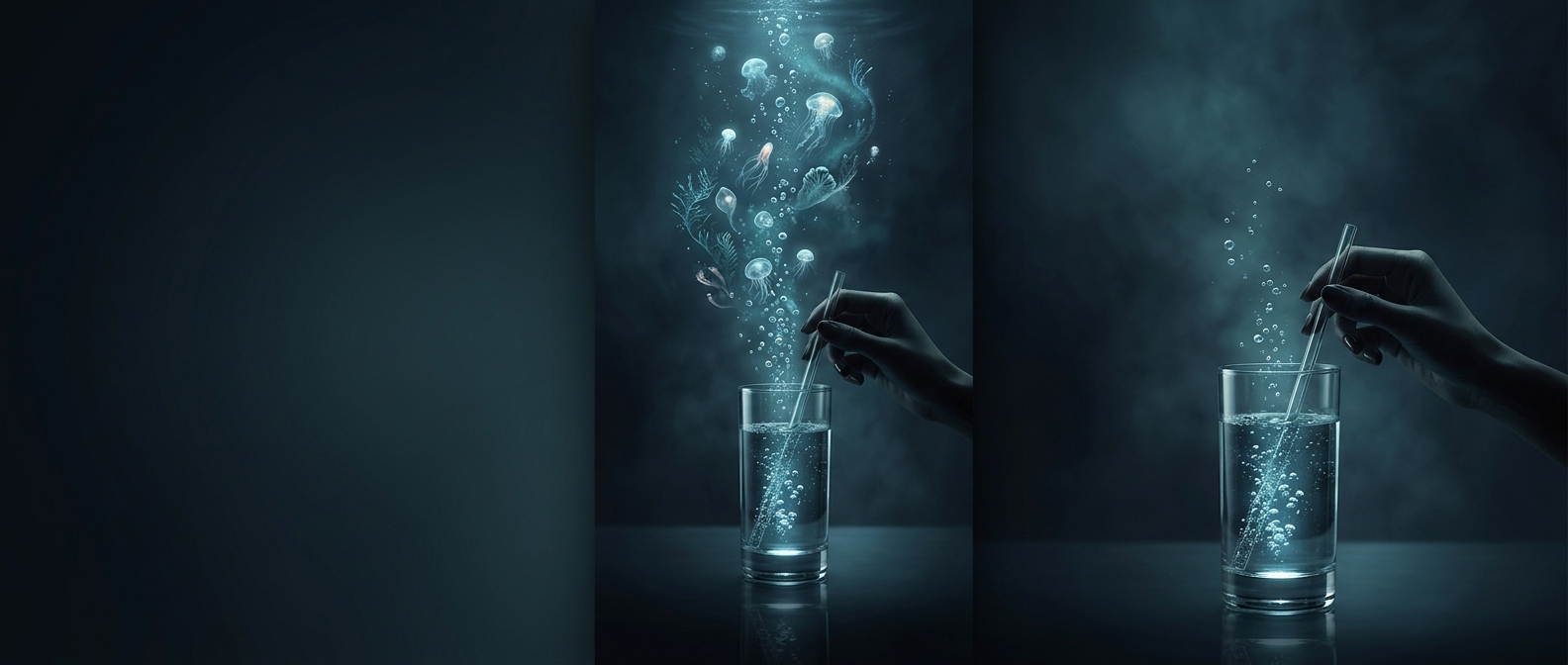
A bubble is more than a tiny burst of air. As it forms and detaches from the straw, it vibrates against the surrounding water, producing a short, resonant tone. The size and shape of the bubble affect that tone: larger bubbles tend to sound lower, while smaller ones make quicker, higher-pitched pops. A glassful of water can therefore produce a varied sequence of hollow burbles rather than one uniform splash.
That uneven rhythm helps sell the illusion. Deep-sea sound effects often need to suggest a place that feels vast, dark, and unfamiliar—not simply reproduce a literal underwater recording. A close microphone can capture the bubbles’ little changes in pitch and timing, giving an editor raw material with texture and character.
Turning the Recording Into a Scene
The glass recording is a starting point, not necessarily the finished effect. A sound designer can layer several takes, emphasize lower tones, or add reverberation—the lingering reflection of sound—to make the bubbles seem to occupy a much larger space. Slowing a recording can also stretch its events and lower their pitch, though the result depends on how the audio is altered.
These choices guide the listener’s imagination. A dry, close burble suggests a small container; a lower, more spacious version can imply distance and depth. The effect works because audiences recognize the bubbling pattern but have no everyday reference for its supposed scale.
That is the useful studio trick: the recording supplies believable detail, while sound design supplies the ocean around it. A glass on a sound-effects table can become a convincing hint of a world far beyond the reach of the microphone.