Why Foley Turns Vegetables Into Violence
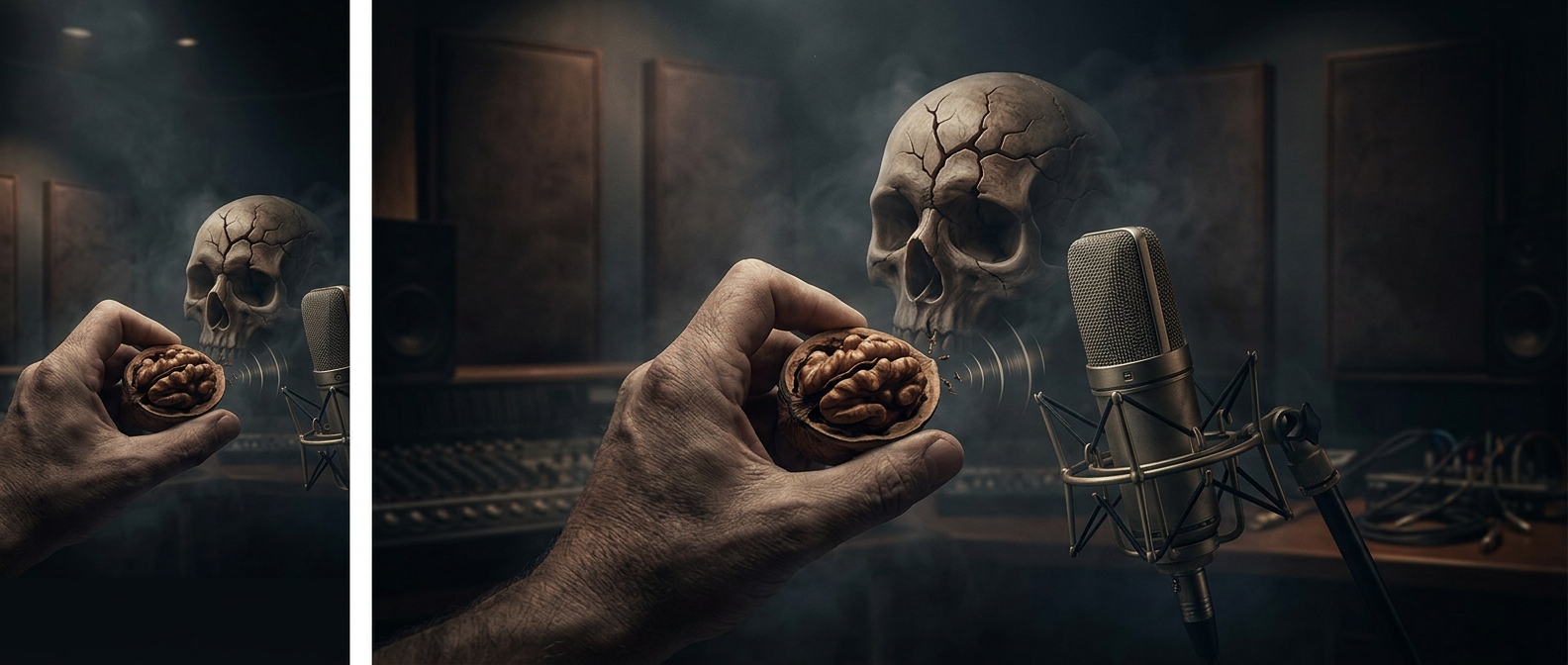
A horror sound effect has to read instantly, even when the real event would be too quiet, muddled, or unpleasantly subtle to register through speakers. Foley artists solve that problem by choosing an object whose texture makes the sound easy to shape. A cabbage or celery stalk gives a microphone a crisp, close-up crackle that can suggest a body breaking without recording an actual injury.
The Sound Comes From the Material
Celery’s stringy fibers resist pressure, then snap; a cabbage’s tightly packed leaves compress and tear with a denser crunch. Close to a microphone, those small, ordinary noises become prominent. The artist can vary the force and timing—one sharp break, a slower crush, or several quick snaps—to make the effect feel more like a particular action.
That flexibility matters because a sound effect is not a documentary recording. The goal is to communicate what the audience should imagine. A literal sound might lack the clean, forceful attack that makes a fracture understandable in a busy scene. Vegetable sounds offer a controllable substitute, and the same recording can be shaped to fit the timing and intensity on screen.
Why the Mismatch Works
The audience hears the sound alongside an image, so it interprets the crunch in context. On its own, a snapped stalk is just a snapped stalk; paired with a violent moment, its sharp break and wet, crumpling texture help sell the action. The trick is not making a vegetable sound exactly like a body—it is making the audience recognize the violence the scene is meant to convey.