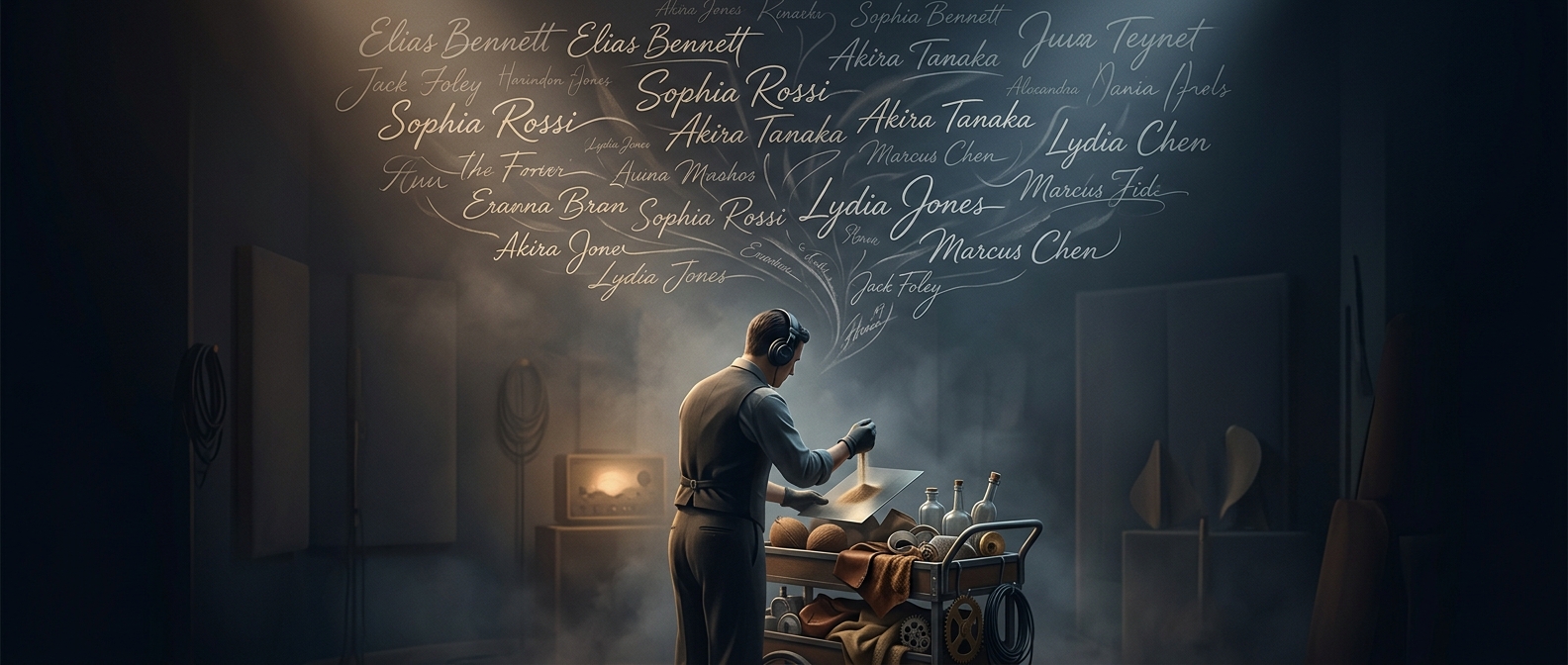
Why a Film Sound Job Became a Person’s Name
A Foley artist’s work begins after filming, when editors can see the actors’ movements but the recorded audio may not make those movements clear. A microphone on set has to capture dialogue and whatever happens around it; footsteps can be faint, clothing rustles can disappear beneath speech, and a movement may sound different from the one the scene needs.
The name comes from Jack Foley, an early sound-effects pioneer associated with developing the practice. Over time, “Foley” became the term for both the performance and the craft of creating everyday sounds to match action on screen.
Making a Sound Fit the Picture
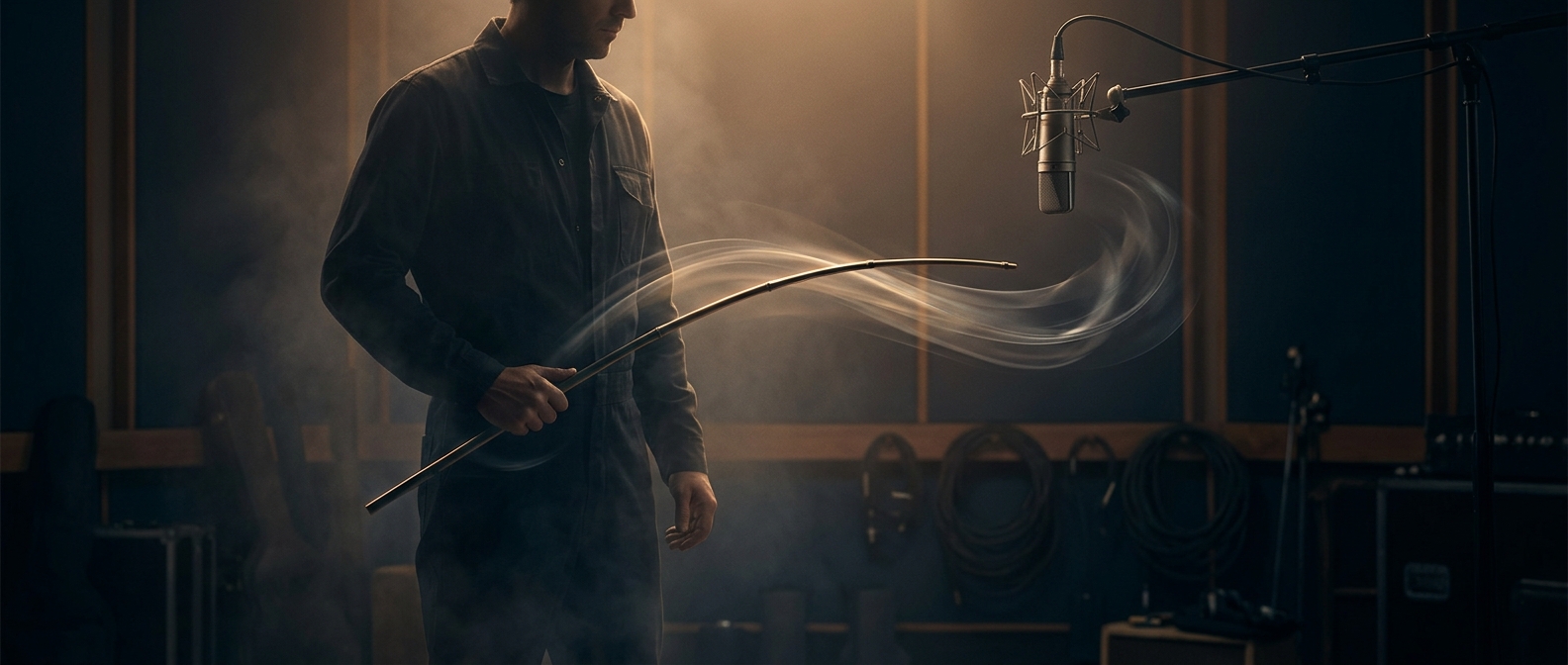
Foley artists watch a scene and perform its small physical details while recording them. They might walk across a surface to match an actor’s steps or handle clothing and props in time with a gesture. The goal is not merely to make a sound plausible: it must begin and stop with the movement viewers see.
That timing gives editors control that a location recording often cannot. A step can be made distinct when the story needs it, or softened when it would distract from dialogue. Because the sound is performed for the image, the artist can also choose a surface or object that communicates the action more clearly than the original recording.
The result is a layer of ordinary sounds that helps a scene feel physically present. When it works, viewers notice the character moving through the world—not the careful performance that made each footfall land on cue.