A paper pull became a futuristic doorway
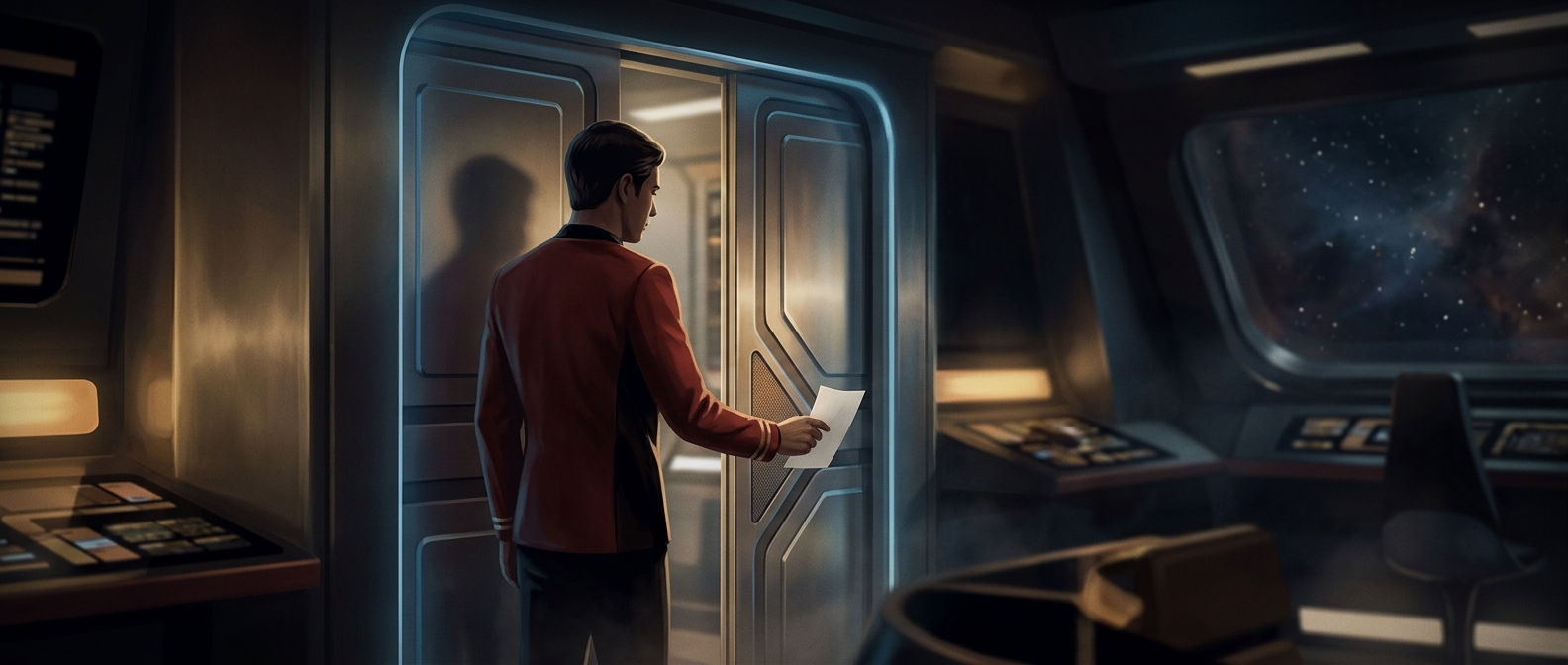
A sliding spaceship door had no real-world sound to record. On the original Star Trek, an engineer instead used a small, familiar action: pulling a sheet of paper from an envelope. The result was a practical sound effect—made in the room, rather than captured from a machine or selected from a digital library.
That choice turns an ordinary bit of friction into a convincing cue for movement. The paper’s quick rush and release can suggest something gliding open, while the audience supplies the missing machinery. The sound does not need to reproduce a door literally; it needs to arrive at the right moment and make the action feel legible.
Making science fiction from everyday materials
Before digital libraries made recorded effects easy to search and reuse, sound crews could create effects by manipulating objects and recording the results. The approach demanded imagination more than specialized equipment: a household material could stand in for technology that did not exist.
It also illustrates a useful principle of screen sound. Viewers rarely inspect an effect on its own; they hear it alongside a visible action. A brief paper swish, synchronized with a doorway opening, becomes the sound of a futuristic mechanism. The memorable part is not that the prop was elaborate, but that a simple, carefully timed noise helped make an imaginary world feel operational.