How Coconut Shells Became Hooves on Radio
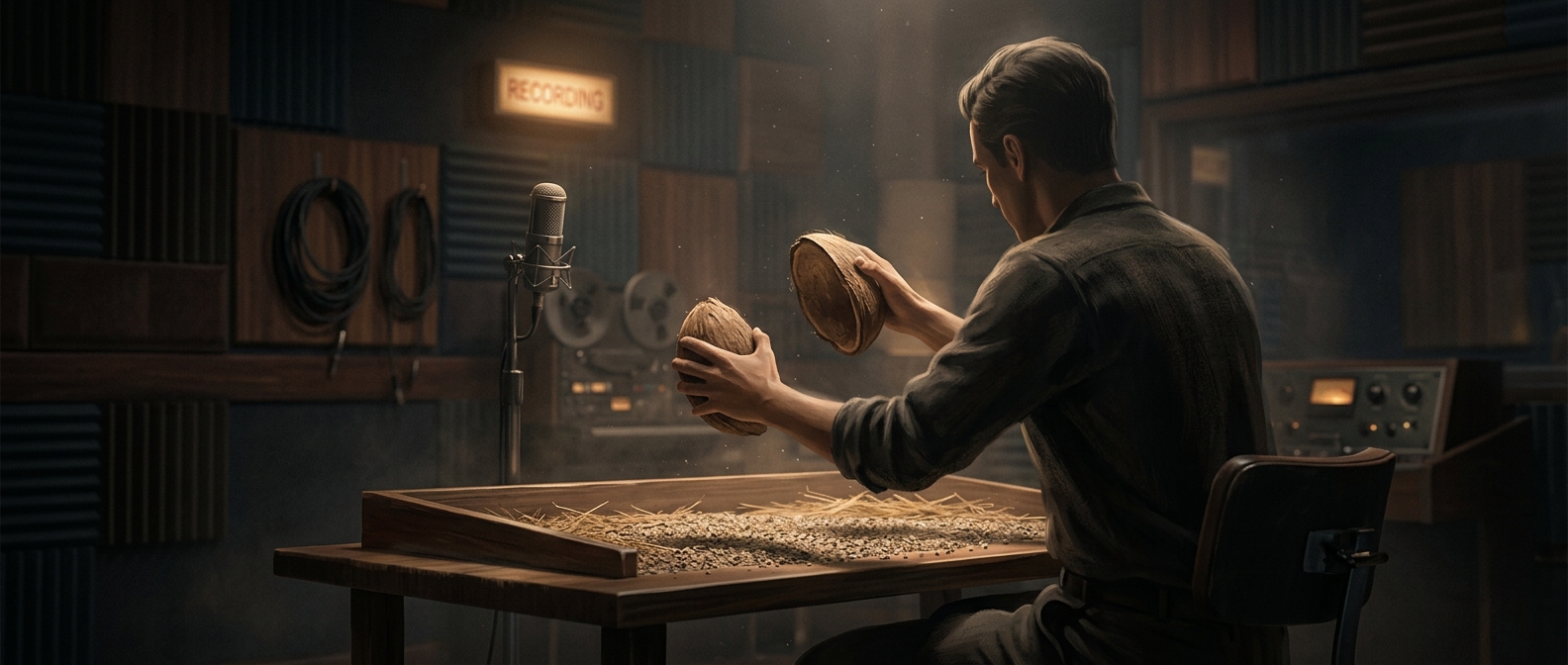
A listener could not see a horse in a radio drama, so the sound had to do the scene-setting. Sound-effects performers—often called Foley artists—made hoofbeats by striking two dried coconut halves against a hard surface. The shells supplied a sharp, hollow clop that could suggest hooves without the noise, space, and unpredictability of an actual horse in a studio.
The Sound Came From Rhythm as Much as Material
A single clack could sound like an object being tapped. Repeated in a measured pattern, the same clacks could imply a horse walking or running. The performer controlled the pace and force, while the surface beneath the shells helped shape the impact. Quicker beats made the horse seem to move faster; a pause or change in rhythm could make it seem to slow or stop.
That control mattered because hoofbeats were part of the storytelling, not just decoration. Their pace could signal a rider approaching, passing, or moving away, giving listeners a sense of action and distance even though the scene existed only in sound.
A Small Prop Solved a Practical Problem
A real horse would have been difficult to bring into a recording room and harder to direct precisely for each take. Coconut halves were portable, repeatable, and easy to use in time with dialogue and other effects. Their simple, recognizable impact let a performer build the impression of a horse from a pair of shells and a surface—an entire animal suggested by a few controlled beats.