Why Wet Paper Can Sound Like Mud
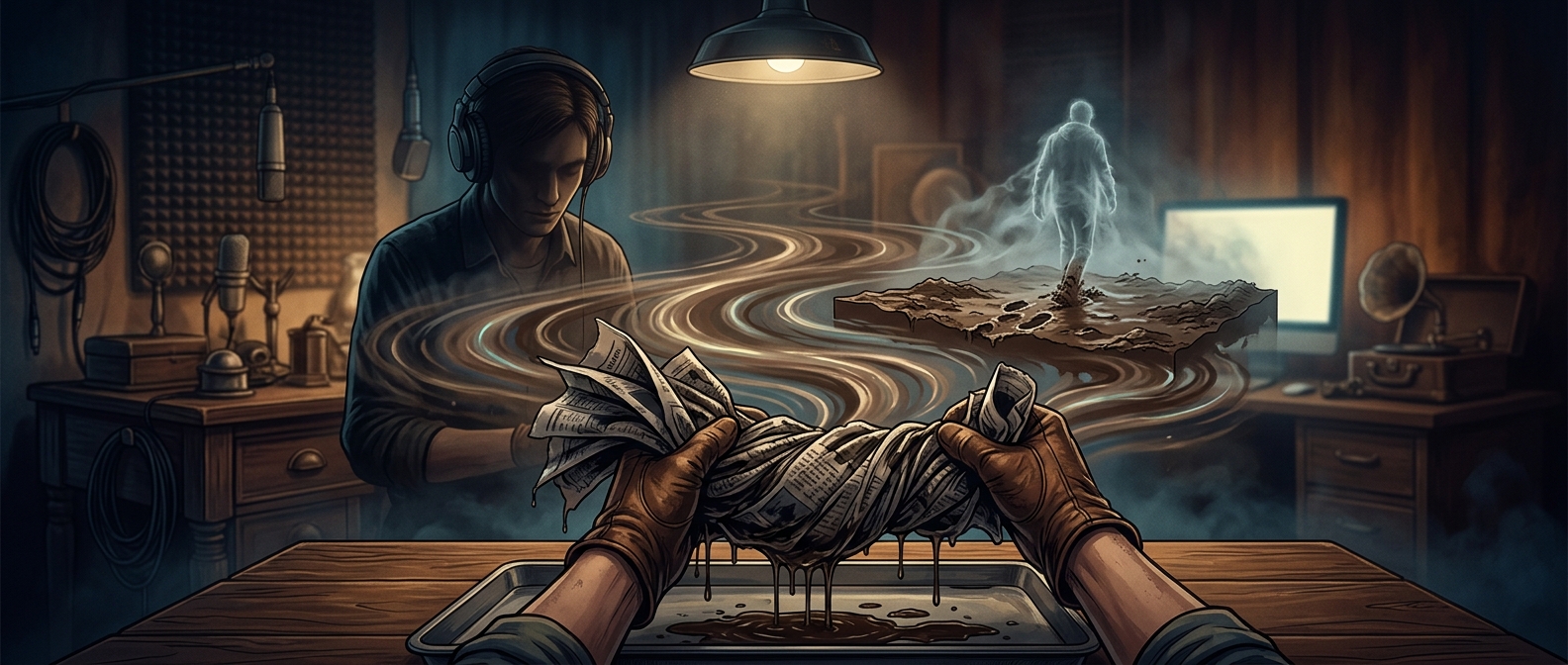
The squelch of a muddy step is less about the ground being mud than about what happens when a foot presses into a wet, yielding surface. The material shifts under pressure, then releases with a sticky, uneven sound as the foot lifts. Soaked newspaper can produce a similar sequence: its softened layers compress, slide against one another, and pull apart.
That makes it useful in foley, the craft of recording or creating sounds to match actions on screen. A sound artist can knead or step on wet paper close to a microphone, then adjust the timing and force to fit a character’s movement. The mic captures the small, irregular noises that a distant recording might miss.
A Sound Is a Practical Substitute
Film sound rarely has to come from the object shown. What matters is whether the recording gives viewers the right sensory clue. Wet paper is inexpensive, easy to control indoors, and can be worked repeatedly without needing a muddy location or risking damage to equipment.
It will not reproduce every quality of real mud; the match depends on how it is handled and how the sound is recorded and mixed. But for a brief footstep, a convincing rhythm and texture can matter more than the material’s identity. A scrap of newspaper, pressed and released at the right moment, can help make an indoor recording feel like a walk through a swamp.