A color can work like a moving lock
A backstage pass is more than proof that someone belongs at an event. It can also signal where that person is allowed to go and when. If every badge looked alike, a pass from yesterday—or a convincing copy—might be harder to notice in a busy corridor.
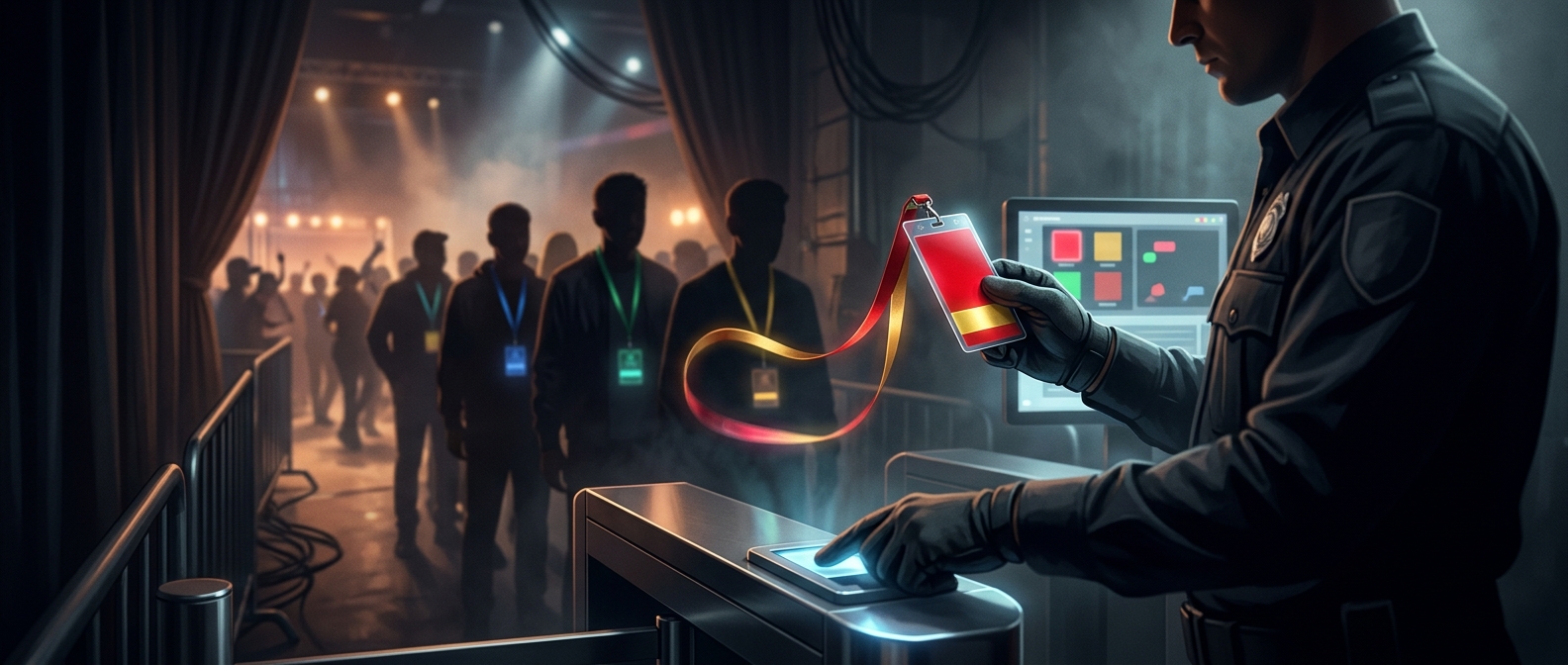
Changing the color gives staff a quick visual check. They can compare a badge with the color currently in use without stopping to read a name or scan a code. A pass from an earlier shift stands out, and a counterfeit using an outdated color is easier to catch.
Why change colors so frequently?
A badge’s usefulness depends partly on how long its design remains valid. At a multi-day event, switching colors each day limits the window in which a lost, borrowed, or copied pass might work. In a venue with rapid shift changes or several access zones, organizers may change colors more often to keep checks simple and immediate.
Color does not have to carry the whole security burden: staff may also check names, credentials, or electronic access. But in a crowded backstage area, a fast glance is practical. A bright strip or lanyard can be recognized from a few feet away, before someone reaches a restricted door.
A simple check with a tradeoff
Frequent changes mean organizers must distribute the right badges to the right people and tell staff what to look for. The payoff is speed: instead of trying to remember every face or inspect every pass closely, a guard can first ask whether the badge matches the current color. That small visual cue can turn an old pass from plausible access into an obvious mismatch.