Why an ordinary house can be hard to film in
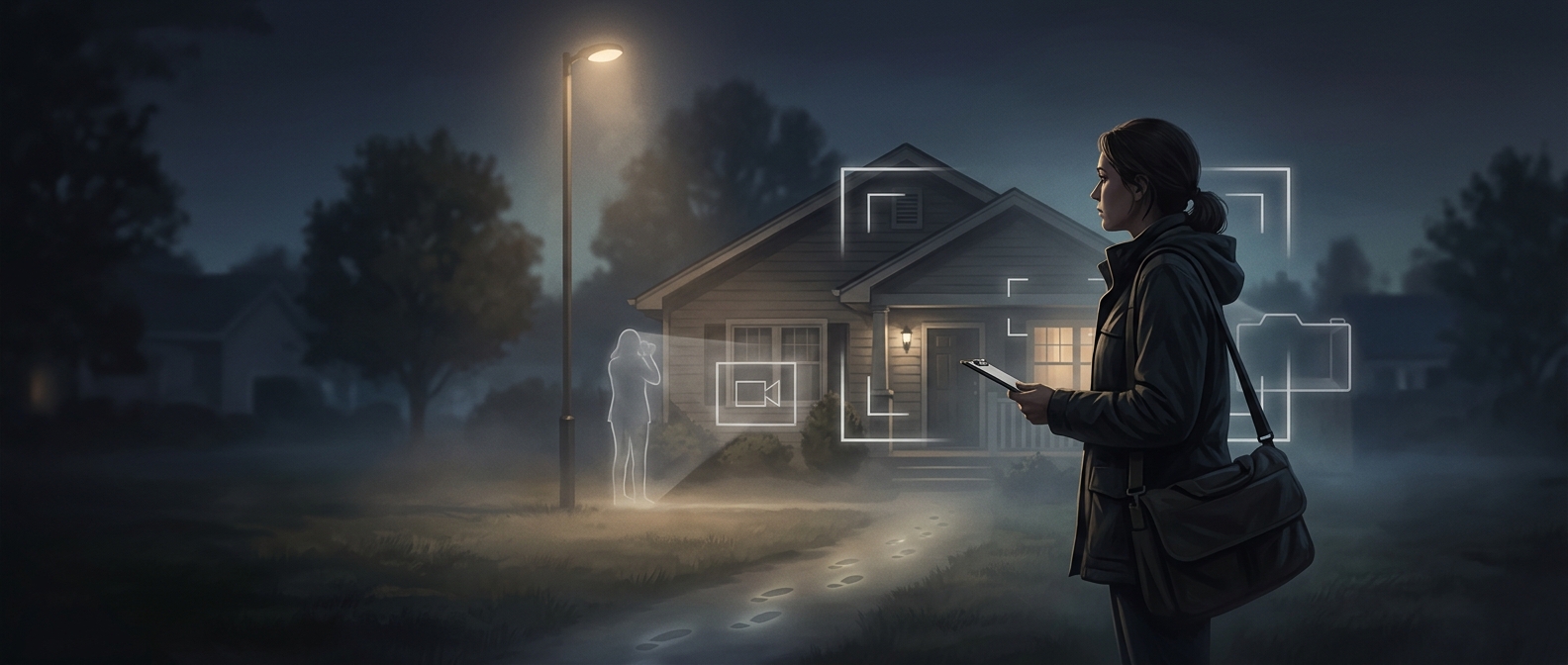
A home that looks simple on camera may be complicated to work in. Scouts are not just looking for the right street or living room; they are checking whether a crew can get equipment inside, place lights and cameras, control outside noise, and keep the space usable through a long shoot. A narrow hallway or a window that cannot be darkened can limit where a scene can be filmed.
The house also has to serve the story. Its layout, finishes, and surrounding neighborhood help establish who lives there and what kind of life the film is depicting. A real home can supply details that are difficult to reproduce convincingly on a set, but its existing walls and windows also constrain camera positions and lighting.
The location becomes a temporary workplace
Once a homeowner agrees, the production has to coordinate access and protect the property. Crew members may move furniture, cover surfaces, run cables, and bring in equipment. Those practical needs shape the search: a visually suitable house is not enough if the crew cannot work safely or efficiently inside it.
The challenge continues after filming. Furniture and small objects need to return to their original places, and the house must be left in the condition promised to its owner. That makes photographs and careful tracking useful for preserving the room’s arrangement before changes begin. The result is a brief transformation: for a day, a private home becomes a working set, then has to become a home again.