A Growing Actor, a Fixed TV World
A sitcom’s story may unfold over a few days, while filming stretches across months. Children can change noticeably during that time, especially during a growth spurt. But the character is meant to look much the same from one scene—or episode—to the next, and episodes are not always filmed in the order viewers see them.
That mismatch creates a continuity problem: the actor’s height changes faster than the fictional timeline. Recasting a child or rewriting scenes around a new height can disrupt the performance and the show’s plans, so productions often adjust what the camera shows instead.
Staging Does the Concealing
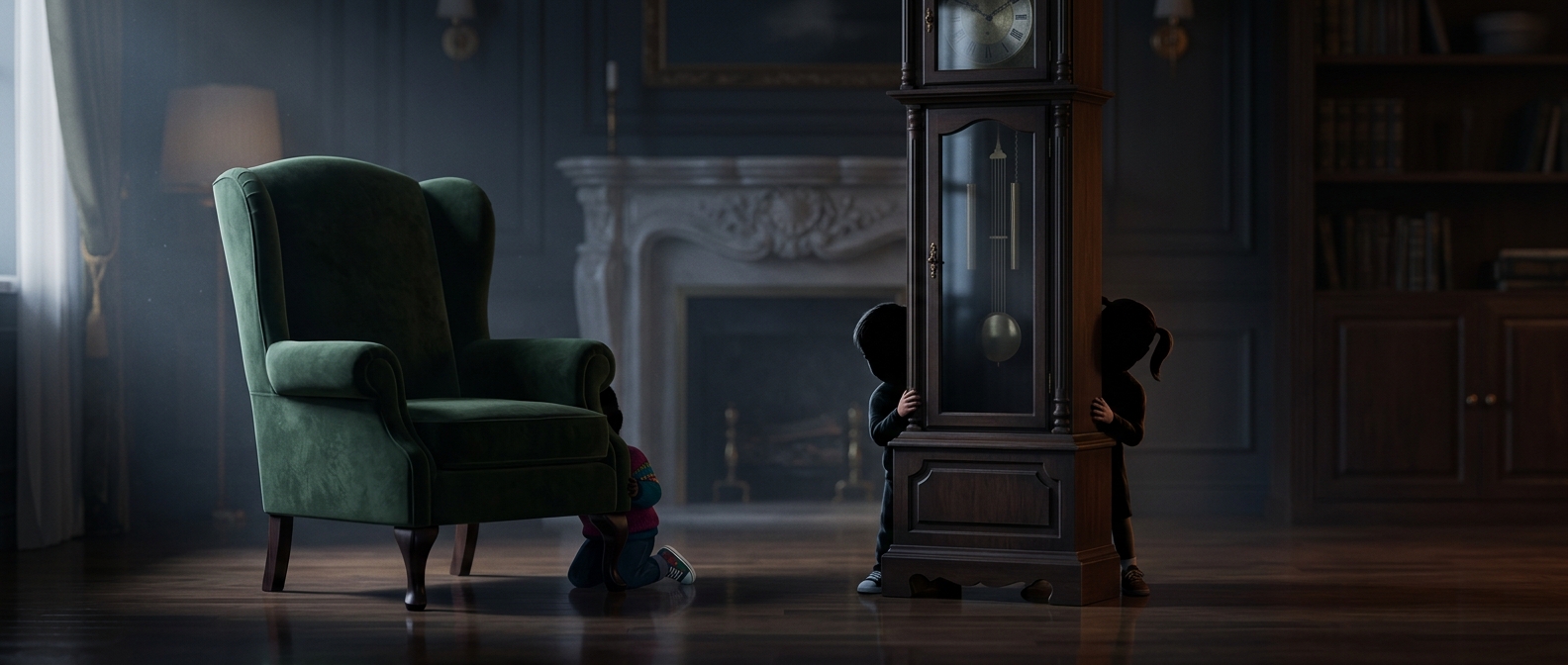
The trick is to make the actor’s height less easy to judge. A counter or sofa can hide the lower body; a taller castmate can stand nearby; a shot can frame the child from the waist up. These choices are forms of blocking—the planned positions and movements of performers and objects in a scene. Because they also shape where viewers look, they can disguise a practical fix as ordinary staging.
The disguise has to work across more than one shot. If the child appears taller in a wide view than in the next close-up, the audience may notice the mismatch. Keeping furniture, camera position, and performer placement consistent helps preserve the illusion without changing the dialogue or calling attention to the actor’s body.
The Fix Can Become Part of the Set
When a growth spurt lasts beyond a scene, the workaround may be used repeatedly, sometimes throughout a season. That can subtly influence how a character moves through the family home: a child may remain behind a counter during a conversation or be positioned beside an object that breaks up the outline of the body.
The result is a small piece of invisible production design. Viewers follow the joke or argument, while the set quietly helps keep the character’s height—and the sitcom’s sense of time—believable.