A Clean Set Keeps the Story in Focus
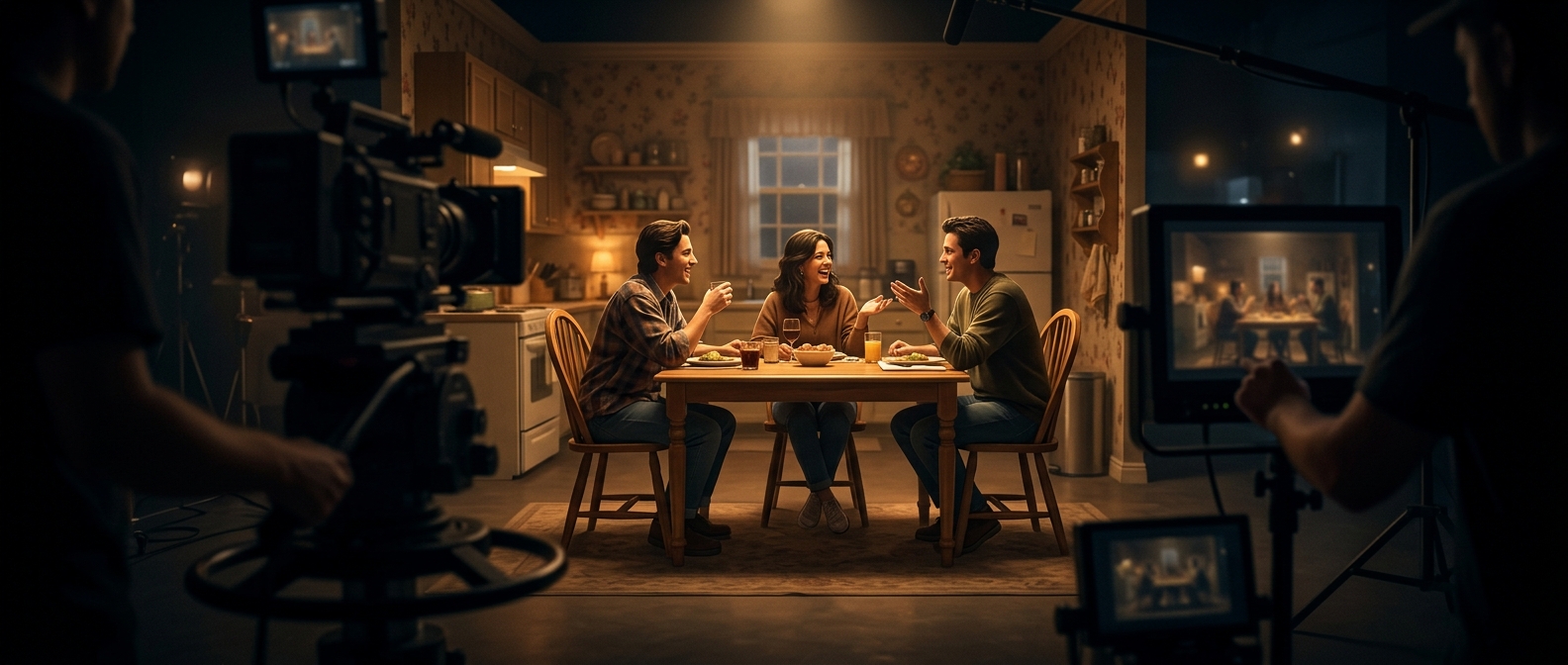
A television room is not simply a home where the characters happen to live. It is a work surface for cameras, actors, lights, and microphones. Everyday clutter can hide a face, obstruct movement, or compete with details the audience needs to notice. Keeping counters and floors clear helps the scene read quickly, especially in a wide shot where viewers must take in the whole room at once.
The set also has to work from multiple angles. A camera may shift position between takes, while lights and equipment occupy spaces that would be used differently in a real home. Furniture and props are arranged to leave usable paths and keep important parts of the room visible. The result often looks less like a naturally accumulating household and more like a carefully composed picture.
Continuity Favors Order
Scenes are rarely filmed in the order they appear on screen. A brief conversation might be shot from one actor’s side, then repeated from the other side, sometimes after a break. Crew members track where objects sit and how they look so the edited scene feels continuous. A tidy set makes that job easier: there are fewer small changes for viewers to notice between shots.
Mess can certainly be used when it tells the story—showing stress, neglect, or a character’s habits. But unless the room itself matters to the scene, adding and maintaining believable clutter takes work without necessarily helping the audience follow the action. The spotless room is often less a claim about ordinary housekeeping than a production choice: it makes a home easier to film and a story easier to see.