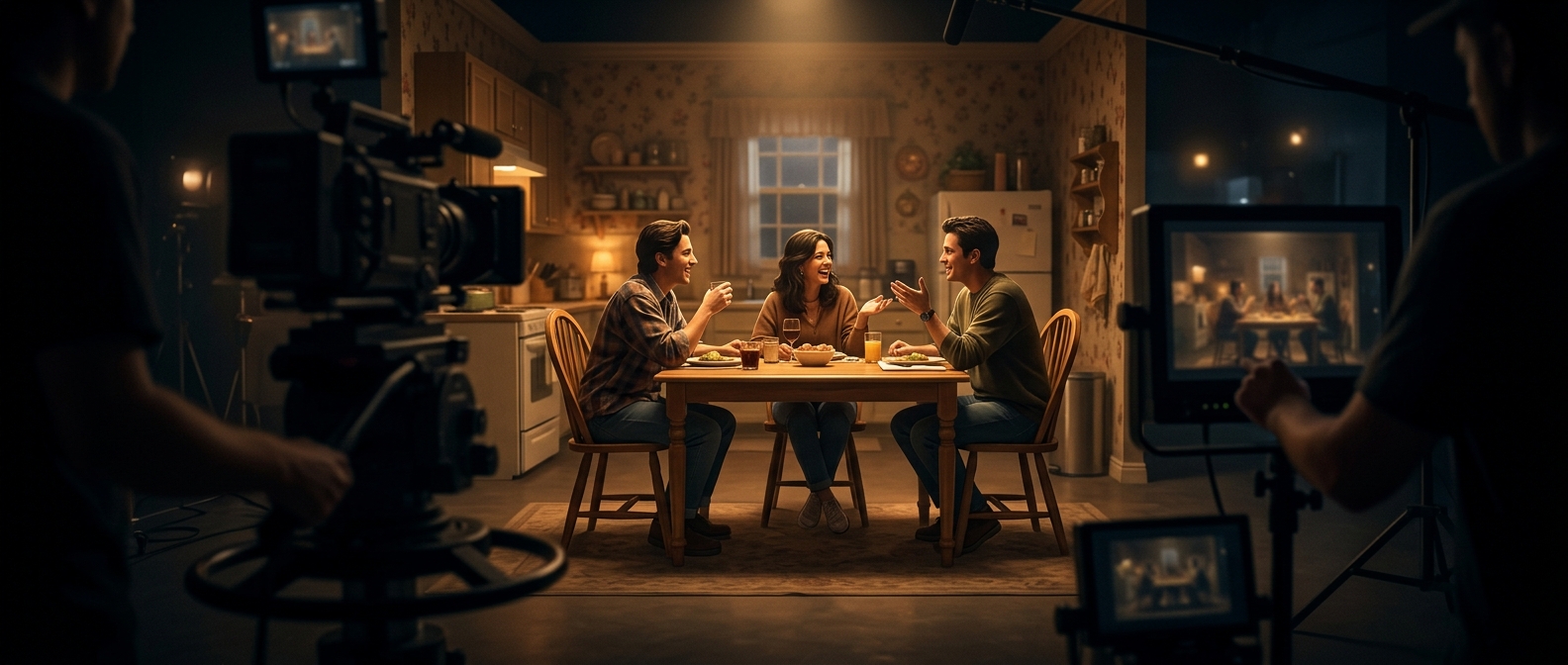
The camera gets the missing seat
A family dinner on television may look like an ordinary meal, but the table is often arranged with the camera in mind. Actors sit around three sides, leaving the fourth open. This horseshoe shape lets the audience see their faces instead of the backs of their heads.
That matters because a dinner scene is less about displaying a perfectly realistic table than about following a conversation. Viewers need to read reactions—a glance, a forced smile, someone reaching for a dish—as readily as they hear the dialogue. An open side gives the camera a clear line of sight to the group.
A practical compromise for filming
With everyone seated on all four sides, a camera filming one person could find another actor blocking the view. The crew might have to shoot from multiple angles, shifting the camera and repeating lines so each reaction is visible. Opening the table toward the lens makes it easier to cover the whole family in a shared view and then move in for individual shots.
The arrangement is a compromise, not a claim that real families dine this way. It preserves the impression of people gathered around a meal while keeping the scene legible on screen. The empty side is where the invisible viewer—and often the camera—gets to sit.