How a Cyr Wheel Turns a Shift in Weight Into Motion
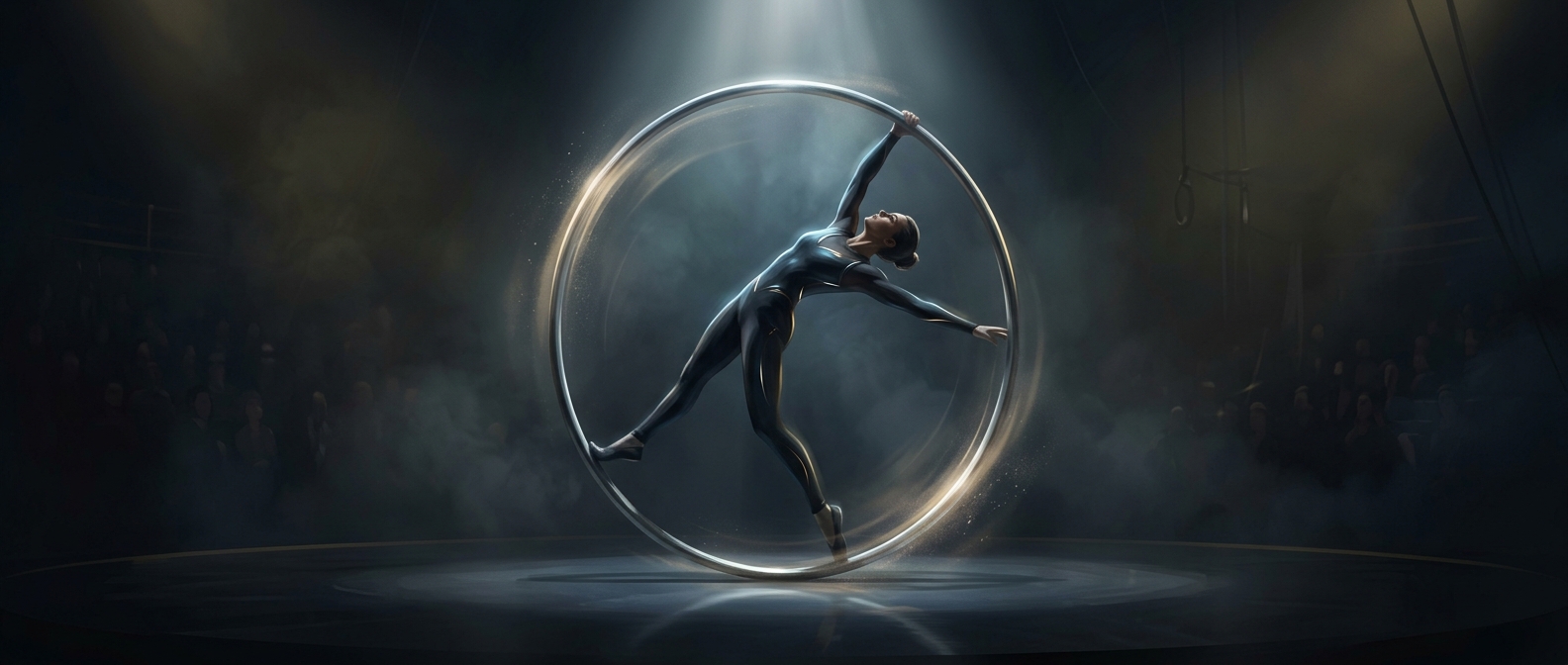
A Cyr wheel is a large, rigid metal hoop with no spokes or axle. Because it touches the floor at just one narrow point, it can roll in any direction—but it is also easy to tip. The performer’s task is to keep that moving contact point beneath the combined balance of body and wheel.
The hoop does not propel itself. A performer starts it with a push against the floor, then uses pressure from their feet and hands and changes in body position to guide its movement. Leaning into a turn helps redirect the wheel; pulling or pressing on the rim helps control its speed and angle. These are small, continuous adjustments, not a single dramatic shove.
Why the Acrobatics Have to Keep Moving
Once the wheel rolls, its momentum helps it stay upright, much as a moving bicycle is easier to balance than a stationary one. But the stability is temporary: slow too much, lean too far, or let the wheel’s path drift away from the performer’s balance, and the hoop can wobble or fall. A spin can make the wheel feel steadier, while the performer uses their grip and body position to manage the spin’s direction and pace.
That makes each acrobatic pose part of the steering. Climbing, extending a leg, or changing which part of the body presses against the rim shifts the performer’s weight—and therefore changes the wheel’s balance. The visible trick and the correction that keeps the hoop upright happen at the same time.
The Stage Becomes Part of the Apparatus
The floor must provide enough grip for the hoop to roll predictably, but not so much that it catches during a turn. Space matters, too: the wheel’s path can widen quickly as the performer builds momentum. What looks like a self-contained act is really a moving balance problem shared among the performer, the ring, and the stage. A pose lasts only as long as the performer can keep all three in alignment.