A knee hook turns the bar into an anchor
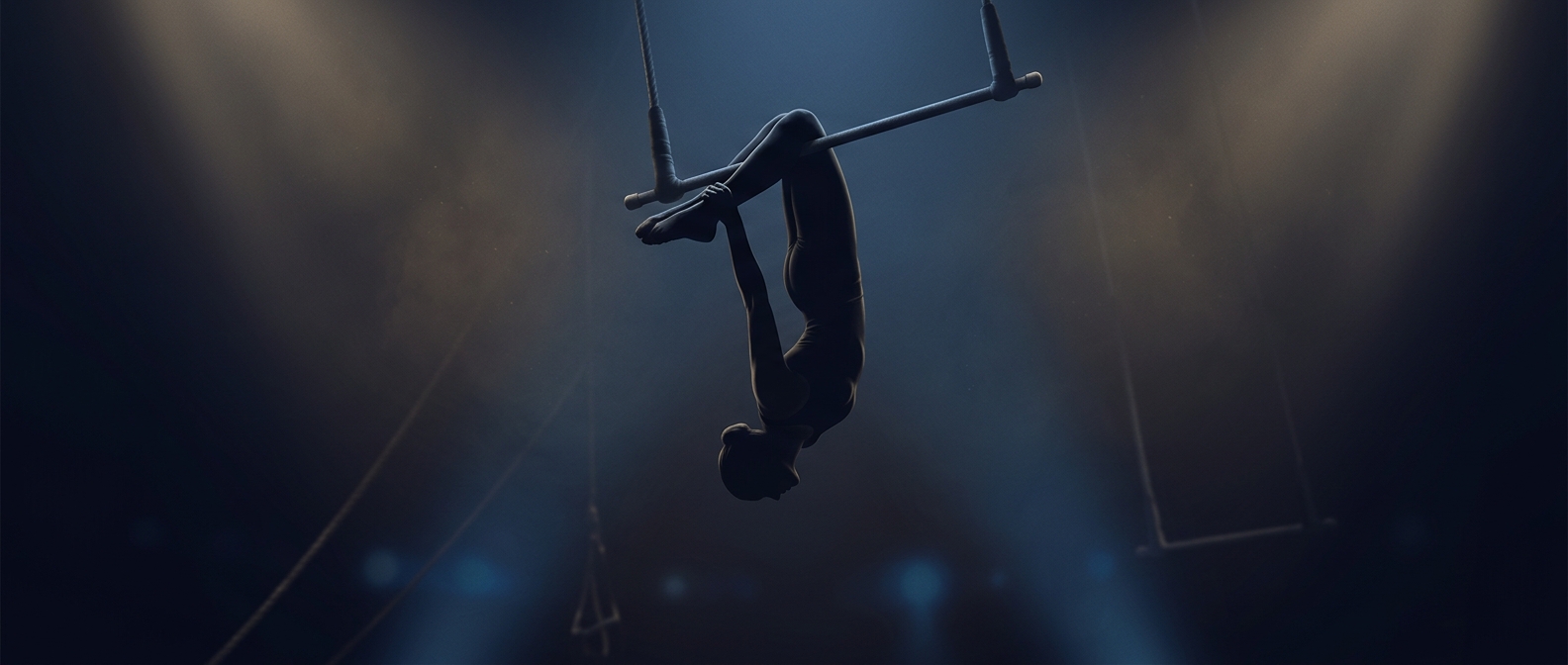
A catcher does not simply perch on the bar. They bend at the hips and knees and hook their legs over it, letting their body hang below. The bar rests in the crook behind the knees; body weight helps keep the legs engaged, while the catcher’s hands stay available to meet the incoming flyer.
That position solves a practical problem: a catcher needs a stable attachment point and two free hands at the same time. Gripping the bar with the hands would make it harder to take hold of a flyer arriving at speed.
The catch depends on timing as well as grip
In a flying-trapeze act, the flyer releases their own bar and travels through the air toward the catcher. The catcher is swinging too, so the two performers’ paths must line up at the right moment. They coordinate the approach, reach for one another, and close their hands around a secure hold before the flyer’s momentum carries them onward.
The knee hook is therefore more than a dramatic pose: it gives the catcher a hands-free base from which to perform a precisely timed transfer. A successful catch looks like a single effortless meeting in midair, but it combines a locked-in leg position with two moving bodies arriving on compatible paths.