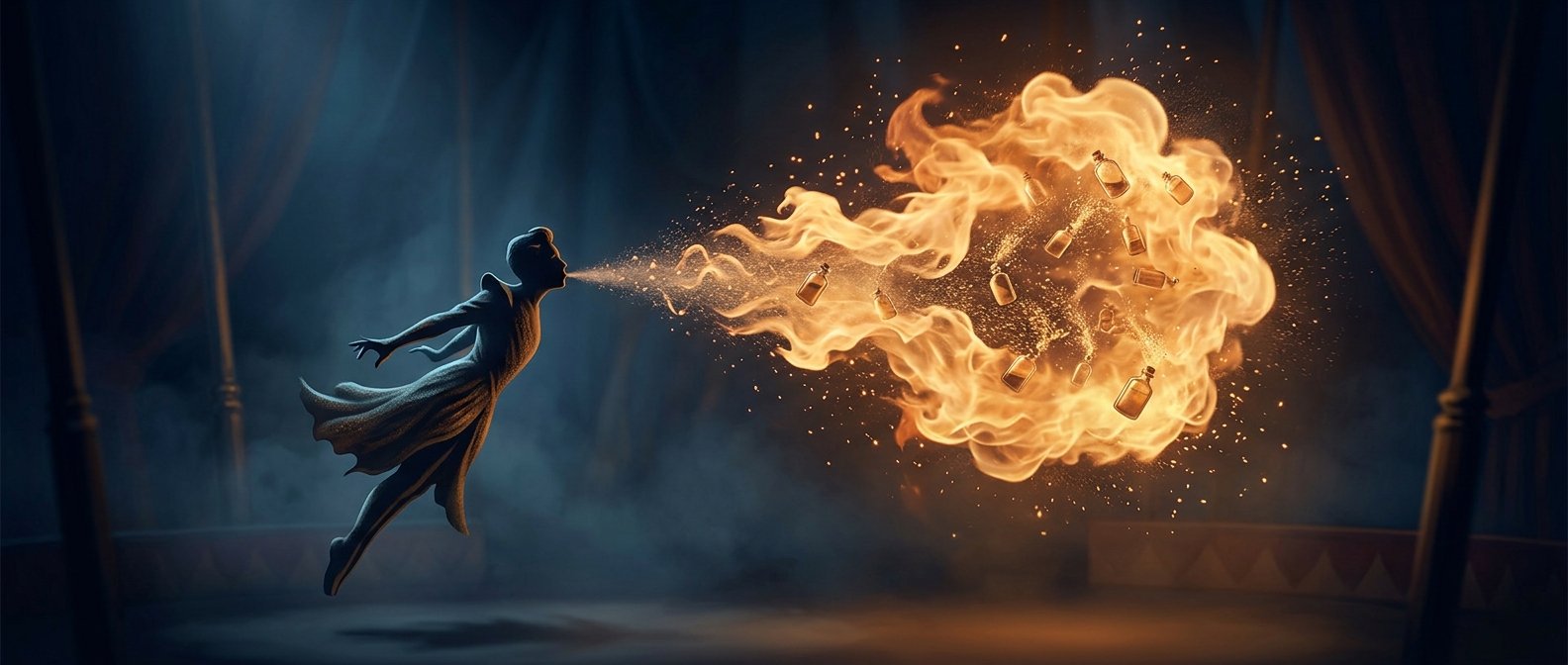
Why a Spray Becomes a Flame
A pool of liquid fuel is difficult to ignite all at once: only fuel that has mixed with oxygen at its surface can burn. When a performer ejects fuel as a fine spray, it breaks into many small droplets and spreads through the air. That greatly increases the exposed surface area, allowing fuel vapor around the droplets to catch from the torch and produce a sudden sheet of flame.
The visible fire is therefore not the liquid itself burning like a solid object. It is a fast-moving combustion of fuel vapor and tiny airborne droplets, which is why the effect can flare outward so dramatically.
The Dangerous Part Is Often Invisible
The same dispersal that makes the flame possible also makes the act hazardous. A spray can drift or fall back toward the performer, while fuel that enters the airway can injure the lungs even if it never ignites. Flame can also travel toward the mouth, and burns may occur without the audience seeing what went wrong until the performance is over.
Some fuels are toxic as well as flammable. Their fumes or accidental ingestion can cause harm independent of fire, so the spectacle depends on managing risks that are not apparent in the bright burst of flame. The striking image is brief; the fuel’s hazards do not disappear when the flames do.