A tent built for more than one show
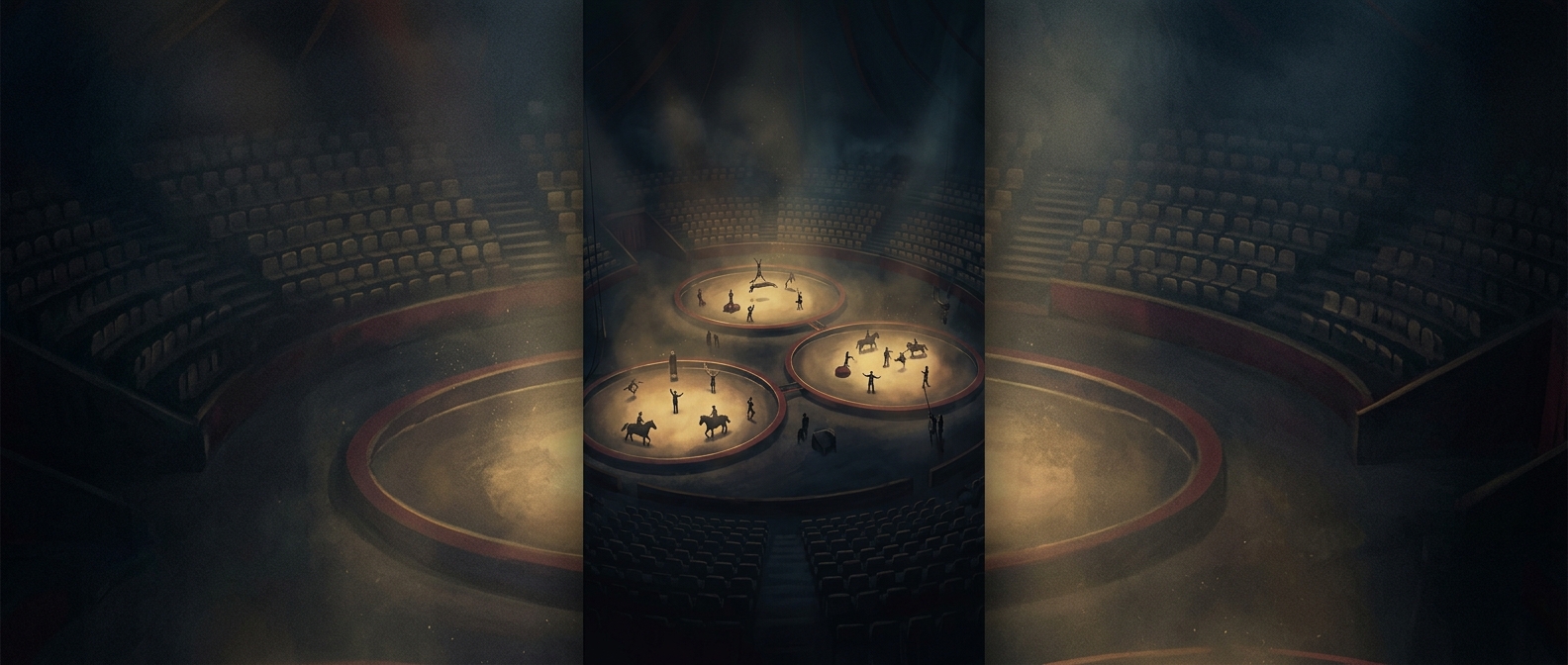
A single ring gives the audience one focal point and makes each act take its turn. With three rings, a circus could stage separate performances at the same time. That changed the tent from a room where everyone watched one sequence into a space where different sections of the crowd could follow different action.
The arrangement also suited a large audience. Instead of extending the program so every act could perform in succession, promoters could keep several acts moving at once. The rings made more use of the floor beneath the tent—and helped make a crowded show feel busy from every direction.
More spectacle, less shared attention
The tradeoff was that spectators could not watch everything. While acrobats performed in one ring, another act might be happening elsewhere; people had to choose where to look or catch only pieces of each performance. That competition for attention became part of the attraction: the tent felt packed with simultaneous events rather than organized around a single stage.
Three rings were therefore not just a visual flourish. They turned the circus into a higher-capacity, more kinetic kind of entertainment, with the audience’s gaze moving as constantly as the performers.