The Fast Lane Borrows Time From the Main Queue
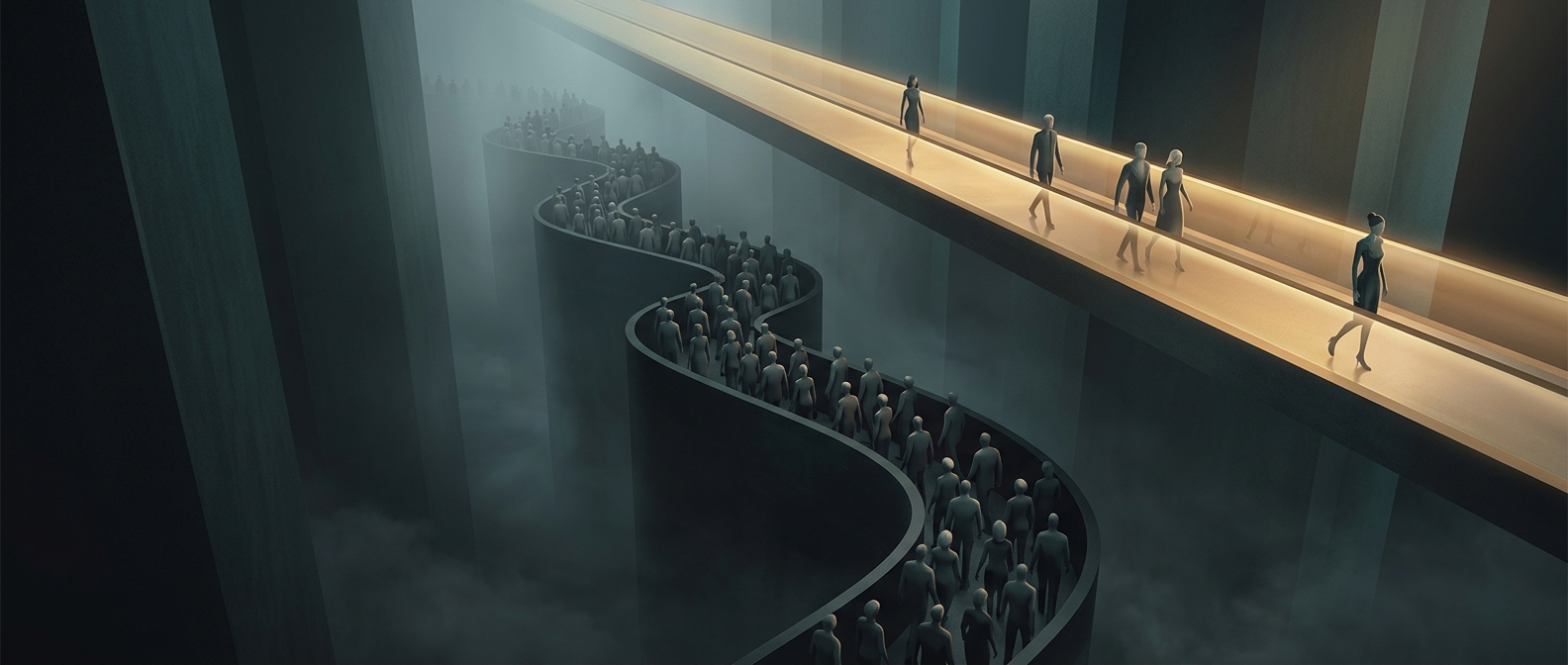
A priority lane changes who gets the next turn, not necessarily how many people the attraction, ride, or counter can serve. If both lanes feed the same limited staff or equipment, each priority customer uses a service slot that could otherwise have gone to someone in the regular line.
Imagine one ride vehicle returning every few minutes. If several priority guests are allowed to board before regular guests, the regular line advances by fewer places during those cycles. The priority guests’ shorter wait is therefore partly created by shifting waiting onto everyone who is passed over.
When a Fast Lane Adds Capacity
The effect depends on how the system is set up. A venue with extra staff, a separate entrance process, or otherwise-unused capacity may serve priority customers without slowing the main queue much. But when the lanes compete for the same bottleneck—the ride vehicle, service desk, or available worker—the priority lane mainly changes the order of service.
That can also make the regular line feel less predictable. People may see the queue move, then pause as priority customers are admitted, making it harder to estimate when their turn will come.
The key question is not simply whether there are two lines, but whether there are two sets of resources behind them. If there is only one, the fast lane can shorten one person’s wait by lengthening another’s.