A poet’s payment depended on the press
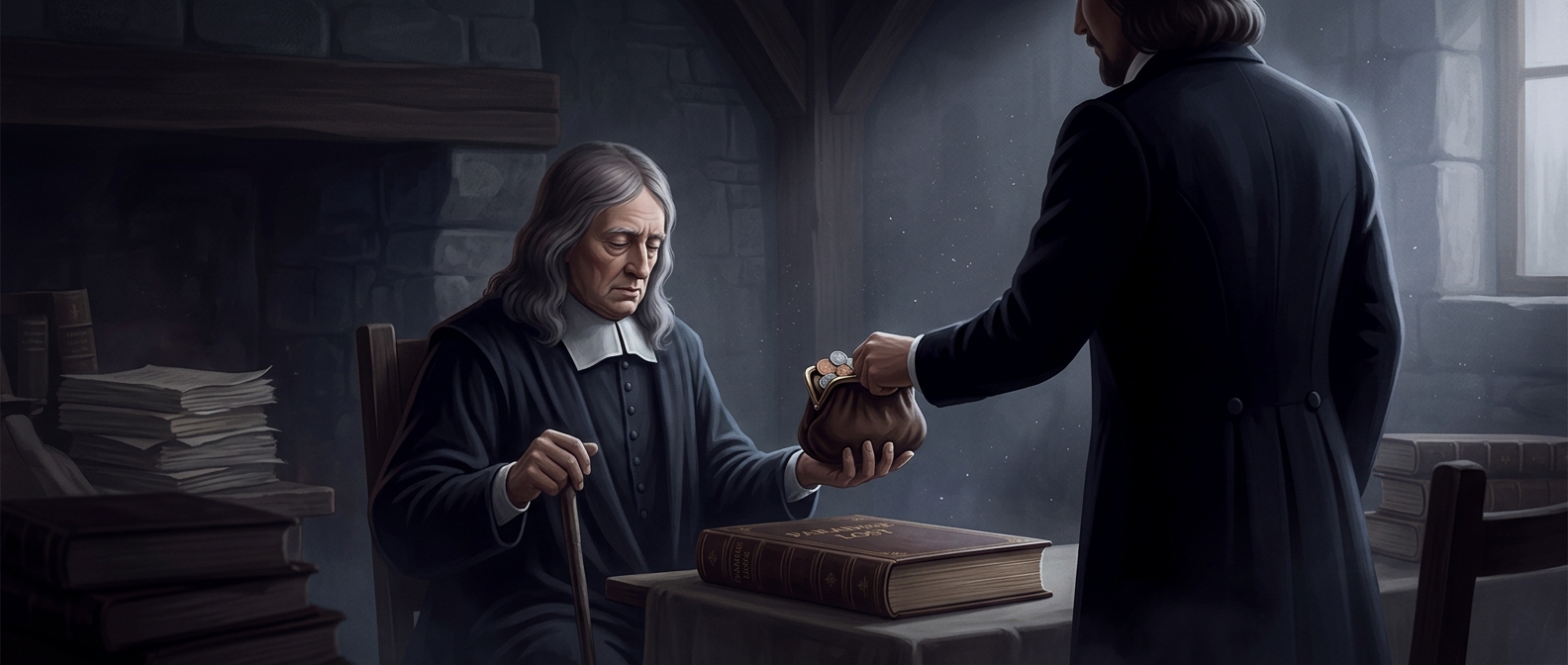
Milton’s 1667 agreement made his compensation hinge on what happened after Paradise Lost reached readers. The initial five pounds was not the whole bargain: another five was due if the book sold out. That condition connected the author’s eventual pay to sales, rather than guaranteeing the full amount at the outset.
For a publisher, printing a book meant paying for paper, typesetting and production before knowing how many copies would find buyers. A sales condition shifted some commercial uncertainty onto the author: Milton could receive more if the edition moved, but the additional payment depended on that outcome. The publisher, meanwhile, had to recover the costs of making and selling the book.
“All rights” did not mean today’s rights system
The agreement is often striking because the sum seems tiny beside the poem’s later stature. But the transaction belongs to a different publishing world, in which contracts and control over printed works did not map neatly onto modern copyright arrangements. The payment records a specific bargain over publication; it should not be read as a simple modern sale of every right in the poem for five pounds.
The memorable detail is the contingency: Milton’s extra payment rested not on the poem’s reputation centuries later, but on whether copies of that early edition sold out.