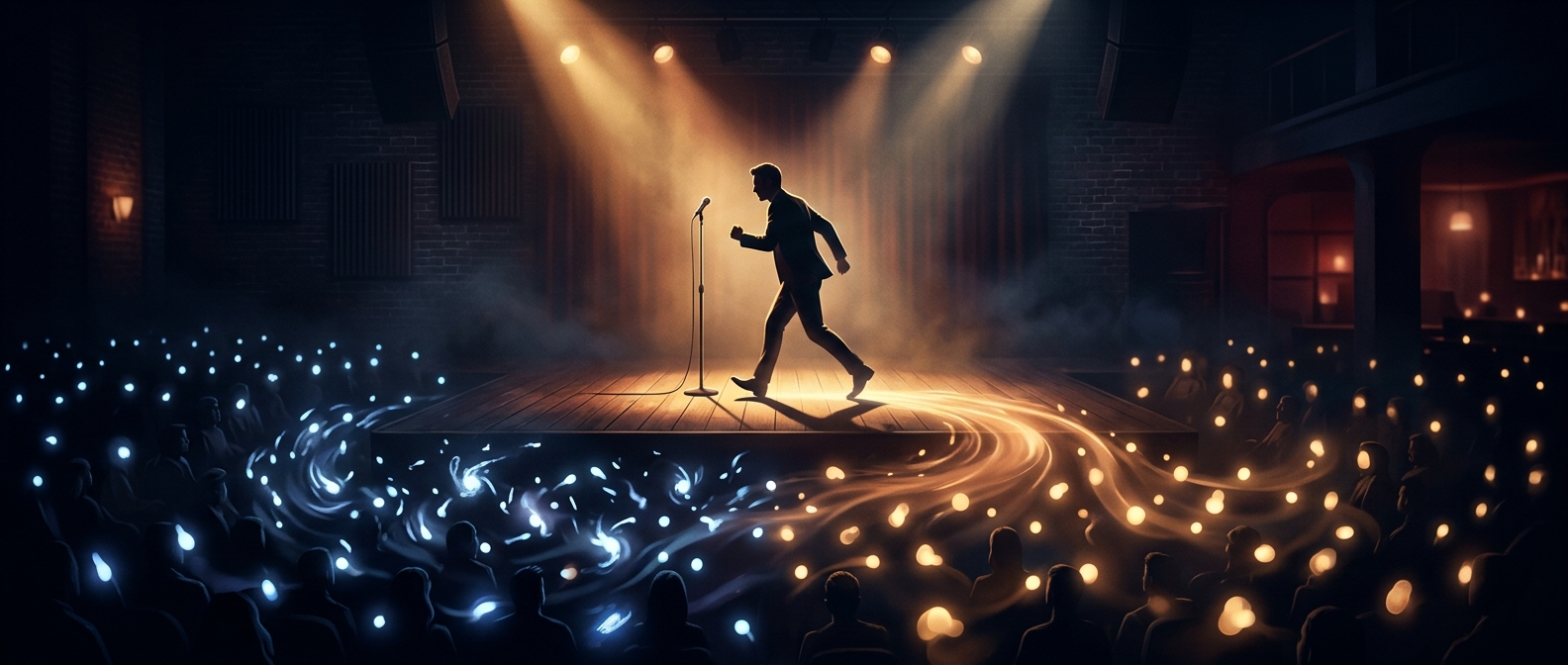
Why a comedian keeps moving
A live audience makes a comedy set a high-pressure task: the performer has to recall material, read reactions and decide when to pause, all while being watched. Nervousness can leave the body keyed up and ready for action. For some comics, walking gives that excess energy somewhere to go instead of requiring them to hold a rigid pose under the lights.
The movement is usually small and repeatable—crossing the stage, taking a few steps, then turning back. That rhythm can make standing before a crowd feel less physically tense, much as shifting your weight or walking can help during an anxious conversation. It does not mean every comedian paces for the same reason, or that movement makes the nerves disappear.
Movement becomes part of the performance
Once a comic is moving, the walk can also help shape the set. A step toward the audience can make a line feel more direct; a pause in one spot can give a punchline room to land. Moving between parts of the stage may also keep a long monologue from looking visually static. But motion has to serve the joke: constant wandering can compete with the audience’s attention, especially during a carefully timed pause.
So pacing can be both a physical outlet and a performance tool. What looks like restless wandering may be a way to manage the strain of being watched while keeping the set alive—until the comedian chooses to stop, and lets the stillness do the work.