Why the Carp Is the Chosen Shape
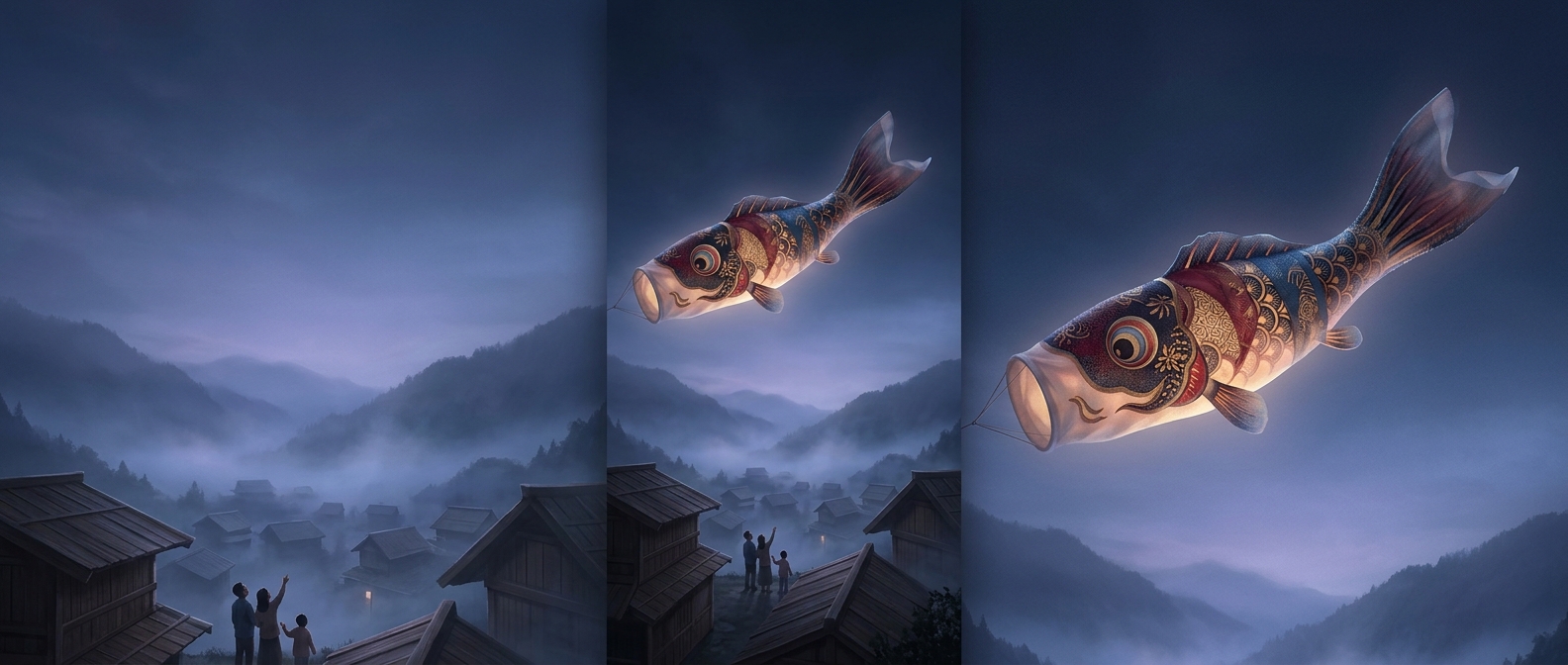
A koinobori is designed to look alive in the wind: air enters its open mouth, fills the cloth body, and makes the tail flutter as if the fish were swimming overhead. That motion suits the carp’s meaning. In Japanese tradition, the carp represents strength and perseverance, qualities associated with its ability to keep moving against a current. Flying one expresses a hope that children will grow up resilient and thrive.
A Family Portrait in the Sky
Koinobori are especially associated with Children’s Day on May 5, a national holiday that celebrates children’s well-being. A household display often includes several carp of different sizes, traditionally representing parents and children. As each streamer catches the same wind, the set turns a private family wish into a visible neighborhood scene.
The display’s effect depends on the weather as much as the design. In a breeze, the carp seem to surge and bob above rooftops; in still air, they hang limp. A gust can animate an entire row at once, making the familiar symbol of a child’s hoped-for strength look, for a moment, like a school of fish moving through the sky.