How oil helps paper shed rain
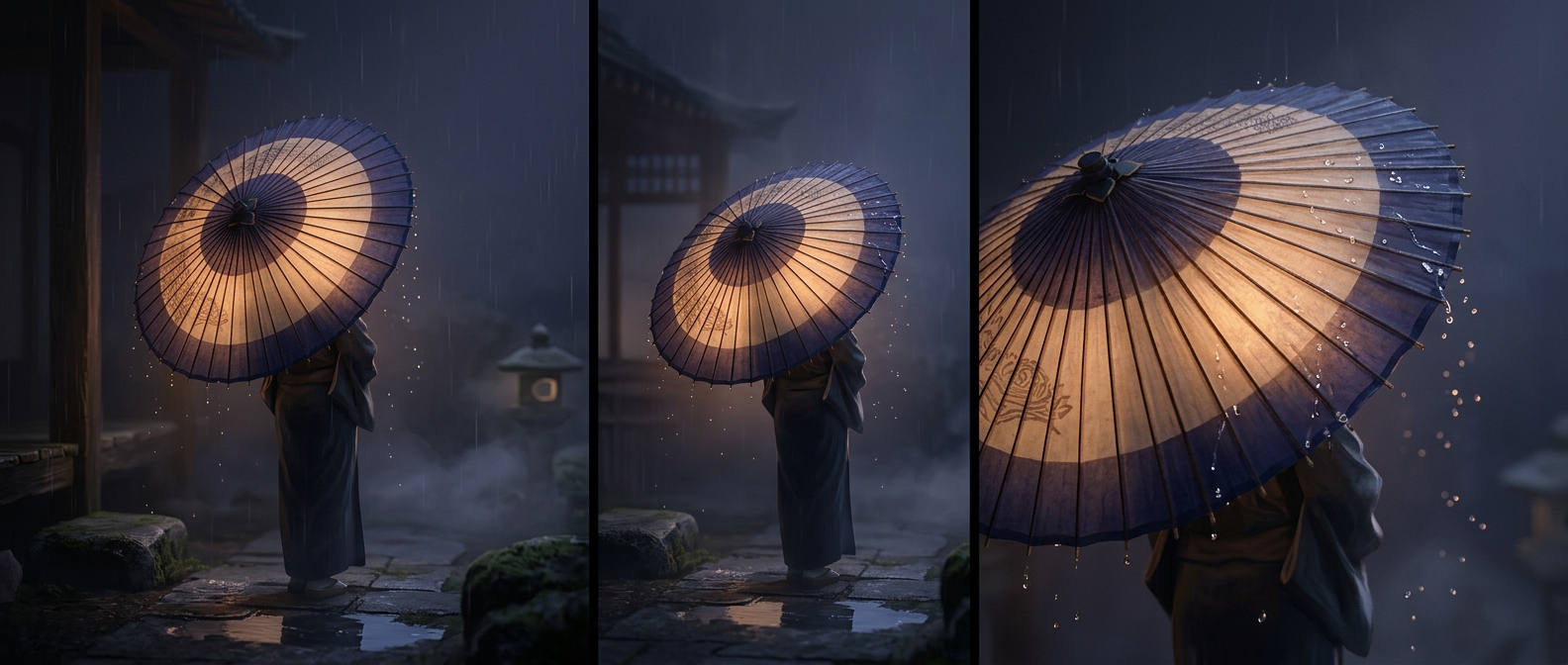
Wagasa are built around a canopy of paper stretched across a framework of bamboo ribs. Untreated paper readily absorbs water: its fibers swell and soften, weakening the sheet. A coating of oil changes how water interacts with the surface. Instead of soaking in quickly, raindrops bead and run off, giving the canopy time to keep its shape while it is held overhead.
The oil does not make paper indestructible or immune to prolonged exposure. It makes a thin, lightweight material practical in ordinary rain—a useful distinction between a surface that resists water and one that can be submerged without damage.
A balance of flexibility and protection
The canopy must do more than block water. It has to fold along the ribs and open again without tearing, so the paper and its coating must remain flexible. That combination of a delicate sheet, a supporting frame, and a water-shedding finish lets a wagasa function as both a rain cover and a portable object that can be closed and carried. Its ingenuity lies in making protection depend not on a heavy, solid shell, but on treating a material that would otherwise be vulnerable to rain.