How a bamboo tube becomes a flexible whisk
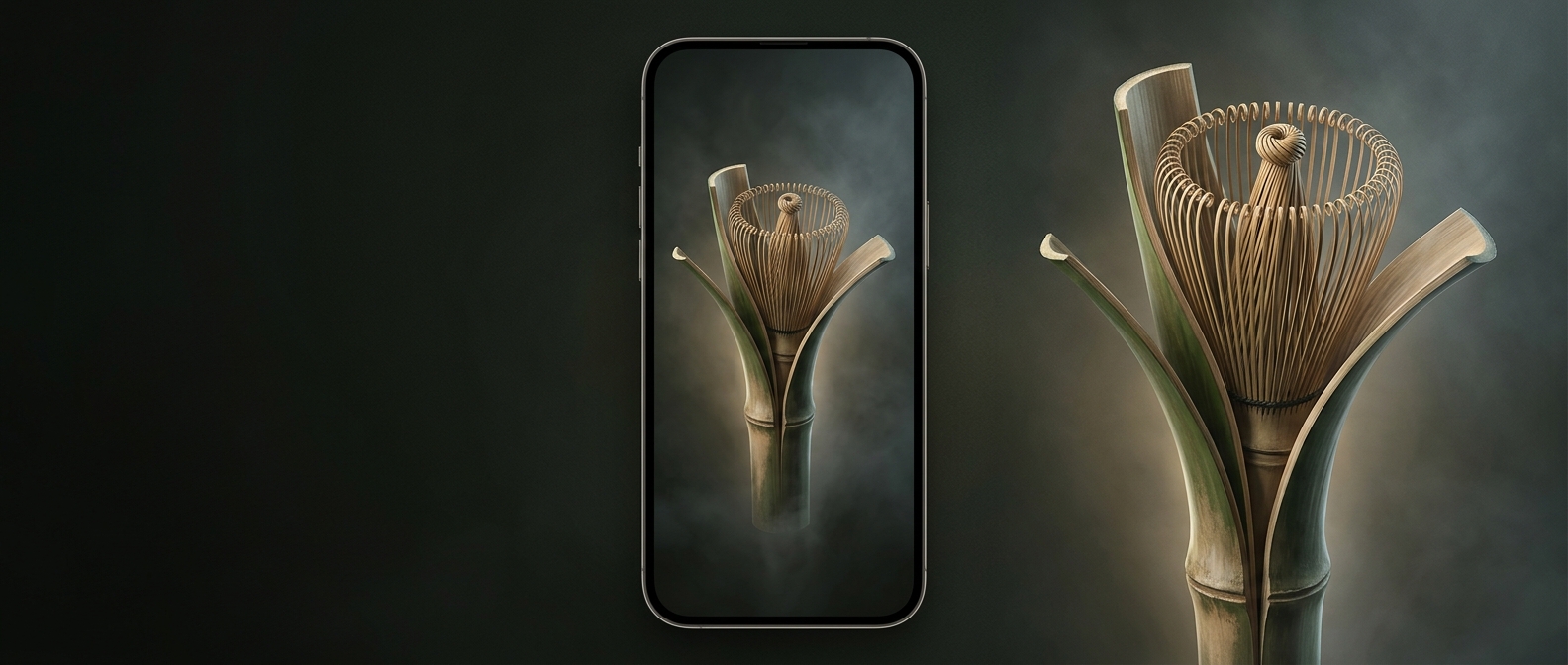
A chasen begins as a short section of bamboo, not a bundle of fibers assembled around a handle. The craft challenge is to turn the solid end of that section into many narrow strips while leaving them attached at the base. A maker cuts lengthwise into the bamboo, then pares and shapes the resulting strips by hand. The untouched base keeps the whisk together; the separated tips can bend independently.
That construction makes the bristles springy rather than rigid. Their flexibility lets them move quickly through a bowl of matcha without scraping it like a hard tool would. The thin strips also create many small points of contact with the tea and water, helping disperse the powder and whip air into the mixture.
Why the bristles matter in the bowl
Matcha does not dissolve like sugar. Its finely milled tea leaves remain suspended in water, so whisking has two jobs: break up clumps and distribute the powder evenly. Rapid strokes with the chasen keep particles moving and produce the fine foam associated with prepared matcha.
The whisk’s shape is therefore part of its function. A single piece of bamboo becomes a fan of separate, resilient tips, while the connected base gives the hand control over them. The result is a tool whose delicate-looking bristles are not attached afterward: each one is a carved continuation of the same stalk.