Why a Daruma Has Blank Eyes
A Daruma doll turns a private intention into something visible. Traditionally modeled on Bodhidharma, the Buddhist monk associated with the Zen tradition, the doll is often round and weighted so it rocks back upright when tipped. That shape gives it a familiar association with perseverance: a setback need not be the end of the effort.
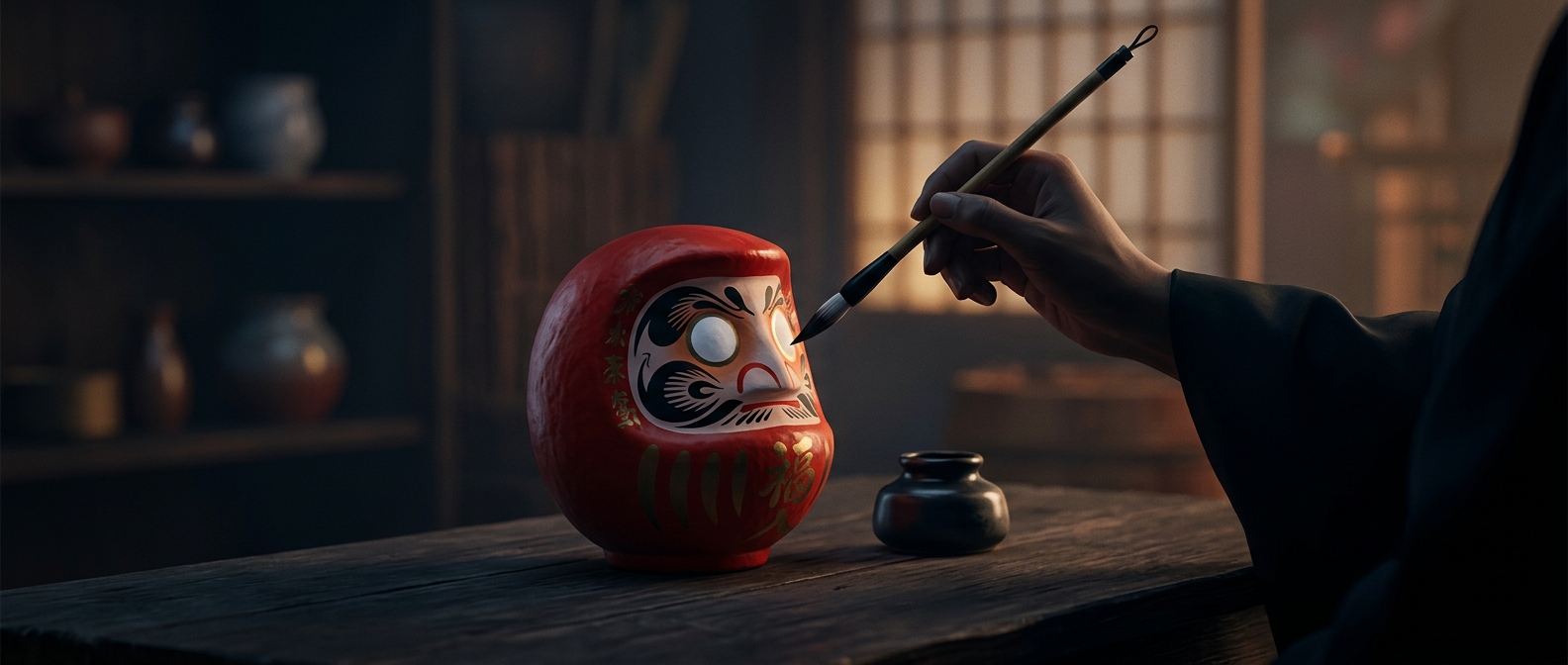
The blank eyes make that idea practical. When someone chooses a goal, painting one eye marks the start; completing the goal gives them a reason to paint the other. The doll becomes a small, public reminder of a commitment that might otherwise stay abstract.
A Goal You Can See
An unfinished eye is not just decoration waiting to be completed. It keeps the outcome in view. Sitting on a desk or shelf, the doll can prompt its owner to remember what they intended to do and notice that the task is still underway. The ritual also creates two clear moments—beginning and completion—around a goal that may involve many less visible steps.
Practices vary, and people may use Daruma for personal aims or shared hopes. The point is not that the doll makes an outcome happen; it gives determination a physical form. A finished pair of eyes records not only what someone hoped to accomplish, but that they followed the intention through.