How a carved block turns into a repeating pattern
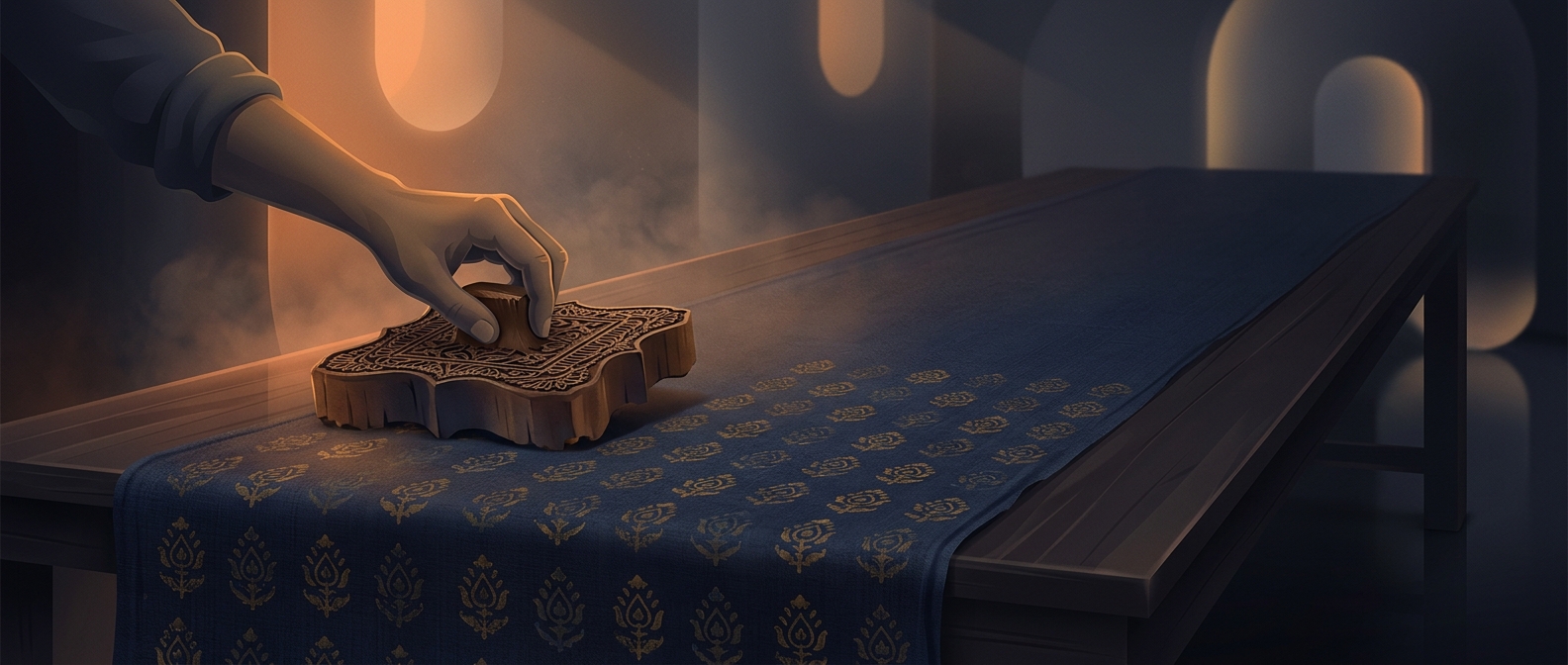
A hand-stamped bedsheet is built impression by impression. The carved wooden block acts like a small printing plate: its raised surfaces pick up dye and transfer it when pressed onto the cloth. Repeating the gesture across a large piece of fabric turns a design into a continuous pattern.
The challenge is not simply making each mark. The printer must place each impression close enough to the last that the pattern flows, while keeping the pressure and dye reasonably consistent. A slight shift can leave a visible gap or make the repeat drift. Intricate motifs demand especially careful placement because small misalignments are easier to notice.
Why the handwork remains visible
A bedsheet may need hundreds of impressions because one block covers only a small area at a time. That makes the maker’s rhythm part of the finished surface: tiny differences in pressure or placement can give hand-printed cloth subtle variation. The same process also makes large patterns labor-intensive—the design has to be translated into many deliberate presses rather than applied in one pass.
The result is a pattern assembled by hand, where consistency comes not from a single machine-wide operation but from repeating a precise movement across the fabric.